REVIEW · ZARAGOZA
Midday Market Tour and Spanish Cooking Class
Book on Viator →Operated by Gastro Rutica 41 Spain · Bookable on Viator
One smell of the market and you start grinning. This midday tour blends a walk through Mercado Central with hands-on cooking led by Jorge, ending in a meal that feels like Zaragoza at the table. You’ll shop like locals, pick ingredients for the dishes, and learn techniques you can actually repeat at home.
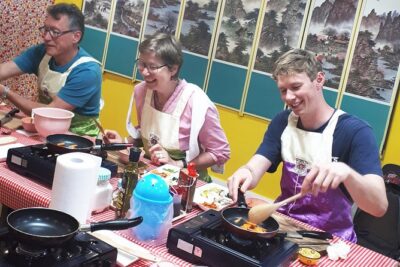
I especially love how the market time is practical, not just sightseeing. You see how vendors work and you help choose fresh, in-season produce (plus staples like bread, and meats for the paella plan). The cooking portion is the second big win: clear steps, lots of help, and a pace that works even if you’re not a trained chef.
One thing to consider: this is a group class (up to 16), so you’ll be close to other people and moving between spots. If you prefer quiet, solo cooking time, you might find the lively kitchen energy a bit much at midday.
In This Review
- Key reasons to book this Zaragoza food tour
- Meeting on Av. de César Augusto at 11:00 am
- Central Zaragoza Market Walk: shop the way locals do
- Choosing ingredients for tapas and paella (the fun part)
- The cooking school kitchen: hands-on, doable, and friendly
- What you’ll actually make and eat (and why it feels like Zaragoza)
- Local wine with your cooking: a simple upgrade
- Price and value: is $118.63 worth it?
- Who should do this Spanish cooking class in Zaragoza?
- Should you book this midday market tour and cooking class?
- FAQ
- What time does the Midday Market Tour and Spanish Cooking Class start?
- How long is the experience?
- Where do we meet and where does the tour end?
- Is the tour offered in English?
- How many people are in the group?
- What dishes will I learn to make and eat?
- Are local wines included?
- What is the cancellation policy?
Key reasons to book this Zaragoza food tour
- Central Zaragoza market shopping with a guide who knows what to pick and why
- Hands-on cooking instruction that keeps you chopping and tasting, not just watching
- Aragonese-style dishes like lamb paella, Spanish omelette, and tapas plates you can recreate
- Local wine with the meal prep and dining so the experience feels complete
- A small group size (max 16) that still has enough energy for conversation
- A walk that adds context through Zaragoza stories tied to the food you’re buying
Meeting on Av. de César Augusto at 11:00 am
The day starts at the Monument to Caesar Augustus, on Av. de César Augusto in Zaragoza’s casco antiguo (old town). You meet at 11:00 am, and the whole experience runs about four hours—long enough to shop, cook, and eat without dragging.
Why this matters: arriving around late morning is a sweet spot. The market has activity, ingredients feel fresh, and you don’t have to choose between “eat now” and “learn later.” And because it’s near public transportation, you’re less likely to waste time figuring out how to get there.
The group stays small, with a maximum of 16 travelers, so you’re not lost in a crowd. That size also makes it easier to ask questions during the cooking part, not just nod along.
Central Zaragoza Market Walk: shop the way locals do
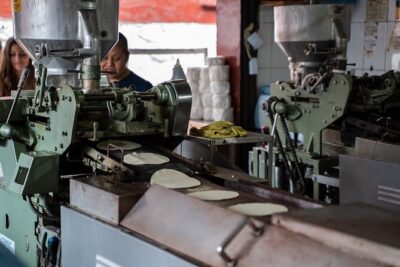
The core of the experience begins with a guided walk through Zaragoza’s central food market, where you meet vendors and watch everyday food culture in action. Instead of rushing past stalls, you take the time to understand what matters: freshness, seasonal produce, and the ingredients that show up again and again in regional cooking.
You’ll see how locals shop when the focus is on what’s good today. That’s a big difference from souvenir shopping or a quick tasting. It also helps you understand how a recipe starts—because you’re buying the same kind of building blocks the dish depends on.
A practical tip for you: go with your appetite switched on, not your stomach fully planned for only one thing. The market portion sets up multiple dishes later, and you’ll likely notice you’re picking ingredients that seem “normal” until you connect them to what you’ll cook.
Choosing ingredients for tapas and paella (the fun part)
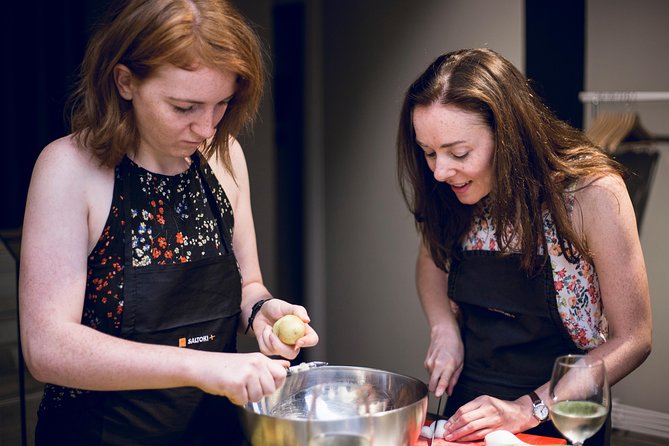
After the market walk, the ingredient choices turn into a plan. One of the things I like most is that the cooking isn’t generic Spanish cuisine taught from a textbook. The menu is tied to what you selected—so the market doesn’t feel like an extra stop you can skip.
The dishes you’ll focus on include favorites that match the region’s style: lamb paella, Spanish omelette (tortilla), and tapas such as tomato salad, plus items like Torrija (Spanish-style sweet bread) for dessert. You may also see other Aragonese-leaning elements on the menu—like borage with potato tapa and Torrega—which gives you the sense you’re eating beyond the usual beginner “Spain starter pack.”
Here’s the practical payoff for you: when you cook at home, you’ll remember the ingredients you handled at the market. That makes recipes easier to follow, because you’ll know what you’re looking for at the store. It’s the difference between collecting steps and learning judgment.
One small consideration: because you’re shopping and cooking in a limited timeframe, you’ll want to be ready to move with the group. If you’re the type who likes lingering over every stall photo, you might feel a bit rushed during the transition times.
The cooking school kitchen: hands-on, doable, and friendly
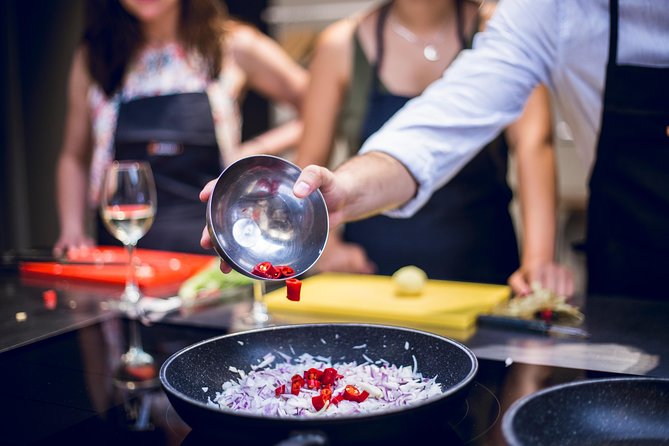
Cooking happens in a professional cooking school setting, close to where the day ends at La Zarola on C. de S. Miguel. The atmosphere is set up for real instruction: you’ll prep, chop, cook, and taste as you go, not just watch someone else work.
Jorge (the guide and chef host) leads the process with hands-on guidance. Multiple people highlight that his instructions are clear and approachable, even for those who aren’t comfortable in the kitchen. That’s exactly what you want from a class like this: a teacher who explains so you can succeed, not so you feel behind.
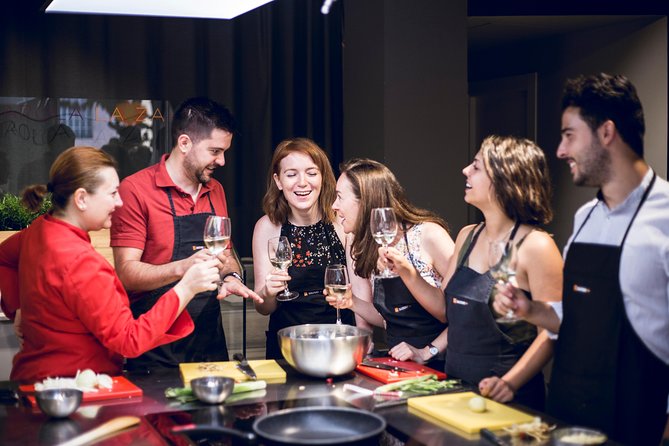
The style of cooking also matters. You’re learning traditional technique through the dishes you make—like how a tortilla comes together, how tapas are built to share, and how the paella becomes the centerpiece. And because the class includes wine during prep and the meal itself, the room often shifts from focused work into relaxed enjoyment once dishes start landing on the table.
One more detail worth knowing: Jorge isn’t a solo show. Reviews mention his family working with him as hosts, which can make the atmosphere feel more like a community kitchen than a scripted performance.
What you’ll actually make and eat (and why it feels like Zaragoza)
This is a “eat well” class. You’re not leaving hungry, and you’re not just getting a snack plate. You’ll make and then enjoy a meal that includes a mix of tapas, a paella, and a Spanish-style dessert like Torrija.
Based on what’s taught and served, here’s the core lineup you can plan around:
- Lamb paella as the main shared dish
- Spanish omelette (tortilla), a classic that teaches comfort-cooking structure
- Tapas such as tomato salad, plus other regional options like Torrega and borage with potato tapa
- Torrija for dessert
Why this set is valuable: it covers variety without feeling random. Tapas teach you how to build small plates with balance. Tortilla shows the reliable method behind a simple staple. Paella gives you a “centerpiece” dish that turns market ingredients into something bigger than the sum of parts.
Also, the class doesn’t keep history only in the background. You’ll get a short history of Zaragoza and walking context tied to the market and the food choices. It makes the tasting feel anchored, not floaty.
When the meal starts, the experience shifts into social mode. People describe it as plenty of food with local wine and plenty of conversation. You’ll likely be sitting down while the rest of the group shares what they enjoyed and what they found surprising during the cooking.
Local wine with your cooking: a simple upgrade
Food tours often stop at “tasting.” This one stays with you through the whole meal. The experience includes local wines paired with the prep and dining time, and in practice that means you’re getting a more complete picture of how the food is actually enjoyed.
For your planning: expect that the wine is part of the event flow, not a separate add-on you have to hunt down. That makes the class feel more like a meal with a guide than a workshop where you bring your own supplies.
A practical note: if you don’t drink, let the group know. The tour data says local wines are included, but it also mentions beer/wine if you wish, so there may be some flexibility in how you handle drinks.
Price and value: is $118.63 worth it?
At $118.63 per person, this sits in the mid-range for cooking classes plus a market walk. The value isn’t just the cooking. It’s the full chain: market shopping + guided ingredient selection + hands-on instruction + a full meal.
Here’s what you’re paying for, in plain terms:
- You get access to the Central Zaragoza market as a guided route, with vendor interactions and ingredient guidance
- You cook multiple dishes, not just one quick recipe
- You eat what you cook, with local wines
- The class is capped at 16 travelers, which helps you get support in the kitchen
If you compare this kind of experience to a standalone walking food tour plus a separate cooking lesson, the “bundle” quality is the point. You’re paying once for market-to-table continuity. And if you actually want to take recipes home, buying the right ingredients is half the battle—so the market component becomes part of the learning, not a detour.
If you’re traveling with someone who loves food and history (or at least loves one of them), this tends to feel like a highlight rather than a scheduled chore.
Who should do this Spanish cooking class in Zaragoza?
You’ll love this most if:
- You want a hands-on food experience, not just tasting
- You like learning how dishes connect to ingredients you can find later
- You’re visiting Zaragoza and want a meal that feels tied to the region
It’s also a great choice if you’re the kind of traveler who gets bored by long lectures. The format keeps moving: market first, then cooking, then eating. Jorge’s teaching style (clear, friendly, and practical) seems built for people who want to participate.
If you’re someone who prefers very quiet experiences, this may feel a bit lively, since the group moves together and the kitchen has an active rhythm. And because it’s a midday slot, it’s not a “slow morning coffee” kind of plan.
Should you book this midday market tour and cooking class?
Book it if you want a Zaragoza experience that goes beyond photos. This is one of those days where you leave with two souvenirs: a deeper sense of local food culture and the confidence to cook at home using what you learned.
Book it sooner rather than later, too—this is commonly reserved about 31 days in advance. If you’re traveling during a busy period, early booking is one way to avoid missing the class you actually want.
Skip it only if you strongly dislike cooking in a group setting or you’re not interested in learning dishes that mix tapas, tortilla, and a centerpiece paella. Otherwise, this is a solid, do-it-and-eat-it kind of afternoon that makes Zaragoza taste like Zaragoza.
FAQ
What time does the Midday Market Tour and Spanish Cooking Class start?
It starts at 11:00 am.
How long is the experience?
The duration is about 4 hours.
Where do we meet and where does the tour end?
You start at the Monument to Caesar Augustus (Av. de César Augusto, s/n, Casco Antiguo, Zaragoza) and end at La Zarola (C. de S. Miguel, 35, Casco Antiguo, Zaragoza).
Is the tour offered in English?
Yes, it’s offered in English.
How many people are in the group?
The tour/activity has a maximum of 16 travelers.
What dishes will I learn to make and eat?
You’ll learn and enjoy several regional dishes, including lamb paella, Spanish omelette (tortilla), and tapas. Dessert can include Torrija, and other regional tapas-style dishes may also be part of the menu.
Are local wines included?
Yes. The experience includes local wines with the meal and cooking time.
What is the cancellation policy?
There is free cancellation. You can cancel up to 24 hours in advance for a full refund. If you cancel less than 24 hours before the start time, the amount you paid won’t be refunded.