REVIEW · THESSALONIKI
Thessaloniki: Greek Cooking Class, Market visit and Lunch
Book on Viator →Operated by Active Thess Holidays · Bookable on Viator
Markets first, then lunch you made. This 3.5-hour Thessaloniki cooking experience pairs two classic open-air stops with hands-on cooking, so the flavors actually have a paper trail. I love the ingredient hunt at Kapani (Vlali) Market and Modiano Market, because it turns Greek food from something you order into something you understand.
The best part is cooking the meal yourself, with a small max group size that keeps the class interactive. My only caution: you will be on your feet for a few hours, and the markets are crowded enough to make slower walking and close-to-people shopping part of the plan.
In This Review
- Market Moves: Kapani (Vlali) and Modiano in One Morning
- Kapani (Vlali) Market: where the produce does the talking
- Modiano Market: ingredients, but with personality
- Cooking at a Local Taverna: Taught by the People Who Run the Food
- The teaching vibe: more than recipes
- The Menu You’ll Make: Tzatziki, Dolmadakia, Greek Salad, Gemista, and Kormos
- Tzatziki: cold, creamy, and built for everything
- Dolmadakia: grape leaves that teach patience
- Greek salad: simple ingredients, real structure
- Gemista: stuffed vegetables with a tomato finish
- Chocolate salami / Kormos: dessert with a shape and a name
- Guides Matter: Maria, Dinha, Kostas, Thelis, and Konstantina
- Timing and Comfort: 11:30 Start, 3.5 Hours, and a Small Group
- Meeting point: Electra Palace Thessaloniki
- Value Check: Why This Is More Than a Lunch Stop
- Practical Considerations Before You Go
- Who Should Book This Cooking Class
- Should You Book It?
- FAQ
- What time does the Thessaloniki Greek Cooking Class start, and how long is it?
- Where do we meet for the tour?
- Is the cooking class offered in English?
- How many people are in a group?
- Do you visit markets as part of the experience?
- What dishes are included in the class and lunch?
- Is cancellation free, and what if the weather is bad?
- Are service animals allowed and is it reachable by public transportation?
Market Moves: Kapani (Vlali) and Modiano in One Morning
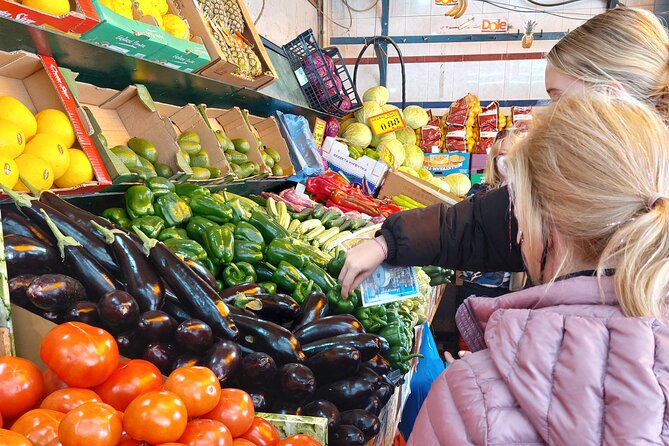
You start right where Thessaloniki’s everyday food happens: at two open-air markets. Think less like a tourist photo stop and more like a place where people shop because they need it for dinner tonight.
Kapani (Vlali) Market: where the produce does the talking
Kapani (Vlali) Market is the warm-up. You get your bearings fast, and you start noticing how Greeks build flavor from basics: herbs, fresh vegetables, olive oil, and yogurt. Even before you cook, the market teaches you what will actually end up on your plate later.
This is where the tour’s structure pays off. By the time you reach the cooking phase, you already know what you are looking at and why it matters.
Modiano Market: ingredients, but with personality
Then you move to Modiano Market. It has a more established feel, and it is a great spot to compare textures and ingredients across both markets. You will likely see what looks similar on the surface but tastes different in a dish once it is handled the Greek way.
If you like food that tastes like real life, not just restaurant versions, these two stops help you make that shift.
Cooking at a Local Taverna: Taught by the People Who Run the Food
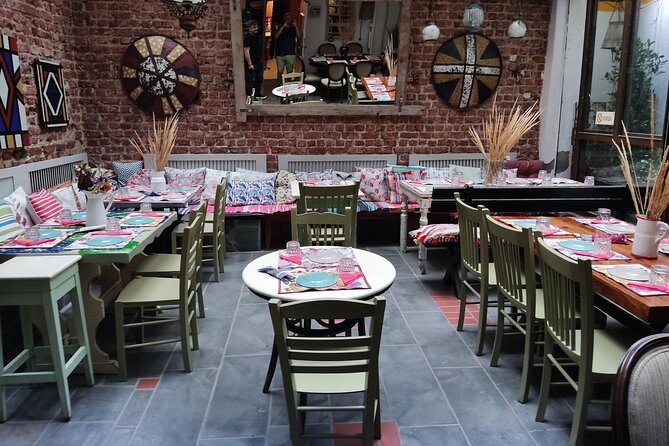
After the market stops, the class moves to a taverna where the chef is also the owner in at least some runs. That matters more than you might think. When the cooking instructor also runs the place, you get practical habits, not just a show-and-tell lesson.
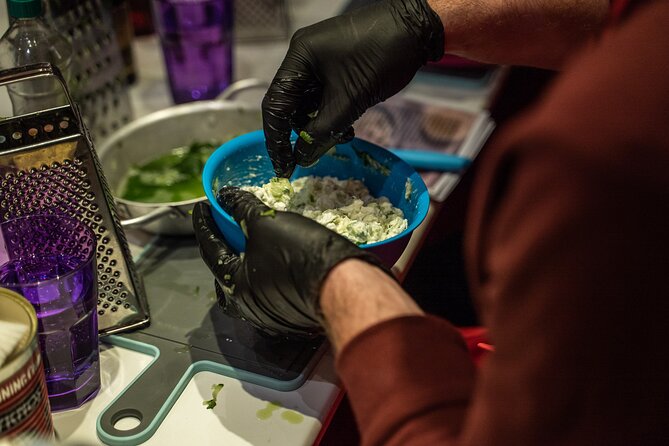
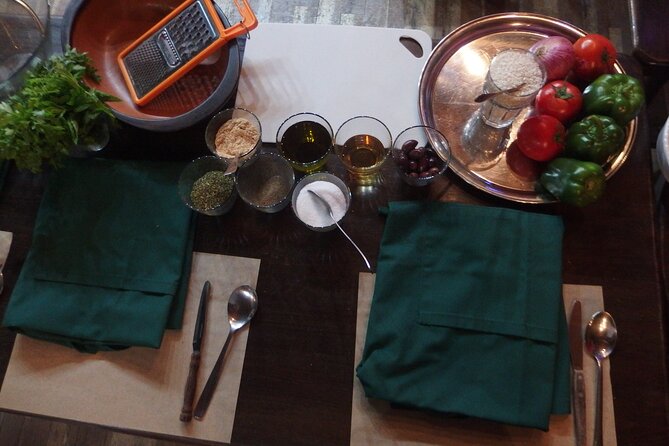
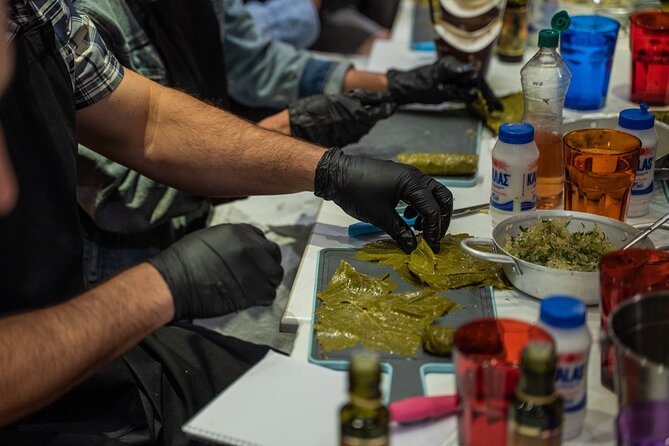
The format is hands-on. You are not just watching someone make tzatziki. You are making dishes that hold up on a real Greek table. And because groups are capped at 16, you get enough attention to ask questions when something feels unfamiliar.
The teaching vibe: more than recipes
A good cooking class should give you technique and confidence, not just instructions you forget tomorrow. The way this one is built points to that goal. People mention learning new techniques for classics like Gemista, and picking up small steps that make dishes taste better than their first-attempt version.
If you like to cook at home and want your Greek food to taste like it belongs, this is the kind of lesson that helps.
The Menu You’ll Make: Tzatziki, Dolmadakia, Greek Salad, Gemista, and Kormos
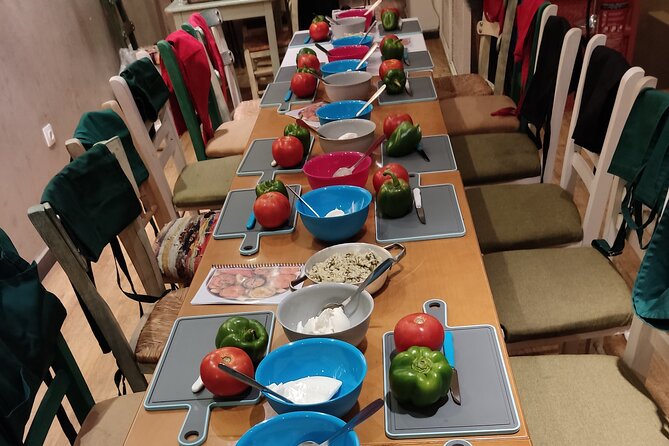
This experience has a clear focus: classic comfort foods with recognizable flavors, plus one dessert that is fun to say and fun to eat.
Tzatziki: cold, creamy, and built for everything
You start with tzatziki, served as a cold appetizer and also commonly used as a side or sauce for things like souvlaki and gyros sandwiches. What you learn here is how to balance cool yogurt with the sharp edge of garlic and the freshness of cucumber. It is simple food, but it is also the base for a lot of Greek plates.
Dolmadakia: grape leaves that teach patience
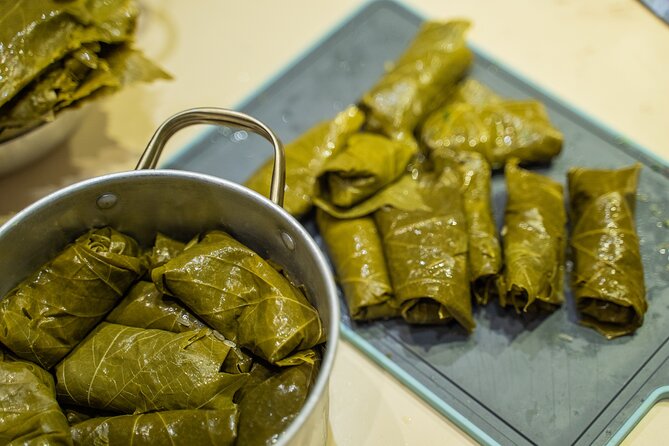
Then comes dolmadakia, stuffed grape leaves. This dish is iconic for a reason. It combines soft, tender leaves with a filling that typically uses herbs and rice, with flavors that feel layered instead of heavy.
One of the most memorable parts is that dolmadakia is not hard to love, but it does require care when you roll. People describe making it for the first time as a big win, which tells you the class is set up to guide you through the tricky parts.
Greek salad: simple ingredients, real structure
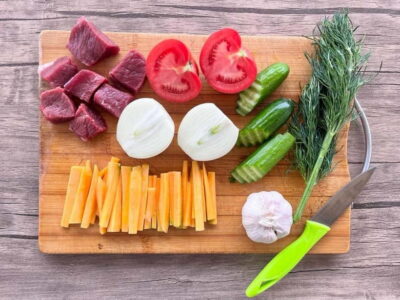
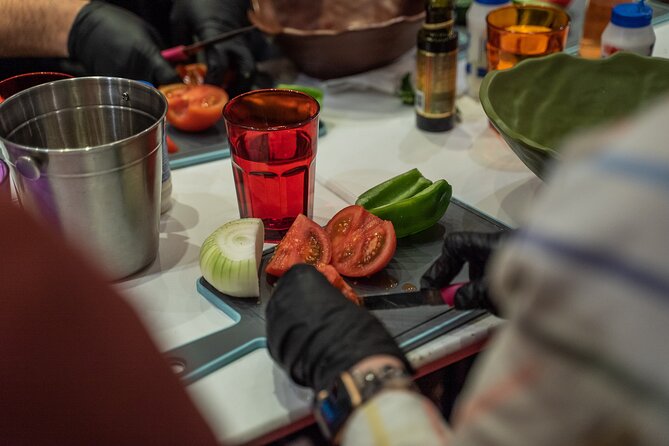
Greek salad is next, and it is more than chopped vegetables. Traditional Greek salad is tomatoes, cucumber, red onion, olive, and feta, tossed with a herby Greek dressing. The trick is not the ingredient list. It is how the salad tastes when each piece is cut and mixed with intent.
If you have only had Greek salad that felt flat before, you will probably notice the difference quickly here.
Gemista: stuffed vegetables with a tomato finish
Gemista is the main event. These are traditional stuffed vegetables filled with rice and herbs, then baked, often with potatoes and a tomato sauce. People highlight learning new techniques for gemista, which makes sense. Stuffed and baked dishes can go wrong when stuffing is under-seasoned or when the bake time and texture do not cooperate.
This is the dish that turns your market-to-table story into something you can taste and recreate.
Chocolate salami / Kormos: dessert with a shape and a name
For dessert, you get Chocolate Salami / Kormos. Kormos means tree log, named for the shape. You may see it under other names too, like mosaico or salami.
This is a fun end to the meal because it feels like a tradition rather than a generic chocolate cake. The lesson is also in how Greek desserts often come from older, practical recipes: the kind of thing families make and pass along.
Guides Matter: Maria, Dinha, Kostas, Thelis, and Konstantina
A cooking class can be great even with average food, but it needs a good guide to connect the dots. In past sessions, names like Maria, Dinha, Kostas, Thelis, and Konstantina show up. That’s useful information because it signals the tour tends to rely on people who can explain both food and place.
What I like about this approach: the guides do not just hand out instructions. They connect dishes to the area around Thessaloniki, including how history and local culture influenced what ends up on the table.
If you care about why foods are the way they are, this style makes the class feel less like a cookie-cutter workshop.
Timing and Comfort: 11:30 Start, 3.5 Hours, and a Small Group
The class starts at 11:30 am and runs about 3 hours 30 minutes. That timing is ideal for a late-morning hunger. You get two market stops, then you cook and eat lunch without feeling like you are racing the clock.
The group size is capped at 16, which is a big deal. In a larger group, cooking classes often turn into passive watching. Here, you are more likely to have a chance to participate and ask questions.
Meeting point: Electra Palace Thessaloniki
You meet at Electra Palace Thessaloniki, Aristotélous 9, Thessaloniki 546 24, Greece. It is also where the activity ends, which simplifies your day. If you are planning other stops afterward, this is one less thing to worry about.
Also, the tour is marked as near public transportation, which matters in Thessaloniki where getting around can be easier when you are not forced into last-mile walking.
Value Check: Why This Is More Than a Lunch Stop
At $110.54 per person for a half-day that includes two markets plus a cooking-and-lunch meal, the value is tied to participation. If the experience were only a sit-down lunch, it would be pricier than it should be. But because you shop for ingredients and then cook classic dishes, you leave with two payoffs:
- You eat lunch you helped make, not just food you were served.
- You gain technique for dishes you can actually cook later.
People also consistently rate this experience at 5/5 with 100% recommendation in the provided feedback. That kind of rating pattern usually points to one thing: the tour delivers what it promises, with minimal letdown moments.
Practical Considerations Before You Go
Here is how I’d prepare mentally.
- Wear shoes you can stand in. Market time and kitchen time both involve being on your feet.
- Bring a light layer if the weather swings. The tour requires good weather, and outdoor market time can feel different depending on the day.
- Go with an appetite for classic Greek food. This menu is not trying to be fusion. It is about doing the essentials well.
Who Should Book This Cooking Class
This is a smart fit if you want an authentic Thessaloniki food day without spending hours researching ingredients on your own. It also works well if you like cooking classes that teach technique, not just a list of recipes.
You would especially enjoy it if:
- You like open-air markets and want them connected to real meals.
- You want to learn dishes like dolmadakia and gemista that feel impressive but are approachable with guidance.
- You are cooking-minded and want take-home skills.
If you hate crowds, you might still have a good time, but you should be ready for market energy. And if you want a totally hands-off experience, this one is built for active participation.
Should You Book It?
Yes, if your goal is a meaningful food experience in Thessaloniki that ends with a lunch you helped cook. The two-market setup gives the day a story, and the meal you make gives it lasting value.
I’d book it particularly if you want to nail Greek standards like tzatziki, dolmadakia, Greek salad, and gemista, and if you are happy spending a few hours standing and cooking. The combination of small group size, market ingredient focus, and practical instruction is exactly what turns a good day into a memorable one.
FAQ
What time does the Thessaloniki Greek Cooking Class start, and how long is it?
The class starts at 11:30 am and lasts about 3 hours 30 minutes.
Where do we meet for the tour?
You meet at Electra Palace Thessaloniki, Aristotélous 9, Thessaloniki 546 24, Greece, and the activity ends back at the meeting point.
Is the cooking class offered in English?
Yes, the tour is offered in English.
How many people are in a group?
The tour/activity has a maximum of 16 travelers.
Do you visit markets as part of the experience?
Yes. You visit Kapani (Vlali) Market first, then Modiano Market.
What dishes are included in the class and lunch?
You’ll make tzatziki, dolmadakia, Greek salad, and gemista, and you’ll have dessert (Chocolate Salami / Kormos).
Is cancellation free, and what if the weather is bad?
Free cancellation is available up to 24 hours in advance for a full refund. The experience requires good weather, and if it is canceled due to poor weather, you will be offered a different date or a full refund.
Are service animals allowed and is it reachable by public transportation?
Service animals are allowed, and the tour is marked as near public transportation.