REVIEW · VALENCIA
Vegetable Paella cooking class, tapas and Ruzafa market visit
Book on Viator →Operated by My First Paella · Bookable on Viator
A good paella starts with the right ingredients. This vegetarian cooking class in Valencia pairs a Ruzafa market visit with hands-on cooking, then finishes with tapas, sangria workshop drinks, and dessert.
I really like the small-group setup: you get chef attention without feeling lost in a crowd. And I like that you’re not just tasting—you shop, prep, cook, and eat as part of one flowing food-focused afternoon.
The one thing to consider is language. The class is offered in English, and if your group needs extra translation support, plan for that.
In This Review
- Key things to know before you go
- Where it starts: Parroquia de San Valero and the short walk to cooking
- Ruzafa Market: buying the produce that makes paella feel real
- Tapas and sangria workshop: the social warm-up before you cook
- Vegetable paella cooking class: step-by-step, hands-on, small group
- What you’ll likely notice in the kitchen
- What you actually eat: a full Valencian spread, not just the main dish
- Main meal
- Included tapas and starters
- Dessert and sweet drinks
- Sangria, wine, and mistela: why the drinks section feels like part of the food lesson
- Price and value: what $78.44 is really paying for
- Timing, group size, and who it suits best
- Best matches
- When you might rethink
- Should you book this vegetarian paella and Ruzafa market experience?
- FAQ
- How long is the vegetable paella cooking class experience?
- What time does the tour start, and where do we meet?
- Is the market visit included, and is it always available?
- What language is the class offered in?
- What’s included in the meal?
- How big are the groups?
- What if I need to cancel?
Key things to know before you go
- Small group cooking (max 20 overall, max 18 for the class) means more hands-on participation
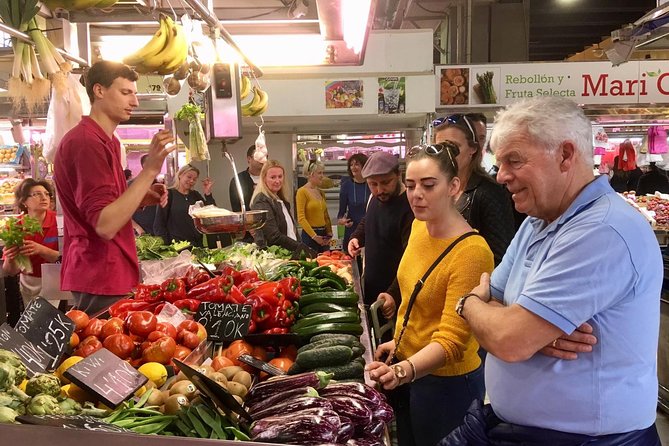
- Ruzafa market first: you buy the fresh produce used in your vegetarian/vegan paella
- Sangria workshop + tapas come right after a short walk to the kitchen
- Step-by-step guidance: the chef walks you through the process, then you sit down to taste together
- Sunday markets don’t run: there’s no Ruzafa market visit on Sundays (so you’ll want to choose your date accordingly)
Where it starts: Parroquia de San Valero and the short walk to cooking
Your experience begins at Parroquia de San Valero (Carrer del Pare Perera, 6, L’Eixample, 46006 Valencia). The start time is 11:00 am, and the tour ends back at the same meeting point.
Expect a very practical flow. You meet the group, head to the Mercado de Ruzafa, then later you walk about 8 minutes to the kitchen for the cooking stage. That short walk matters because it keeps the day moving; you’re not burning time on transfers, and you still get a market-and-kitchen rhythm.
If you’re the type who likes to get your bearings fast in a new city, this format is perfect. You’re in the neighborhood first, then you move to a kitchen right after you’ve shopped—so the food context stays fresh in your mind.
You can also read our reviews of more tours and experiences in Valencia.
Ruzafa Market: buying the produce that makes paella feel real
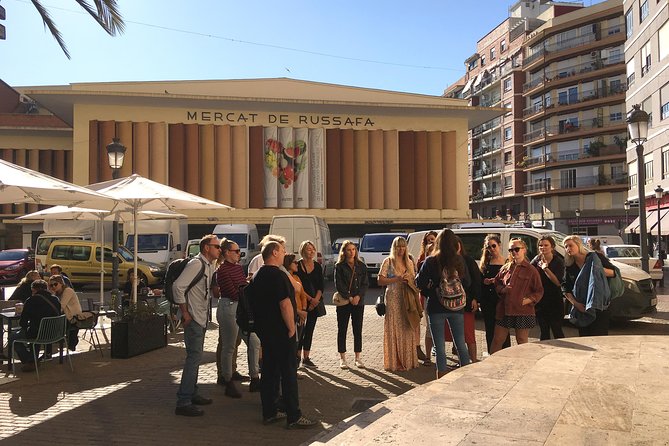
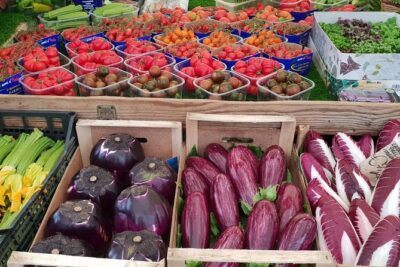
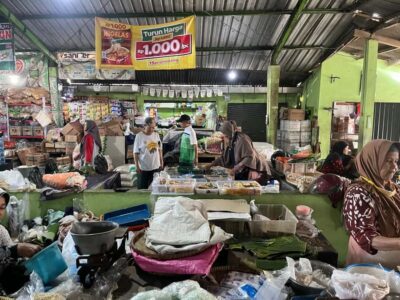
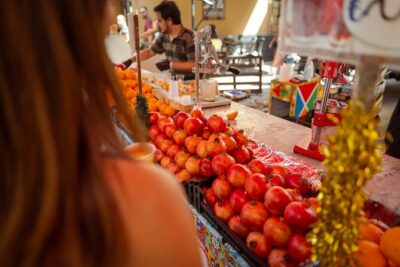
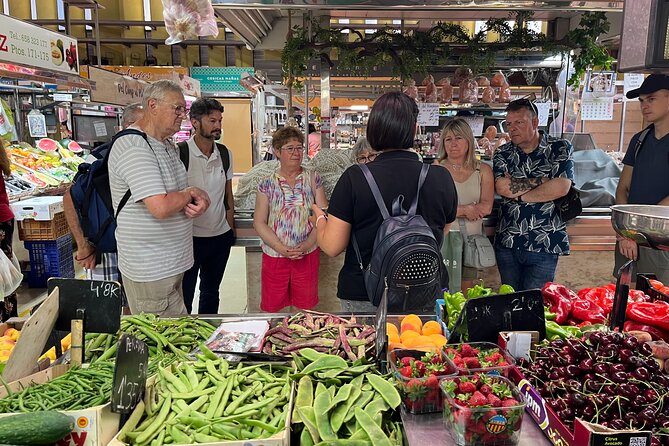
The Mercado de Ruzafa stop is the part that turns paella from a recipe into a local food story. Together, you’ll shop for the fresh products needed to cook a great paella. While you’re buying, your guide also shares the origin of paella and Valencian customs and culture.
That matters because Valencia’s food identity isn’t only about what’s on the plate—it’s about how people treat meals as social events. Market shopping is a quick way to connect the dish to place, instead of learning paella as something you’ve only seen on menus.
Two practical points to keep in mind:
- The market visit isn’t available on Sundays because it’s closed on that day.
- You’ll want to come hungry. This is a market stop, not a snack stop—plus you’re about to get tapas and drinks shortly afterward.
Tapas and sangria workshop: the social warm-up before you cook
After the market, you’ll walk to the kitchen and find the chef waiting for you. Before the paella process begins, you get a sangria workshop plus tapas, with sangria, beer, water, and other drinks included as part of the experience.
This is a smart design choice. You’re not thrown straight into cooking with no context. You arrive, taste, drink, and then shift gears into the main event—vegetable paella—while the group is already relaxed and chatting.
On the food side, the tapas set gives you a taste of the classic Spanish side of Valencia:
- Patatas bravas with sojanesa
- Serrano ham
- Manchego cheese
- Steamed mussels
- Olives
Even if you’re in the vegetarian paella half of the menu, these starters help you understand the broader Spanish table—salty, shareable, and meant to keep conversations going.
Vegetable paella cooking class: step-by-step, hands-on, small group
The paella portion is where you’ll feel the benefit of the group size. The experience is designed with a maximum of 18 participants for the cooking workshop (overall group can be up to 20). That small number is why you can actually get involved rather than watching from the sidelines.
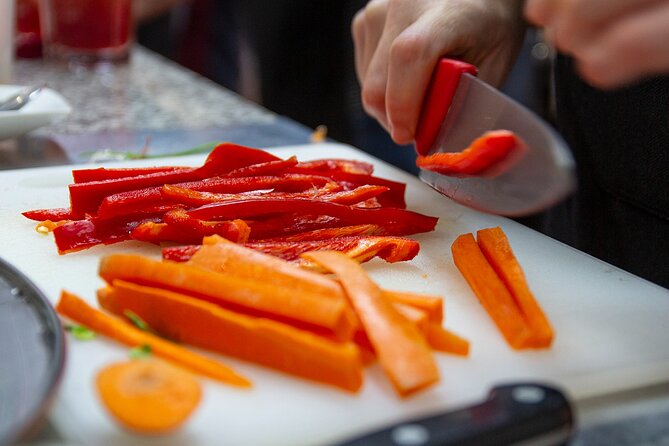
You’ll work as a team to make vegetarian/vegan paella, with the chef explaining step by step how to prepare it. Then, once it’s finished, you all sit down together to eat.
This is the kind of class that helps you leave with confidence. In a lot of cooking classes, you see steps; here, you’re doing steps. Several highlights from past participants point to the same theme: everyone getting a turn and feeling included in the process.
Also, the hosts seem to be a big part of the experience. Names that show up again and again in feedback include Guillermo and Cristina, plus Anna and Jordie, and Marie and Jordie. That’s not just trivia—it’s a sign the instruction style is typically warm, energetic, and clear in English.
What you’ll likely notice in the kitchen
You’re going to learn paella as a technique-driven dish, not just a list of ingredients. Feedback mentions paella history and cooking technique, and the way the session is structured supports that: market shopping builds your ingredient understanding, then the chef’s sequence ties it into method.
What you actually eat: a full Valencian spread, not just the main dish
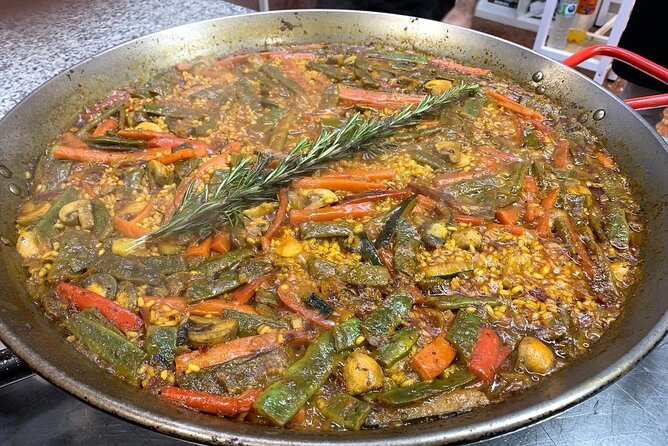
This isn’t a “small tasting” class. It’s a full meal built around paella, with tapas and a sweet finish.
Main meal
Your main course is vegan paella plus a Valencian tomato salad. That tomato salad is a key detail: it gives you the bright, acidic balance that paella often needs, especially with plant-based versions that can taste richer without that lift.
Included tapas and starters
Before the paella, you’ll have tapas and drinks. The list above is part of the included menu, so you’re not hunting for add-ons to make the class feel complete.
Dessert and sweet drinks
After paella, you’ll round out the meal with:
- Seasonal fruit
- Valencian cake
- Sweet wine
- Coffee
- Plus mistela is included (a typical sweet drink in Valencia)
This is a practical “end-to-end” menu. It keeps you seated and satisfied through the end of the experience, which matters when your day in Valencia is otherwise packed with walking.
Sangria, wine, and mistela: why the drinks section feels like part of the food lesson
The drinks aren’t random extras. The way this experience pairs tapas + sangria workshop + wine makes the whole session feel like a Valencian evening meal scaled to a few hours.
You’ll get sangria and beer during the workshop segment, plus wines with the meal and a sweet finish with mistela and sweet wine. In other words: it’s not just “something to sip.” It’s tied to the meal pacing—especially the shift from lively starters to the slower sit-down tasting.
If you drink alcohol, you’ll likely enjoy the flow because it stays social without turning into a distraction from the cooking. If you don’t, there’s still water and soft drinks included, so you’re not forced into alcohol.
Price and value: what $78.44 is really paying for
At $78.44 per person, you’re paying for more than paella instruction. You’re paying for:
- a guided market visit (fresh ingredient shopping plus cultural context)
- included tapas and multiple drinks
- a kitchen setup where you cook and then eat what you make
- ingredients and equipment, so you’re not bringing your own supplies
- a dessert + coffee finish with Valencian sweet drinks
Classes that only teach you recipes tend to feel light on food and atmosphere. This one aims to be a real Valencian meal experience with cooking in the middle. The small-group size helps too—more time with the chef and more chance to participate.
And the fact it’s booked about a month in advance on average suggests it’s a popular, reliable option when you want something structured but still local.
Timing, group size, and who it suits best
This experience runs about 3 hours 30 minutes. That’s a sweet spot. Long enough to shop, cook, and eat without feeling rushed, but short enough that you can still plan other Valencia sights later.
It’s also built for mixed groups. Feedback repeatedly mentions families and teens enjoying the hands-on participation, and that inclusion tends to come from the way the hosts invite everyone into the process. If you’re traveling with different eating preferences, vegetarian paella keeps things clear without requiring separate meals.
Best matches
- You want a vegetarian/vegan-friendly paella experience that still feels authentically Valencian
- You like cooking classes that include a market stop, not just a kitchen
- You enjoy group energy and don’t mind sharing prep space with strangers (it’s part of the fun)
When you might rethink
- If you’re extremely sensitive to English-only explanations and your group needs heavy translation, consider that the class is offered in English and you may need to plan for extra support.
Should you book this vegetarian paella and Ruzafa market experience?
If you want one Valencia food activity that’s equal parts shopping, cooking, and eating, I’d book it. The market-to-kitchen flow makes the lesson stick, and the meal format means you leave satisfied, not just “educated.”
Book this especially if you’re traveling as a couple, family, or small group and you want hands-on participation in a small group with tapas, sangria workshop drinks, and a sweet dessert finish. The Sunday caveat is the only real date-related wrinkle to watch—pick a day when the market stop is available.
If you’re the type who thinks paella is a once-a-trip dish, this class is also a confidence boost. You’ll learn the method behind it, not only the taste. And in Valencia, that’s a great souvenir.
FAQ
How long is the vegetable paella cooking class experience?
It lasts about 3 hours 30 minutes.
What time does the tour start, and where do we meet?
It starts at 11:00 am. You meet at Parroquia de San Valero, Carrer del Pare Perera, 6, L’Eixample, 46006 València, Valencia, Spain. It ends back at the same meeting point.
Is the market visit included, and is it always available?
Yes, the experience includes a visit to Mercado de Ruzafa. However, the market visit does not happen on Sundays because it is closed.
What language is the class offered in?
The experience is offered in English.
What’s included in the meal?
You’ll have tapas, a tomato salad, vegetarian/vegan paella, dessert (including Valencian cake and seasonal fruit), coffee, and sweet drinks such as mistela and sweet wine.
How big are the groups?
The overall group size can be up to 20, and the cooking workshop is designed for a maximum of 18 participants.
What if I need to cancel?
You can cancel for a full refund up to 24 hours before the experience starts. If you cancel less than 24 hours before, the amount paid is not refunded.