REVIEW · MUMBAI
Mumbai Morning Market Tour of Flowers, Fish, and More
Book on Viator →Operated by Cityscape Mumbai Tours · Bookable on Viator
In This Review
- Early mornings in Mumbai hit different
- Key highlights before you go
- Entering Mumbai’s morning markets: why this 3-hour window matters
- Price and logistics: what $20.72 buys you
- Sassoon Dock fish market: salt air, wet footing, and the real morning rush
- Dhobi Ghat: the open-air laundry that runs like a factory
- Dadar fruit and vegetable market: the daily rhythm behind the produce
- Flower Market Dadar: color, fragrance, and practical tips for your senses
- Getting between stops: taxi or train without the stress
- What to bring and how to act in the market crowd
- Who should book this Mumbai morning market tour
- Should you book it? My take
- FAQ
- How long is the Mumbai morning market tour?
- Where does the tour start and end?
- Is pickup available?
- Do I pay admission for the markets?
- Will there be food or drinks during the tour?
- Do you take public transport during the tour?
- Is this tour private?
- What if I need to cancel?
- What should I wear for the fish market?
Early mornings in Mumbai hit different
Some cities wake up slow. Mumbai’s markets don’t. In just about 3 hours, you get a guided route through Sassoon Dock’s fish market, Dhobi Ghat laundry, and the Dadar flower and produce markets—the kind of morning activity that starts fast and starts closing early.
I love that the tour focuses on how people buy and work, not monument photos. I also love the practical flow: you see big smells and big color, then you get a small chai break and help navigating the crowds. One possible drawback: the fish stop can be smelly and wet, so wear shoes you won’t mind getting ruined.
Key highlights before you go
- Sassoon Dock fish market gives you the real early-morning market feel, with boats and fresh unloading
- Dhobi Ghat shows laundry at scale, with workers washing over 2,000 clothes daily
- Dadar fruit and vegetable + flower markets means you get both daily food shopping and daily floral trade
- A small chai break keeps you energized during the busiest parts of the morning
- Private tour format means it’s only your group, so you can ask questions and move at a sensible pace
You can also read our reviews of more tours and experiences in Mumbai.



Entering Mumbai’s morning markets: why this 3-hour window matters

This is the kind of tour that works because you start before the city fully turns on. By the time most people are ready for breakfast plans, many of these market areas are already tightening up and packing away.
You’re also getting something most first-time visitors miss: a view of Mumbai’s daily supply chain. Fish, produce, and flowers aren’t just scenery here. They’re jobs, routines, and routes that keep the city fed and supplied every single day. That’s why the timing feels important. You’re not watching a performance. You’re watching work happen.
And because this is a private tour (only your group), you’re not being pushed along like a herd. You can pause, ask questions, and take photos when the light is still good.
Price and logistics: what $20.72 buys you
At $20.72 per person, this tour is priced like a “guide + route + access” deal rather than a big ticket attraction. And that makes sense, because the stops themselves are free (admission ticket free at the listed market points).
The value is in:
- Someone arranging a logical morning route across markets that are easier to connect with local guidance
- A guide who can talk you through what you’re seeing while you’re standing right in it
- A small chai break, so you’re not starting the day on an empty tank
Logistics are also built around real Mumbai movement. The tour includes taking a local taxi or train to Dhobi Ghat, which saves you from piecing together transit while the morning rush is already underway. And you’re near public transportation to begin with, which helps if you’re arranging your own start.
Sassoon Dock fish market: salt air, wet footing, and the real morning rush
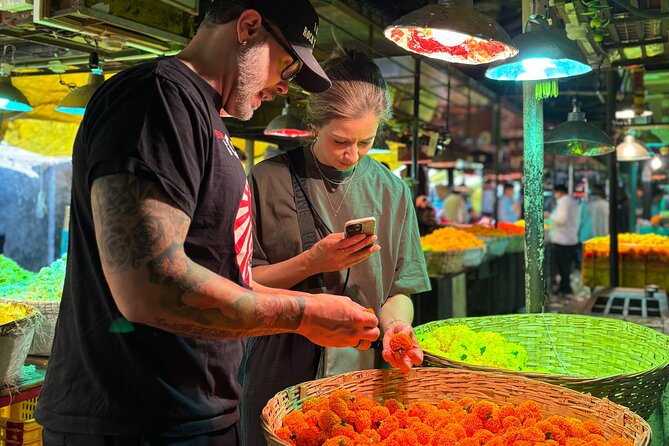
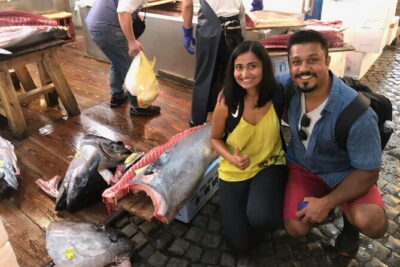
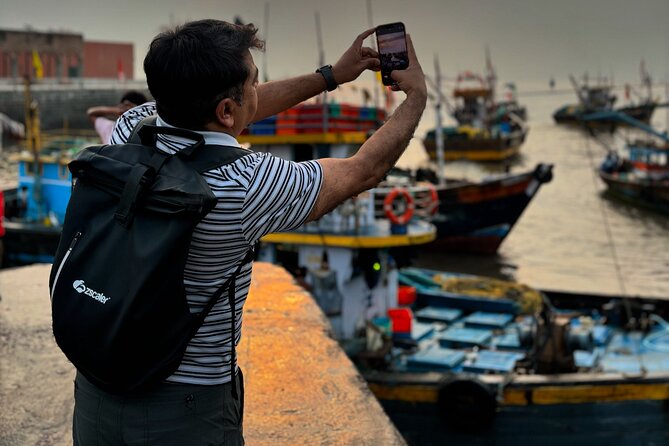
Your first major stop is Sassoon Dock, where fishermen unload early catches and the market activity gets loud fast. This is one of the best places on a short tour for understanding Mumbai’s appetite for fresh food—because you’re not seeing fish as a display. You’re seeing fish as the day’s work in motion.
What I’d focus on here:
- Color and texture: boats, piles of fish, and crates changing hands quickly
- How sellers talk and move: speed matters in a market that turns over constantly
- The smell factor: it’s part of the experience, but it can catch you off guard
From a practical point of view, follow this advice: don’t wear your best shoes. The fish area can be smelly and wet, and even careful steps won’t make the environment any drier. If you want the tour to feel fun instead of stressful, plan for that.
Photography is also easier early on. One review noted great photo opportunities and lighter traffic conditions—this tour’s timing helps you catch the markets before everything gets swallowed by the day.
Dhobi Ghat: the open-air laundry that runs like a factory
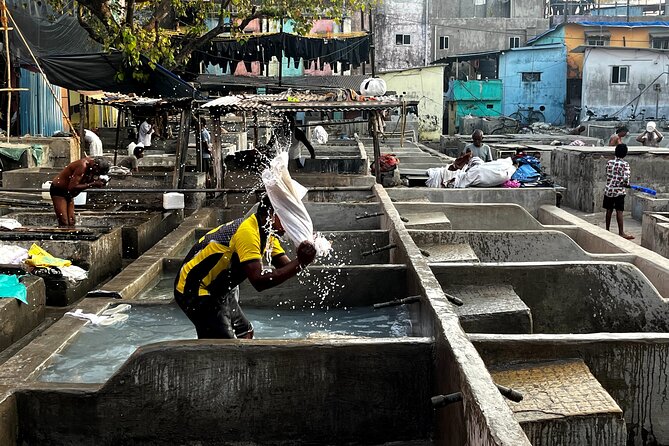
Next you head to Dhobi Ghat, the famous open-air laundry area. This is where the experience gets especially mind-shifting: you’re looking at an operation at large scale, not a small side street.
The standout detail here is the sheer volume: workers clean over 2,000 clothes daily, including laundry for hotels, hospitals, and private homes. That means you’re not only watching people work—you’re watching how services keep the city running.
You’ll typically have about 30 minutes at this stop. In that time, you can do two things well:
- Watch how clothes move through the washing and drying rhythms
- Look at the work methods and tools (you’ll likely notice repeat motion patterns that make the system efficient)
This is also where a guide can make the time feel richer. In past tours, different guides have helped visitors connect what they’re seeing with how Mumbai functions day to day. Names you might meet include Jawwad (Jay), Abhishek (Abhi), Sharon, or Ayan—and people consistently appreciated how clearly they explained what was happening around them.



Dadar fruit and vegetable market: the daily rhythm behind the produce
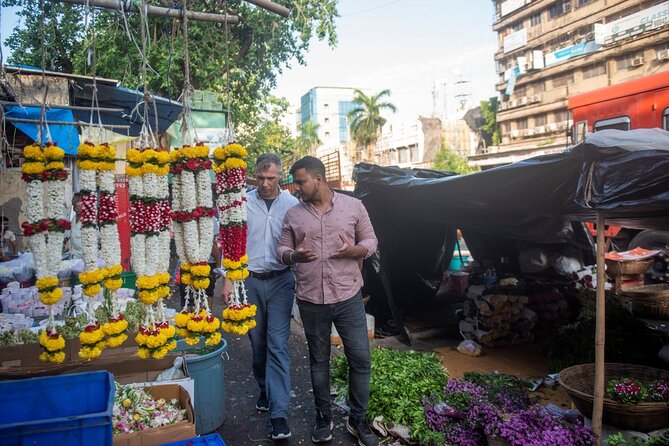
After Dhobi Ghat, you’ll switch gears to food supply at human scale: Dadar Fruit and Vegetable Market. This is a strong stop for anyone who likes food but also likes understanding where it comes from.
You’ll spend about 45 minutes here, and that’s usually enough time to:
- See how different produce is stacked and organized
- Notice what’s in season and what looks like it’s selling steadily
- Catch conversations between buyers and sellers (even if you don’t understand every word)
What makes this stop valuable on a morning tour is the “freshness signal.” You’re seeing produce while it’s still actively being traded, not after the market has quieted. It helps you connect taste and freshness with the work behind it.
Also, markets like this teach you a kind of street-reading skill. You start to understand how people navigate crowded areas quickly—where to stand, when to step aside, and how to keep moving without blocking anyone.
Flower Market Dadar: color, fragrance, and practical tips for your senses
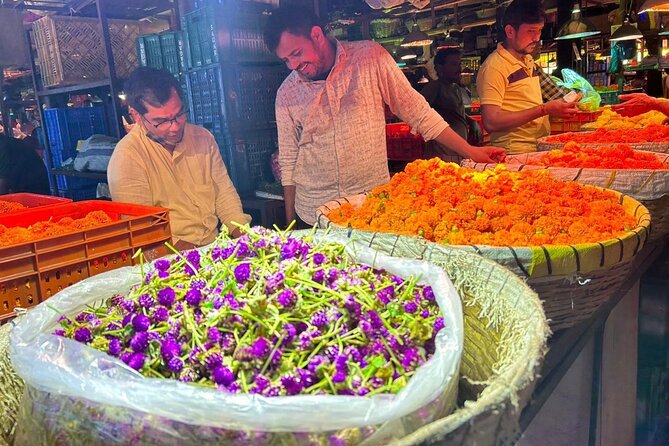
Finally, you end at Flower Market Dadar for another 45 minutes. This is the contrast to the fish and laundry stops. Where the earlier parts can feel intense—smell, water, motion—flowers bring color and a different kind of sensory experience.
You’ll see vendors selling fresh flowers, and the energy here is different from produce. It’s more about arrangement, selection, and quick sales for everyday use and ceremonial needs.
If you’re into photos, the timing matters. One comment mentioned avoiding normal traffic and getting great early light for photos. Even if you don’t consider yourself a photographer, early morning gives you better chances for clear shots without the harsh midday glare.
Just remember: markets are crowded. Build in patience, keep your phone secure, and let your guide handle crossings and tight spots.
Getting between stops: taxi or train without the stress
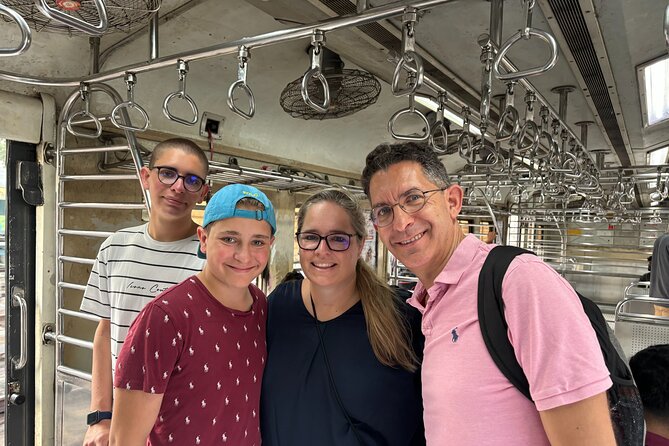
A big piece of why this tour works for a short stay is that you’re not stuck reinventing local transit.
The route includes taking a local taxi or train to Dhobi Ghat. That’s a sweet spot for first-timers: you get the city movement without having to figure out the logistics on the fly while the morning gets busy.
And at the end of the tour, your guide can help you book a taxi, which matters because you’ll be in an area where hailing a ride can be more complicated than it looks from a smartphone map.
What to bring and how to act in the market crowd
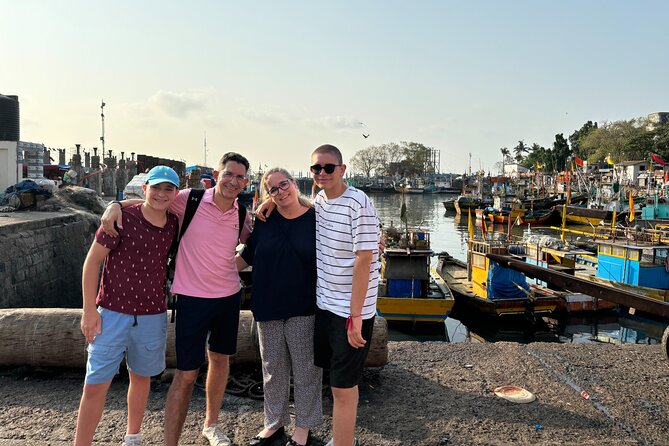
You’ll get the most from this tour if you dress and behave for a working market.
Bring:
- Shoes you don’t mind getting wet (Sassoon Dock is the key reason)
- A small bag you can keep close in crowded areas
- An attitude of patience. These places don’t slow down for visitors
Act like:
- Walk with your group and your guide’s pace
- Step aside when someone is carrying goods through a tight lane
- Ask questions. The guide experiences tied to this tour often score high for being friendly and helpful, with people like Jawwad (Jay) praised for arriving early, showing visitors what they couldn’t find on their own, and staying patient in the crowd.
One more practical thought: this is a morning tour. Plan your day around it. If you treat it like a flexible extra, you’ll feel rushed. If you treat it like the main event, you’ll enjoy the rhythm.
Who should book this Mumbai morning market tour
This tour is a strong fit if:
- You want something more local than classic sightseeing
- You like food culture—fish markets, produce markets, and flower trade
- You enjoy getting an early start when the city is at its most real
- You prefer a guided route that helps you avoid wasting time figuring things out
It might be less ideal if:
- You hate strong smells (the fish market is genuinely smelly)
- You need super quiet, low-crowd experiences
- You don’t handle wet conditions well
If you’re traveling solo or as a couple, the private-group format is a plus. If you’re with family, it can still work as long as everyone is comfortable with crowded market walking and the sensory side of fish and laundry.
Should you book it? My take
I think you should book this tour if you want a morning in Mumbai that feels useful—like you learned something about how the city actually runs. The price is reasonable for what you get: free admission markets, a guided route across multiple districts, and that small chai break that keeps you going.
The top reason to go is timing. Starting early means you see the action while it’s still happening. The top reason to be cautious is practical: Sassoon Dock can be wet and smelly, so shoe choice really matters.
If you’re the type who enjoys people-watching with purpose—trade, work, and daily routines—this is a great use of a few hours in Mumbai.
FAQ
How long is the Mumbai morning market tour?
It runs about 3 hours total (approximately), including time at each market stop.
Where does the tour start and end?
The start point is listed as PizzaExpress, Dhanraj Mahal, Chhatrapati Shivaji Maharaj Marg, Apollo Bandar, Colaba, Mumbai, Maharashtra 400001. The tour ends at Flower Market Dadar (Dadar West, Dadar, Mumbai).
Is pickup available?
Yes. Pickup is offered.
Do I pay admission for the markets?
No. The listed stops show admission ticket free.
Will there be food or drinks during the tour?
You get a small chai (tea) break during the experience.
Do you take public transport during the tour?
The route includes using a local taxi or train to reach Dhobi Ghat, and the meeting area is noted as being near public transportation.
Is this tour private?
Yes. It’s listed as a private tour/activity, with only your group participating.
What if I need to cancel?
You can cancel for a full refund if you cancel at least 24 hours before the experience’s start time.
What should I wear for the fish market?
Wear shoes you don’t mind getting wet. The fish market area is described as smelly and wet, and that’s the stop most likely to ruin uncomfortable footwear.