REVIEW · MYKONOS
Mykonos Market Tour & Brunch Cooking Class with a Local, Angelina
Book on Viator →Operated by Traveling Spoon · Bookable on Viator
A small cooking class beats the Mykonos crowd. This private market-to-brunch experience with Angelina mixes hands-on cooking, local ingredients, and a sit-down meal you actually help prepare. I like that you get the kind of lesson that’s built around real brunch dishes (not just a demo), and I also like the optional market stop to shop for what ends up on your table.
One practical thing to weigh: there’s no hotel pickup, and you’ll walk about 5–10 minutes from the Sea Bus or taxi drop-off to Angelina’s home. If that short walk is a deal-breaker, you’ll want to plan your arrival carefully.
In This Review
- Key Highlights You’ll Feel Immediately
- Why Angelina’s Mykonos Brunch Class Feels Local
- Meeting Angelina at Mykonos Old Port (and the Short Walk to Her Home)
- The Welcome Meze Table: A Brunch Lesson Starts With Tasting
- Optional Farmers’ Market Stop: Shop Like You Mean It
- Tomatoes for Kagiana Eggs and Mykonian Mostra
- Feta Parcels in Filo: The Wrap-and-Bake Skill
- Spanakopitas and Filo Choices: Flexible Fillings That Match the Season
- The Brunch Spread You’ll Actually Eat: Tzatziki, Melitzanosalata, and More
- Greek Coffee and Spoon Sweet: The Finish That Makes It Feel Like Brunch
- Alcohol Included: Wine or Local Beer With Your Brunch
- Price and Value: Is $326 for 3 Hours Worth It?
- Who This Cooking Class Is Perfect For (and Who Might Skip It)
- Should You Book Angelina’s Mykonos Market & Brunch Cooking Class?
- FAQ
- How long is the Mykonos Market Tour and Brunch Cooking Class?
- Where do we meet, and where does it end?
- Is hotel pickup included?
- Is this a private tour?
- What’s included in terms of food and drinks?
- Do I have the option to include a market tour?
Key Highlights You’ll Feel Immediately
- A truly private kitchen lesson with Angelina, sized for your group only
- Brunch recipes built on tomatoes and filo, so you cook, assemble, and bake
- A meal that lands on your table right away, including yogurt, fresh fruit, and honey
- Mykonian flavor details like kagiana eggs, mostra (with kopanisti), and spanakopitas
- Optional farmers’ market add-on if you choose the market + cooking option
Why Angelina’s Mykonos Brunch Class Feels Local
Mykonos can be all white windmills and sprinting crowds. This experience slows the pace down fast. You’re not learning Greek cooking in a restaurant kitchen with a timer on your head. You’re in a local home setting, where the food and the rhythm feel tied to how Greeks actually eat in the morning and early afternoon.
The biggest win is the structure: you start with a meze spread, then you cook in small, clear steps, and you finish by sharing the brunch you made with Angelina. That makes it easier to remember what you did and why it works. You’ll also hear recommendations along the way—useful if you plan to shop for ingredients after class.
This is also a good fit if you want something more than a cooking show. You’ll handle fillings, wrap filo, prep sauces, and assemble pies. Even if you’re a nervous cook, the lesson is designed so you can keep moving from one station to the next without losing the thread.
Meeting Angelina at Mykonos Old Port (and the Short Walk to Her Home)
The experience starts at 10:00 am at Vegera Restaurant Cafe Bar Mykonos, Old Port. From there, you walk about 5–10 minutes to Angelina’s home. It’s not far, but it is a walk only—no pickup is included—so plan your route and comfortable shoes.
You’ll return to the same meeting point when it ends, so you’re not stuck figuring out a second transfer. It’s also nice that you’re near public transportation. In other words, even though you’re heading into a local neighborhood, the logistics aren’t chaotic.
Because it’s a private activity, you don’t have to squeeze into a schedule with strangers. That matters for hands-on cooking. You’ll get time to ask questions, and you can go at the pace of your group.
The Welcome Meze Table: A Brunch Lesson Starts With Tasting
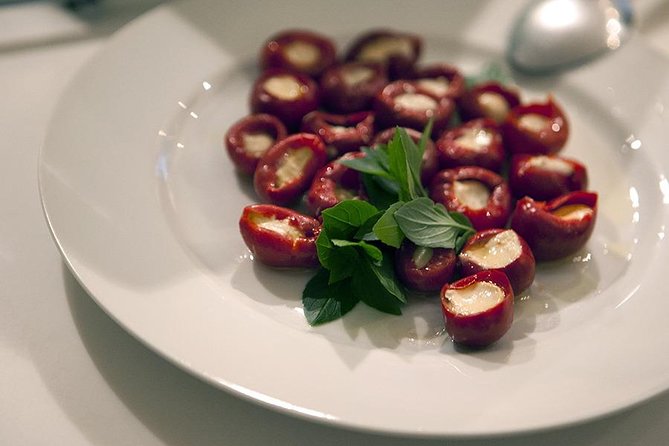
Right when you arrive, Angelina sets out a small meze table. Expect local olives and cheese, including Myconian gruyere. There’s cold herbal tea or fresh fruit juice, plus slices of louza (a local cured meat), and an exquisite Myconian sausage. It’s a smart start because you’re tasting the ingredients before you cook them.
This is also where you get your bearings. You’ll see what’s considered normal on a Greek brunch table—salty bites, cheeses, cured meats—and how these foods pair with the tomato-based dishes you’ll make later. If you’ve only associated Greek food with dinner classics, this meze start is a quick education.
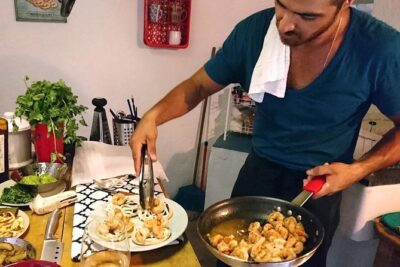
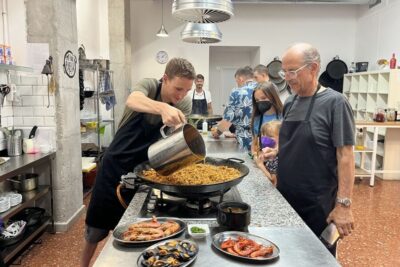
Then you move into the kitchen lesson. The style here is hands-on, not just watching someone cook. You’ll learn how Angelina builds flavor through simple steps and ingredient choices. That’s the kind of knowledge you can use again when you’re back home.
Optional Farmers’ Market Stop: Shop Like You Mean It
If you book the market + cooking option, you’ll also have an ingredient market walk. This part is valuable because you’ll learn what to buy and why, not just what the dish is called.
You’re likely to focus on the things that show up repeatedly in Greek cooking: ripe tomatoes for sauces, herbs, and whatever fillings are seasonal for the pies and parcels. Even if you don’t plan to cook later at home, you’ll come away knowing how local cooks think about freshness and timing.
Practical tip: If you have room in your luggage, ask what items are easy to carry. The lesson centers on ingredients you’ll end up using during class, so don’t stress about overbuying. Instead, think of this as training your eyes for what looks right.
Tomatoes for Kagiana Eggs and Mykonian Mostra
Tomatoes are the backbone of what you’ll cook. Angelina teaches you how to prepare the tomato base that supports two key dishes: kagiana eggs and mostra.
Kagiana eggs are a classic brunch-style egg dish built around tomato sauce. You learn how to prep the tomatoes so the sauce tastes bright, not dull, and so the eggs don’t just disappear into the pan. This part matters because tomato-based breakfasts can go wrong if the sauce is under-seasoned or cooked too long. In this class, the focus stays on building a base you can taste and adjust.
Then there’s mostra, the Myconian equivalent of a bruschetta-style bite. Instead of just toast plus toppings, you’ll work with kopanisti cheese, olive oil, capers, and tomato. The logic is deliciously simple: salty cheese and capers need tomato acidity and good oil to balance them out. You’ll learn the assembly rhythm so it feels natural, not fussy.
If you love food that tastes like it has a purpose—each ingredient doing a job—this is the moment you’ll appreciate most.
Feta Parcels in Filo: The Wrap-and-Bake Skill
After the tomato base, the next skill jump is feta parcels. These are cheese wrapped in filo that bakes in the oven. You’ll work on wrapping and shaping, which is where many home cooks struggle. Here, it’s broken into practical steps so you can focus on technique rather than panic.
You’ll also learn how the class uses flavor pairing beyond plain feta. The sample meal includes feta parcels with thyme honey and pink peppercorns. That combination shows up in a lot of Greek-style cooking where sweetness and heat are used carefully, not randomly. The goal is balance: creamy cheese, herbal sweetness, and a little pepper lift.
This is a great section for first-timers. You don’t need fancy tools. You need patience with filo and a steady hand. Once you get the first parcel assembled, the rest come together faster.
Spanakopitas and Filo Choices: Flexible Fillings That Match the Season
Spanakopitas are next, and Angelina keeps it practical by offering different filling options. Depending on what’s available and in season, you might make spanakopitas with:
- feta and spinach (if spinach is in season) plus herbs
- anthotyro with fine herbs
- or a minced sausage filling with green olives
The point isn’t just variety for fun. It’s that you’ll understand how a filo pastry becomes a flexible delivery system for whatever the market and household cooking have on hand. That’s why the class feels more authentic than a fixed menu cooking demo.
As you wrap, you’ll see how thickness, folding, and seal quality affect baking. You don’t just learn what to make—you learn what to watch for. And once those pies start baking, you get a chance to reset and taste the meze again, which is always a smart move.
If you want one takeaway skill from Mykonos, it’s this: how to turn a handful of ingredients into something shareable, crisp, and comforting.
The Brunch Spread You’ll Actually Eat: Tzatziki, Melitzanosalata, and More
Brunch in this class isn’t a side salad. It’s a full spread, and it’s built to balance cool and warm, savory and sweet.
You’ll likely see a starter like tzatziki or melitzanosalata (roasted eggplant salad). Both are typical for Greek meals, but in a brunch context they work especially well because they cool the palate after savory baked pies and warm sauces.
For the main course, the sample menu includes a choice:
- Chicken cooked in fresh tomato sauce with orzo (giouvetsi)
- or shrimp saganaki cooked in fresh tomato sauce with feta
Both dishes follow the same theme: tomato-forward flavor with dairy and herbs to smooth and deepen it. Orzo (in giouvetsi) also means you’re eating comfort food that feels like a complete meal, not just a plate of protein.
Then you finish with dessert: baklava. It’s a classic closer for good reason. After the savory cooking and tasting, the honey and nuts bring the whole brunch to a satisfying end.
The meal you make is also served with yogurt, fresh fruits, and honey. That sweet-and-salty rhythm is very Greek brunch: not a sugar bomb, but a pleasant finishing note that keeps things from feeling heavy.
Greek Coffee and Spoon Sweet: The Finish That Makes It Feel Like Brunch
Brunch in Greece often ends the way it should: with something small and intentional. After the baked items and main dishes are done, Angelina concludes the meal with Greek coffee and a spoon sweet.
This part is more than a dessert substitute. It’s part of the culture of finishing a meal slowly. You’re not just packing up and leaving. You’re sharing food and conversation in a home setting, then wrapping up with that last little burst of sweetness before you go back to the port.
If you’re the kind of person who likes to understand food culture, this closing moment helps you see brunch not as a trend, but as a real routine.
Alcohol Included: Wine or Local Beer With Your Brunch
Alcohol is included, and you can expect a glass of local wine. The experience description also notes that Angelina may include a bottle of local beer, Mikonu. Either way, the alcohol is paired with the meal in a casual way, not like a tasting event.
For me, the value of including a drink is simple: it keeps the meal relaxed and social. You’re cooking, then eating together. The wine or beer helps bridge those two moments.
Price and Value: Is $326 for 3 Hours Worth It?
At $326 per person for about 3 hours, this isn’t a budget activity. But for a private class, it can be good value—especially if you like learning technique you can repeat.
Here’s what you’re paying for that many group classes don’t fully deliver:
- a private host (Angelina) for your group only
- real hands-on steps: prepping tomato base, wrapping filo, assembling pies
- a meal built around what you cook, plus extra brunch sides (yogurt, fruit, honey)
- alcohol included
- optional ingredient shopping if you choose the market + cooking option
If you’d rather buy a ticket to something performative, you’ll feel the price. But if you want to come away with skills and understand how flavors work together, this is the kind of experience that earns its cost.
Also, Mykonos can be expensive across the board. Cooking at a local home with a private host helps you spend in a way that doesn’t feel like you’re paying for the view alone.
Who This Cooking Class Is Perfect For (and Who Might Skip It)
You’ll love this if you:
- want a local, home-kitchen style experience instead of a crowded tour
- enjoy hands-on cooking and want to learn specific recipes like kagiana eggs and mostra
- like food that mixes familiar basics (tomatoes, herbs, cheese) with Mykonian twists
- travel as a couple, family, or small group that wants private attention
It can be less ideal if:
- you need hotel pickup or step-free logistics without any walking
- you only want a quick taste and don’t care about wrapping or cooking steps
One of the clearest strengths from previous participants is how accommodating the lesson can feel for families. The class also tends to deliver a thorough, hands-on style, so it works when you want the kids involved or you want to make sure your group isn’t just standing around.
Should You Book Angelina’s Mykonos Market & Brunch Cooking Class?
If your ideal Mykonos day includes market ingredients, cooking in a real home kitchen, and eating what you made, then yes, book it. This is the kind of experience that feels practical, memorable, and personal.
I’d especially recommend it if you’re tired of sprinting from one viewpoint to the next. Here, the payoff is food skills and a brunch you can share, not just photos.
FAQ
How long is the Mykonos Market Tour and Brunch Cooking Class?
The class runs for about 3 hours.
Where do we meet, and where does it end?
You meet at Vegera Restaurant Cafe Bar Mykonos at Old Port. The activity ends back at the same meeting point.
Is hotel pickup included?
No. Hotel pickup and drop-off are not included, and you’ll walk about 5–10 minutes from your taxi or Sea Bus drop-off to Angelina’s home.
Is this a private tour?
Yes. It’s private, and only your group participates.
What’s included in terms of food and drinks?
You’ll get a meze start at Angelina’s home, then hands-on cooking, and you’ll share the brunch you prepare. Greek coffee and a spoon sweet are included, and alcoholic beverages are included as well.
Do I have the option to include a market tour?
Yes. If you choose the market + cooking tour grade option, the experience includes a market tour.