REVIEW · PHUKET
Phuket Thai Cooking Class with Market Tour Option
Book on Viator →Operated by Phuket Thai Cooking Class by Chef VJ · Bookable on Viator
Curry paste from scratch beats any souvenir. This Phuket cooking class is built around doing the work yourself: you’ll shop (optional), learn Thai ingredients, then cook classic dishes in small-group comfort with take-home food and recipes after.
You can even choose a class time that fits your day, and it starts with convenient pickup.
I really like the focus on hands-on cooking and the fact that you make curry paste the traditional way with a mortar and pestle. I also love that you get hotel pickup and drop-off from select areas, so you spend less time figuring out logistics and more time cooking.
One thing to consider: the class runs with energetic momentum. If you want slow, clinical instruction for advanced technique, you might find the pace a touch theatrical (still fun, just not a quiet classroom).
In This Review
- Key highlights you’ll feel right away
- The real draw: making curry paste the Thai way
- Market time at Mae Somchit (and what to look for)
- Inside the kitchen: clean stations, clear English, and practical substitutions
- What you’ll cook: classic Thai dishes with take-home payoff
- Tempo and teaching style: fun, interactive, and fast enough to matter
- Pickup, timing, and how the group size changes the experience
- Price and value: why $65+ can make sense in Phuket
- Who should book this class (and who might want a different style)
- Should you book the Phuket Thai Cooking Class with Market Option?
- FAQ
- FAQ
- How long is the Phuket Thai cooking class?
- Does the class include pickup and drop-off?
- Is there an option to visit a market?
- What’s included in the class?
- Do you make curry paste from scratch?
- How large are the groups?
Key highlights you’ll feel right away
- Curry paste from scratch using mortar and pestle, with no MSG and no ready-made shortcuts
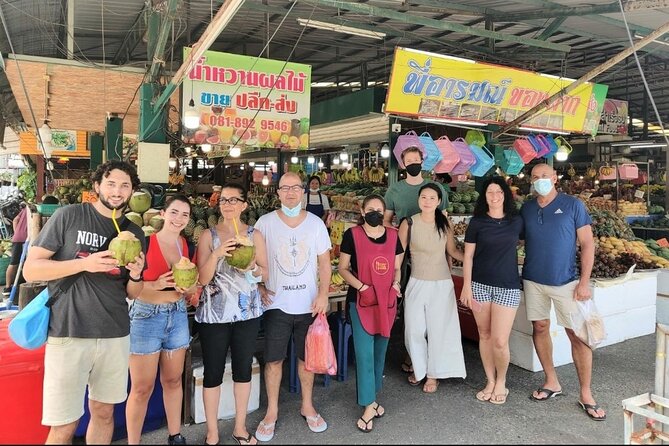
- Optional market visit to Mae Somchit Kata Fresh Market plus fruit tasting
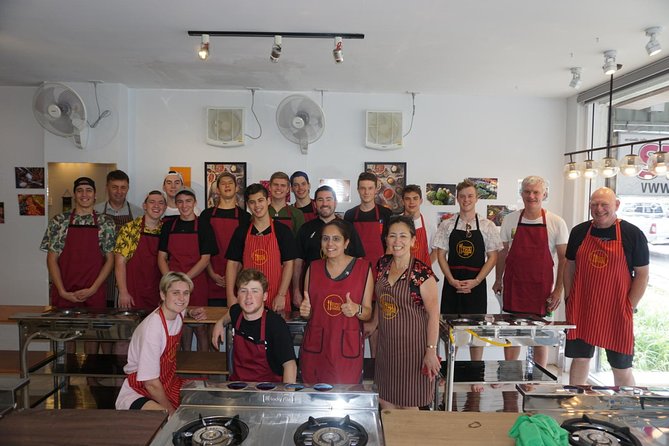
- Small-group size (up to 20) with your own cooking station
- Substitution coaching so you can recreate flavors at home when ingredients are missing
- Free extras all session: unlimited bottled water plus tea and ground coffee
The real draw: making curry paste the Thai way
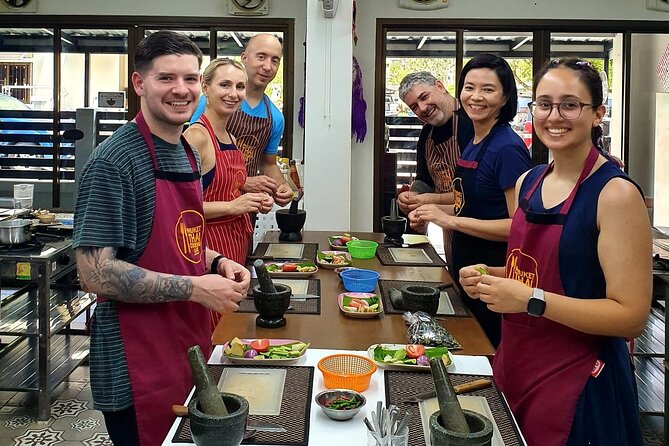
If you’ve ever tried to cook Thai at home, you already know the secret isn’t just ingredients. It’s balance: salty, sweet, sour, and heat pulling together like a good team. Here, the class makes that easier by starting with one of the most important building blocks—your own curry paste.
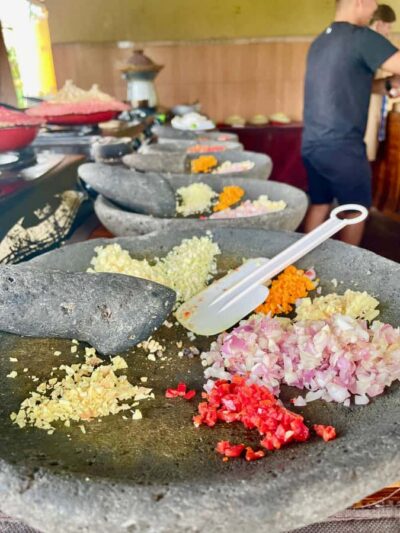
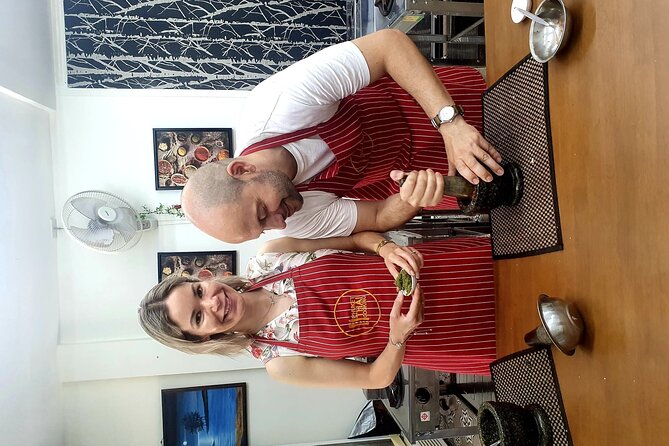
Instead of buying paste, you grind from scratch with a mortar and pestle. That matters because it teaches you what the paste is actually doing. When you crush and mix aromatics until they turn fragrant and cohesive, you start to understand why Thai curry tastes the way it does, not just how it’s assembled.
Also, the class is explicit about avoiding MSG and avoiding ready-made paste. That’s a big deal if you’re trying to cook with cleaner control over flavor. It’s not about being strict for the sake of it—it’s about making sure the taste comes from the ingredients you’re actually learning.
You can also read our reviews of more tours and experiences in Phuket.

Market time at Mae Somchit (and what to look for)
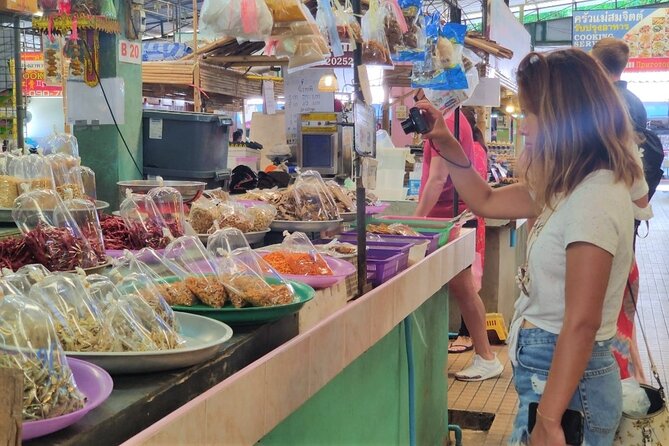
When you choose the market option, you’ll start with a visit to Mae Somchit Kata Fresh Market. This isn’t a long, wandering tour. It’s guided, with the chef or instructor pointing out ingredients as you go so you don’t just take pictures—you build a mental map.
What you’ll likely spot (and later cook with) includes:
- Thai herbs and leafy aromatics
- Spices and flavor bases
- Fresh produce used for texture and balance
- Sweet tropical fruit that shifts the whole flavor story
Then comes fruit tasting. Depending on what’s in season and what the market has that day, fruit can be everything from familiar mango to more challenging choices. One helpful mindset: treat the fruit like a flavor lesson, not a dessert side quest. Many Thai flavors tie back to that sweet-sour balance you’ll keep tasting in your cooked dishes.
If you skip the market visit, you’re not left out. The class runs the same ingredient teaching, just with a market brought to you inside the kitchen. That means you still get explanations of what each ingredient does, and how to swap when you can’t find the real thing.
Inside the kitchen: clean stations, clear English, and practical substitutions
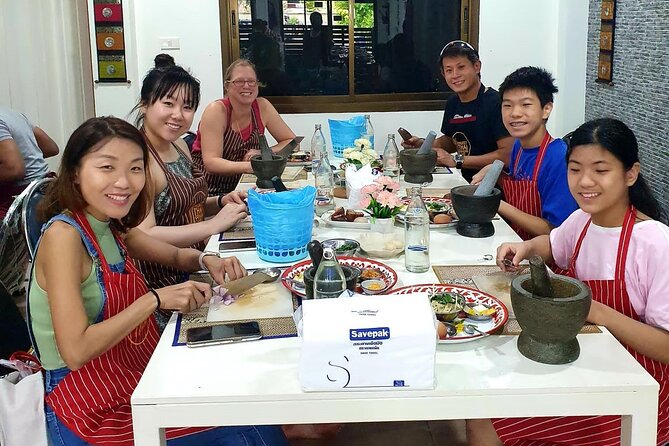
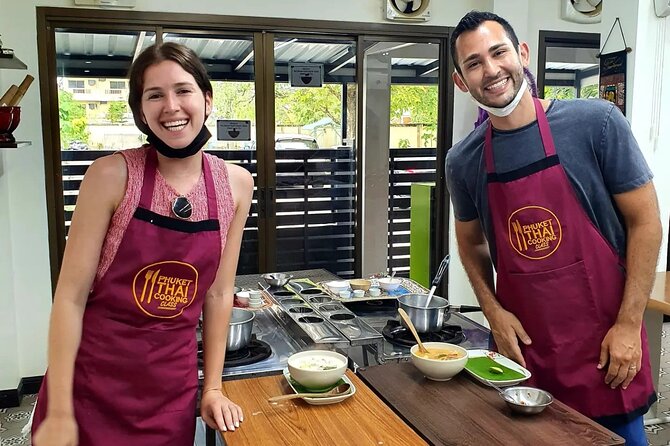
The cooking happens in a working kitchen with everyone having their own station. That setup is underrated. You’re not waiting around for a shared cutting board or standing behind someone else’s mess. You chop, you stir, you cook—at your own pace.
English instruction is also a strong point. The chefs are described as very fluent in English, and the teaching style is step-by-step. That matters for two reasons:
1) you follow the technique while you’re doing it, not just watching
2) you can ask questions as you hit confusion
One of the most practical parts is the talk about ingredient replacements. Thai cooking relies on flavors that can be hard to find outside Thailand. Instead of hoping you’ll find the exact herb or paste, you get guidance on what to use at home. For me, that’s the difference between a fun day and an actually usable skill.
The class also includes light refreshments, plus free unlimited bottled water throughout. You’ll also get unlimited tea and ground coffee during the session, which helps if you’re chugging water between hot dishes and vigorous chopping.
What you’ll cook: classic Thai dishes with take-home payoff
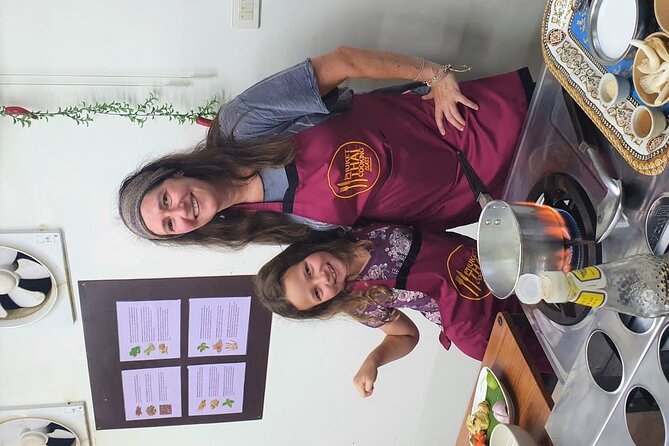
You’ll cook fresh and eat what you make right there. Then you can take home the rest if you can’t finish. That’s not just generosity—it’s practical. Thai cooking often makes more food than one person can eat comfortably, especially when you’re trying a few dishes at once.
The menu can adapt to your preferences and dietary needs. That flexibility is good, because Thai cuisine depends on specific ingredients and balance, not just random spice. When the kitchen can adjust, you’re more likely to get a satisfying result rather than a watered-down compromise.
Based on the kinds of dishes repeatedly described, expect a mix of flavor styles. You’ll often see classic categories like:
- Tom Yum-style sour-spicy soup (people describe it as Yum Yum/Tom Yum)
- Spicy stir-fry dishes with bold flavors (one example is Petite Petite)
- Curry (often with choices like red or green; one described highlight is rich Panang curry)
- Thai dessert sticky rice, commonly mango sticky rice or pineapple sticky rice
A key detail: you cook everything yourself—chopping, cooking, and assembling. That hands-on approach is exactly what helps you later when you try to replicate the meal at home, because you’ll remember the texture cues and taste goals.
And yes, the “fresh and hot” factor is real. Thai food is at its best right after cooking. You’ll feel that in the first bite—herb freshness, sauce brightness, and heat that hasn’t sat around.
Tempo and teaching style: fun, interactive, and fast enough to matter
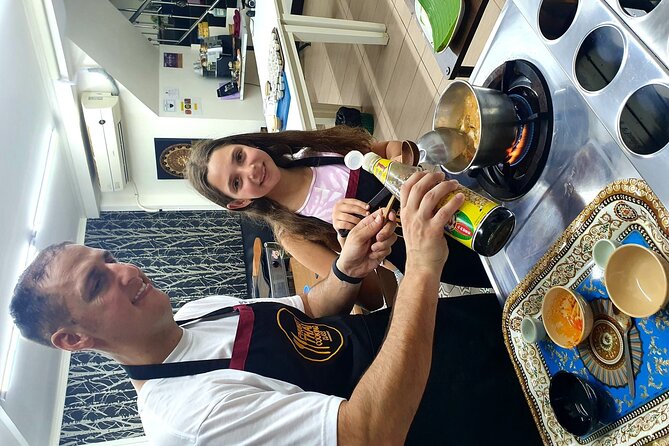
Let’s talk about the vibe. The class is small-group, with multiple assistants helping keep you on track. People highlight how organized and energetic the chefs are—one set of instructors named Chef Gigi and assistant Nid is specifically mentioned for high energy and smooth flow.
The downside? One participant noted it can feel a bit shouty and race-like at times—more hype than quiet craft. I don’t think that ruins the experience, but it’s worth knowing if you prefer calm, slow instruction.
If you’re the type who loves speed—chop, grind, cook, taste—this likely feels like a great match. You’re not spending an hour watching; you’re busy with your hands, and the class moves so you can actually finish and eat while everything is at peak.
Also, keep expectations realistic about food volume. When you cook multiple dishes in a 3-hour window, you end up with a lot. Pace yourself, take sips of water, and share bites if you’re with friends.
Pickup, timing, and how the group size changes the experience
The class runs about 3 hours. You get a choice of two class times, which helps if you’re trying to plan around beach time or dinner plans.
Pickup is included from select Phuket areas, and the transfer is described as free round-trip for multiple zones (including Kata, Kata Noi, Karon, Rawai, Patong, and Nai Harn). For some areas like Kamala beach and Surin beach, the meeting point is listed as Hard Rock Cafe Patong, with a note about minimum numbers.
What this means for you: you can treat the cooking class as a scheduled activity rather than a mini logistics project. And the meeting point/end back at the meeting point makes it easier for you to plan the rest of your day.
The group size cap is 20 travelers max. That’s big enough for a lively feel, but small enough that your instructor can keep an eye on your chopping and stir-fry. With curry paste and multiple dishes, it helps that you’re not one of 50 people in a food-factory line.
You’ll also get a mobile ticket, and the start location is on Patak Rd in Karon. The activity is noted as near public transportation, which can be useful if you’re not staying in one of the pickup zones.
Price and value: why $65+ can make sense in Phuket
At about $65.22 per person for roughly 3 hours, this isn’t the cheapest thing on Phuket—but it’s also not just a show. You’re paying for:
- guided instruction in English
- ingredients and light refreshments
- cooking tools and your own station
- the curry paste work (labor plus technique)
- your ability to taste what you make right away
- recipes emailed after the class
The market option adds another layer: you get guided ingredient context plus fruit tasting. If you love the idea of buying the right ingredients later, that market guidance can pay off fast, especially for Thai pantry items that don’t translate well from generic supermarket labels.
The best value comes if you’re going to actually cook again at home. The substitution tips and emailed recipes turn this into something you can use—otherwise it’s just a full stomach and good memories.
Who should book this class (and who might want a different style)
This experience is a great fit if you:
- want a hands-on cooking day instead of a passive tour
- love Thai food and want to understand why flavors work
- plan to cook at home and need ingredient replacements
- want optional market shopping and fruit tasting
It may be less perfect if you:
- prefer quiet, slow, technical instruction for serious advanced cooking
- hate energetic group energy and fast momentum
It’s also worth considering whether you want the market option. If you enjoy ingredient hunting and learning by seeing, the Mae Somchit stop plus fruit tasting tends to add extra satisfaction. If you’re short on time or don’t want market crowds, the market-brought-to-you format still covers the key ingredient education.
Should you book the Phuket Thai Cooking Class with Market Option?
Yes, if your goal is to leave with skills, not just photos. The big wins are the curry paste-from-scratch method, the emphasis on substitutions for at-home cooking, and the fact that you cook everything yourself in a structured, small-group setting.
Book the market option if you want to connect ingredients to real places—Mae Somchit gives you that context, and fruit tasting adds a fun reality check on Thai sweetness and flavor balance. Skip it if you’d rather get straight into the kitchen without the extra step.
If you’re sensitive to pace, go in knowing the session is lively and interactive. Bring a curious attitude and a willingness to taste as you go. That’s when it turns into one of those days that sticks with you long after you’re back home.
FAQ
FAQ
How long is the Phuket Thai cooking class?
The class lasts about 3 hours.
Does the class include pickup and drop-off?
Yes. Free round-trip transfer is offered from select Phuket areas, and the end time returns you back to the meeting point.
Is there an option to visit a market?
Yes. There are classes that include a market visit to Mae Somchit Kata Fresh Market and a fruit tasting option.
What’s included in the class?
You’ll get ingredients, light refreshments, unlimited bottled water, and unlimited tea and ground coffee. You’ll also receive recipes after the class.
Do you make curry paste from scratch?
Yes. You make curry paste using mortar and pestle, and it’s stated as no MSG and no ready-made curry paste.
How large are the groups?
The class has a maximum size of 20 travelers.