REVIEW · TOKYO
Tokyo Tsukiji Fish Market Food and Culture Walking Tour
Book on Viator →Operated by Japan Wonder Travel · Bookable on Viator
Tsukiji smells like breakfast and legends. This 3-hour food walk through the old fish-market lanes is built around what you can taste and what you can learn, starting at Tsukiji Hongan-ji Temple with a guide who knows how top chefs shop.
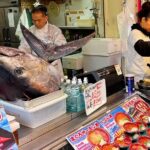
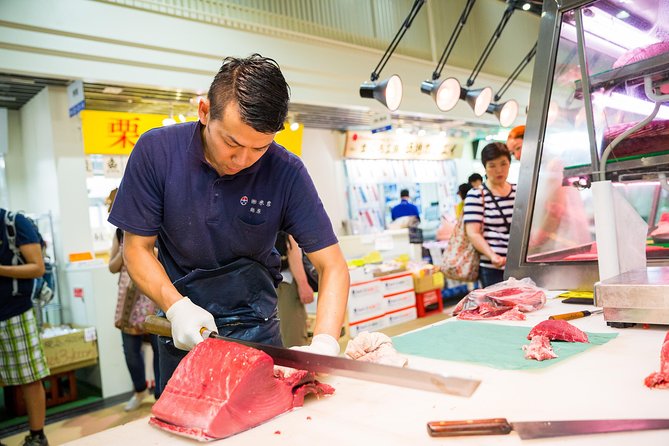
I love the food tastings—from dashi soup and green tea to things like fish cakes, seasonal fruit, and wagyu beef skewers. I also love the way the guide turns the chaos into a story, pointing out details like uni stacked in boxes and how vendors handle big fish like bluefin tuna.
One drawback: the tour is very strict about food needs. If you can’t eat fish, or you need vegetarian/halal/gluten-free help or allergy-specific accommodations, this one won’t fit.
In This Review
- Key Points Before You Go
- Meet at Tsukiji Hongan-ji Temple and Don’t Miss the Exact Spot
- Tsukiji Jogai Market: The Outer Stalls, Dashi, and Tea Samples
- How a Guide Turns a Crowded Market Into a Route You Can Follow
- The Old Tsukiji Market Stop and the Culture Stops People Forget
- Tsukiji Uogashi: The Mini Wholesale Market, When It’s Open
- The Final Wrap-Up: Sushi or a Seafood Bowl That Actually Feeds You
- What You’ll Usually Eat: Wagyu Beef Skewers, Fish Cakes, Fruit, and More
- Diet and Drink Rules: Fish Is Required, and Some Requests Don’t Apply
- Price and Value: Why $99.49 Can Be Fair for Tsukiji
- Who Should Book This Tour (and Who Should Skip It)
- My Booking Verdict: Should You Book This Tsukiji Food and Culture Walk?
- FAQ
- FAQ
- What should I wear for the Tsukiji fish market tour?
- Where is the meeting point?
- How long is the tour?
- Is lunch or snack included, and do I get sushi?
- Are drinks included, and is there an age requirement?
- Can vegetarians or people with allergy needs join?
- Is Tsukiji Uogashi open every day?
Key Points Before You Go
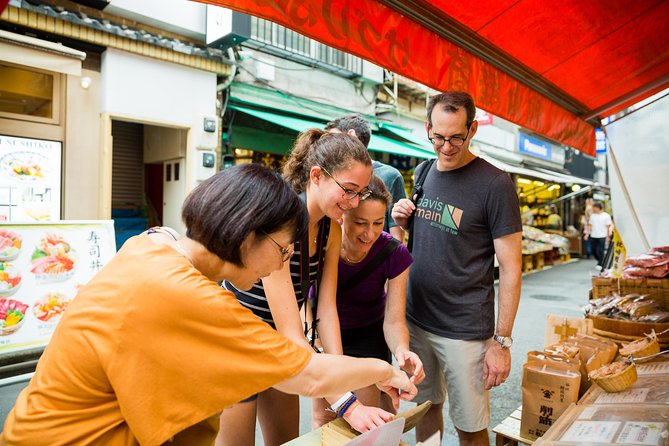
- Start at the main gate of Tsukiji Hongan-ji Temple and arrive early; the group leaves at the start time and won’t wait.
- Outer-market tastings are a big part of the value, including dashi soup, green tea, and multiple sample stops.
- You’ll see seafood at very different stages, from tanks and cutting to neatly boxed items like uni.
- The ending meal matters: you’ll wrap up with either sushi or a seafood bowl depending on the day.
- Small group size helps you move (maximum 20 travelers), and it makes browsing stops feel less stressful.
- Some stops are closed on certain days, especially Tsukiji Uogashi on Wednesdays, Sundays, and other market closures.
Meet at Tsukiji Hongan-ji Temple and Don’t Miss the Exact Spot
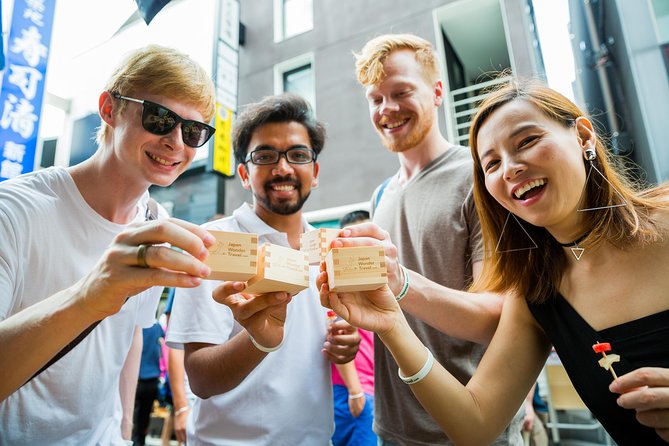
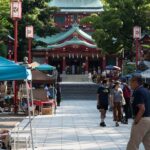
The meeting point is outside the gate of Tsukiji Hongan-ji Temple. The key detail is simple but important: you want the main gate, not the back side that Google Maps sometimes sends people toward.
Come early enough to find your guide and settle in. They leave at the start time sharp, and late arrivals don’t get extra time added to make up for it.
This tour uses a mobile ticket, so have it ready on your phone before you reach the area. Comfortable shoes are non-negotiable here, because you’ll be walking through crowded market streets for the full 3 hours.
You can also read our reviews of more tours and experiences in Tokyo.

Tsukiji Jogai Market: The Outer Stalls, Dashi, and Tea Samples
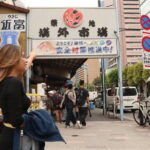
Your first leg goes into Tsukiji Jogai Market, where the focus is on the sights, sounds, and smells—plus history you can actually connect to food. You’ll get the bigger picture on why Tsukiji matters and why many chefs visit regularly for ingredient quality.
This part also sets you up to taste as you go. Along the way, you’ll sample typical snacks such as dashi soup and green tea, which is a nice way to reset your palate before you head deeper into the seafood world.
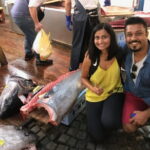
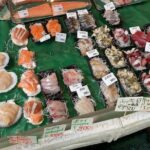
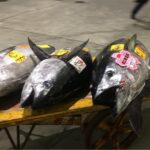
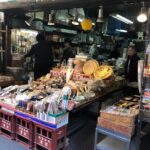
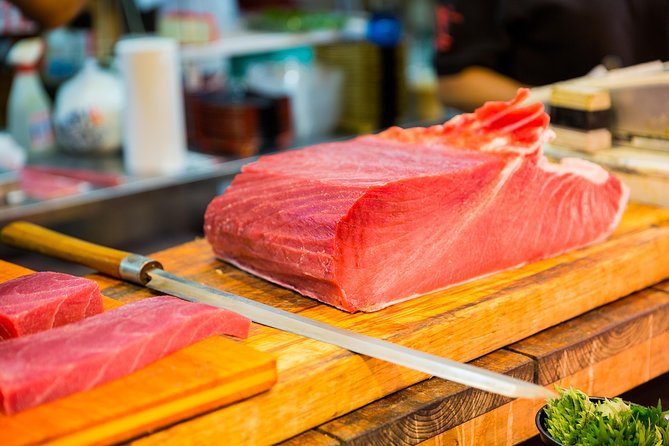
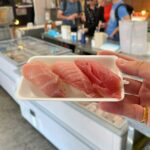
And yes, you’ll be surrounded by dramatic seafood displays. Depending on the day, you might see piles of sea urchin (uni) stacked in boxes, vendors working with big fish like bluefin tuna, and pufferfish floating in tanks.
How a Guide Turns a Crowded Market Into a Route You Can Follow
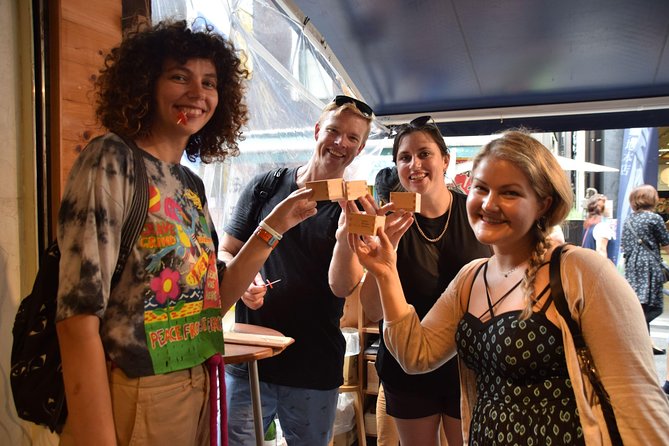
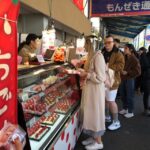
Tsukiji can feel overwhelming fast. The market has hundreds of vendors, narrow lanes, and constant motion—so having a guide who controls the route makes a huge difference.
I like that the tour is built around navigation, not just narration. Your guide keeps you moving through the right stalls at the right moments, and explains what you’re looking at in plain language, including how ingredient sourcing works for people cooking at a high level.
In particular, the strongest tours tend to be guided by people who connect food to daily market life. Guides like Kiyo, Naz, and Miky are praised for guiding people through the market and pointing out foods and stalls you’d likely miss on your own.
Small group size (up to 20) helps here. You’re not stuck behind a giant crowd, and if the group is moving smoothly, you can also browse briefly without losing the whole itinerary.
The Old Tsukiji Market Stop and the Culture Stops People Forget
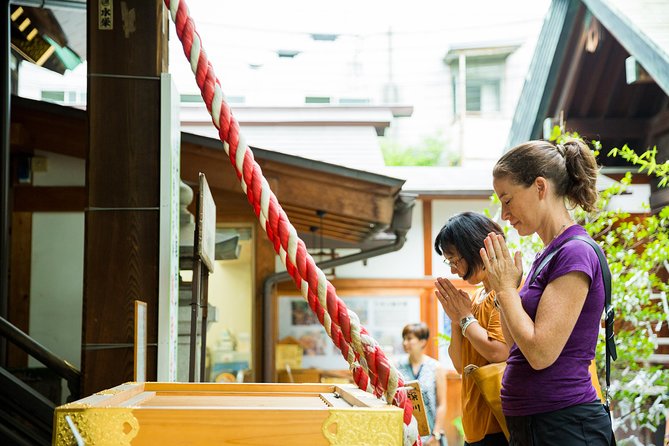
After the outer market, you’ll continue to the Old Tsukiji Market area. This stretch is where the tour adds context beyond food, including market culture and the kind of small sights you might skip if you’re just chasing the next snack.
On some days, you’ll also find opportunities to see shrines or temple-adjacent spots that connect Tsukiji to Tokyo’s older layers. It’s a nice contrast: the seafood energy continues, but the setting reminds you this isn’t just a food bazaar—it’s part of a much older city rhythm.
There’s also a practical bonus built into the tour. If you need kitchen tools, you’ll have a stop for shopping around that theme, so you can bring home more than just bites.
Tsukiji Uogashi: The Mini Wholesale Market, When It’s Open
You’ll pass by Tsukiji Uogashi, a mini wholesale market where you can see hundreds of kinds of fish. This is the part that makes the whole experience click for many people, because you get to see the variety up close rather than only at the counter-level.
One big heads-up: Tsukiji Uogashi isn’t always open. It’s closed on Wednesdays, Sundays, and other closed market days. When it’s closed, the flow changes, and some sample items may not be served.
On those closure days, shop closures also affect what’s available for certain tastings. The tour notes that Japanese omelette, fish cake, and fruits can’t be served on those days because the shops are closed.

The Final Wrap-Up: Sushi or a Seafood Bowl That Actually Feeds You

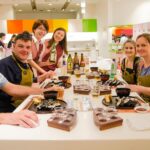
The tour ends with a serving of a fish bowl or sushi. The exact choice depends on the day and time, so you’re not guaranteed the same dish every departure.
What I like about ending with a meal is that it turns the whole walk into something you can remember with your mouth, not just photos. After hours of seafood sights, you’re ready to sit down, eat, and compare what you saw with what you taste.
Some departures also include extra presentation moments. In the guide-style feedback from past outings, people mention things like sushi cutting demonstrations and even hands-on moments where sea bass prep and making sushi come into the picture.
If you’re the kind of eater who likes to watch food being made, this stop is often the payoff.
What You’ll Usually Eat: Wagyu Beef Skewers, Fish Cakes, Fruit, and More
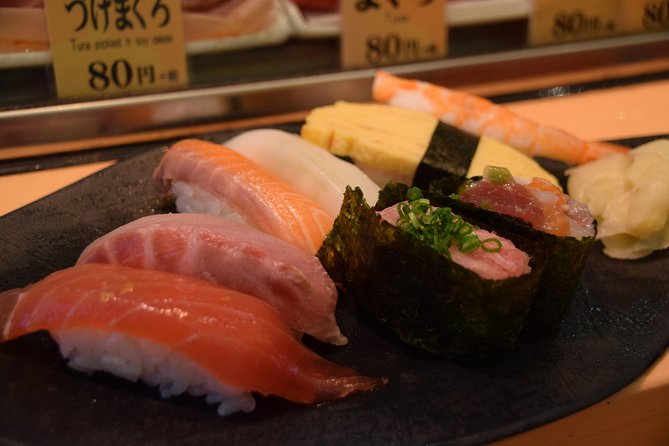
This is a sampling tour, so think in terms of multiple tastes that add up. Along the way, you may encounter items like wagyu beef skewers, sushi or a seafood bowl, fish cakes, seasonal fruit, and other market snacks.
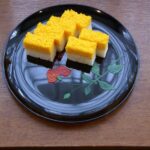
Some days include Japanese omelette and other prepared bites. Some days don’t, especially when market closures affect the stalls that provide those items.
A lot of the pleasure here comes from variety. You might go from savory broth samples like dashi to rich seafood and then to fruit, so you’re not stuck tasting the same flavor profile back to back.
If you’re a matcha fan, you may also run into matcha tea as part of the snack lineup, since guides commonly use drinks to break up heavy seafood tasting.
Diet and Drink Rules: Fish Is Required, and Some Requests Don’t Apply
This tour is not built for flexible diets. The tour does not accommodate vegetarian, halal, gluten-free requests, or allergy-related requests.
Also, if you can’t eat fish, you can’t join. Since the entire premise is seafood-focused shopping and tasting, they’re not able to swap it out.
Drinks have another filter: the minimum drinking age is 20. If you’re under 20, you still get an alternate drink so you can participate without being left out.
If you’re traveling with a picky eater, the simplest planning move is to confirm they can eat fish comfortably. Otherwise, you’ll end up frustrated at the check-in point rather than during the meal.
Price and Value: Why $99.49 Can Be Fair for Tsukiji
At about $99.49 per person for roughly 3 hours, you’re paying for three things at once: guided navigation, curated tastings, and access to the market rhythm without the trial-and-error.
Tsukiji isn’t just a place to eat. It’s also a place to understand how seafood quality gets judged at the source. A good guide helps you interpret what you’re seeing, which makes your time feel productive rather than random browsing.
Do you get full-feeling meals? Lunch and snack are included, and the tour ends with sushi or a seafood bowl, so you’re not only doing tiny bites. Still, the sampling style matters: if you expect an all-you-can-eat seafood feast, you may feel differently than someone who likes a careful tasting route.
In terms of value, this tour tends to work best when you’re a first-timer at Tsukiji or when you’ve been overwhelmed by the scale. It’s also a good match if you want the chef-style perspective—seeing what top chefs shop for and learning how that connects to the food you’re eating.
Who Should Book This Tour (and Who Should Skip It)
Book it if you want a guided path through Tsukiji and you’re excited to sample. This is ideal for food lovers who get nervous in crowded markets and for people who want both culture context and specific tastings.
It’s also a smart pick if you like watching food preparation and learning what makes ingredients special. Past guide feedback highlights strong communication and frequent “you wouldn’t find this alone” stall knowledge, which is exactly what you want in a place this big.
Skip it if any of these apply:
- You can’t eat fish.
- You need vegetarian/halal/gluten-free support.
- You have allergies and need allergen-specific accommodations.
- You’re looking for a slow, relaxed stroll with no emphasis on timing.
Also, plan around walking. You should have a moderate physical fitness level, and the route is mostly on your feet.
My Booking Verdict: Should You Book This Tsukiji Food and Culture Walk?
If your goal is to leave Tsukiji understanding more than just where to eat, I’d book this. The structure makes sense: temple start, outer-market tastings, specialty stops, and a real ending meal of sushi or a seafood bowl.
I’d especially recommend it if you’re new to Tsukiji and want to avoid the overwhelm of figuring out where to go. The guide-led route is the main reason it feels worth it at this price.
The biggest “don’t book” signal is diet needs. If you can eat fish and you’re comfortable with seafood tasting, you’ll likely have a fun, satisfying morning.
FAQ
FAQ
What should I wear for the Tsukiji fish market tour?
Wear comfortable walking shoes. This is mainly a walking experience, and the market area involves lots of walking.
Where is the meeting point?
Meet at the main gate of Tsukiji Hongan-ji Temple (the front side). The group leaves at the start time sharp, so be there on time.
How long is the tour?
The tour is about 3 hours.
Is lunch or snack included, and do I get sushi?
Lunch and snack are included. At the end, you wrap up with either sushi or a seafood bowl depending on the day and time.
Are drinks included, and is there an age requirement?
Minimum drinking age is 20. If you’re under 20, the tour offers another drink.
Can vegetarians or people with allergy needs join?
No. The tour does not accommodate vegetarian, halal, gluten-free requests, or allergy-related requests.
Is Tsukiji Uogashi open every day?
No. Tsukiji Uogashi is closed on Wednesdays, Sundays, and other closed market days.