REVIEW · TOKYO
Tokyo Tsukiji Fish Market Tour and Sushi Making Lesson
Book on Viator →Operated by ABC Cooking Travel · Bookable on Viator
Tsukiji can feel overwhelming, in a good way. This tour pairs a guided stroll through the Tsukiji Outer Fish Market with a hands-on sushi and tamagoyaki lesson at ABC Cooking Travel, capped by lunch you helped make. I especially like the small group size (max 6) and the English-speaking guidance that makes the seafood lessons make sense fast. One possible drawback: the cooking portion is shorter than a full-day class, so if you want lots of deep theory or extra recipes, you may feel a bit rushed.
You’ll start near the Tsukiji Hongan-ji Temple, take a quick look before heading into the market’s maze, and then move to a modern cooking school environment where the chaos turns into prep time. The overall pacing is built for eating while learning, not for standing around with clipboards.
At $99.49 per person for about 3 hours, it’s not a “cheap market snack” experience. But it is good value for what you get: English help, transportation between stops, apron use, water, and a sit-down lunch with drinks after you cook.
In This Review
- Key things I’d circle before you book
- Tsukiji Hongan-ji Temple: the calm start before the seafood surge
- Tsukiji Outer Fish Market with an English-speaking guide: how tasting becomes a lesson
- A practical tip before you go
- The move to ABC Cooking Travel: why the class feels different right after Tsukiji
- The washoku lesson: sushi roll and tamagoyaki that teach real technique
- What you’ll likely make (and why it’s a good skill set)
- One heads-up: this isn’t an all-day culinary degree
- Lunch and drinks: turning the lesson into a full meal
- Price at $99.49: what you’re really paying for
- Who should book this Tsukiji + sushi making combo (and who should skip it)
- Quick FAQ for planning your morning
- FAQ
- How long is the Tsukiji Fish Market Tour and Sushi Making Lesson?
- How much does it cost?
- Where do I meet, and where does it end?
- Is the guide English-speaking?
- How many people are in the group?
- What is included in the tour price?
- What do you cook in the class?
- What about tuna auction watching?
- What drinks do you get with lunch?
- Is there a minimum age requirement?
- Should you book it? (My honest take)
Key things I’d circle before you book
- Maximum 6 people means you actually get help, not just background noise.
- English-speaking guides (often praised by name, like Akiko, Shitomi, Lucy, Nobu, Miho, and Yoko) make the market readable.
- Hands-on washoku focuses on technique, including sushi roll and tamagoyaki (Japanese omelet).
- Tasting on the market route turns Tsukiji from a sight-only stop into an eating lesson.
- Lunch with wine or plum sake (or soft drinks) finishes the day the right way.
- If you’re expecting a deep, multi-hour cooking seminar, some reviews note it can feel basic.
Tsukiji Hongan-ji Temple: the calm start before the seafood surge
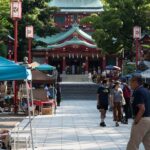
You meet just outside Tsukiji Hongan-ji Temple (3-chōme-15-1 Tsukiji). This first stop is brief—about 5 minutes—but it’s a smart warm-up. Before you hit fish, you get a moment of perspective: this area isn’t just about seafood commerce. It’s part of daily Tokyo life, with a living religious site right next to a food engine that can overwhelm your senses.
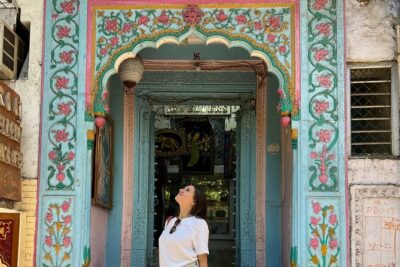
What you’ll notice right away is the architecture. The tour highlights how the outside design feels reminiscent of South Asian and Indian traditions, while the interior offers a different character. That contrast is useful because it frames the rest of the morning: Tsukiji is a place where cultures and styles mix, even when it looks purely “Tokyo seafood.”
You can also read our reviews of more tours and experiences in Tokyo.

Tsukiji Outer Fish Market with an English-speaking guide: how tasting becomes a lesson
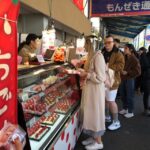
Your main walk is through the Tsukiji Outer Fish Market area, where you’ll browse vendor stalls and sample foods. The time on the market side is typically around 70 minutes, even though the schedule mentions about 1 hour at the fish market stop. Either way, you’re not meant to stroll aimlessly.
This is where the guide matters. A good guide does three jobs:
- Helps you decode what you’re seeing (ingredients and how they’re used).
- Points you toward bites that are easy to understand even if you don’t speak Japanese.
- Keeps the flow moving so you get both sights and tastings.
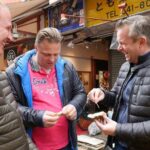
From the feedback tied to guides like Miho, Akiko, Shitomi, Lucy, Nobu, and Yoko, the pattern is consistent: the English support is strong, and the guides are patient about questions. That matters because Tsukiji isn’t organized like a museum. It’s a maze. Without help, you can end up focusing only on the most obvious eye-catchers.
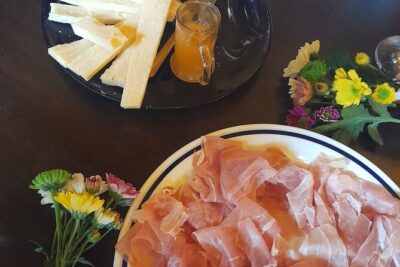
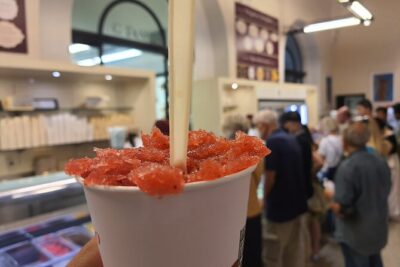
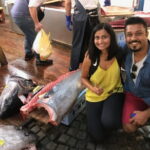
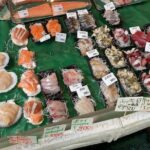
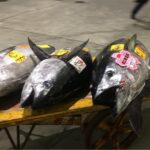
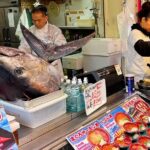
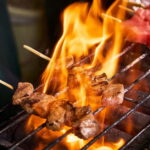
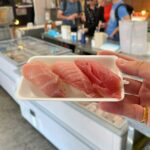
Even with a group, it’s still eye-catching. Expect to see seafood displayed in dramatic ways—giant tuna, sea urchin, octopus—plus the kind of dried and processed items you might not know how to order. In reviews tied to this exact experience, people called out tastes like dried scallops and other small seafood snacks, plus sweets like red bean mochi with strawberries. The point isn’t that every sample is your forever favorite. It’s that you start learning what Japanese ingredients taste like at their most basic form.
A practical tip before you go
Wear shoes you can stand in. The market walking portion is part browsing, part sampling, and part threading through crowds. You’ll be happiest if you treat it like a food-and-photo mission, not like a sit-down breakfast.
The move to ABC Cooking Travel: why the class feels different right after Tsukiji
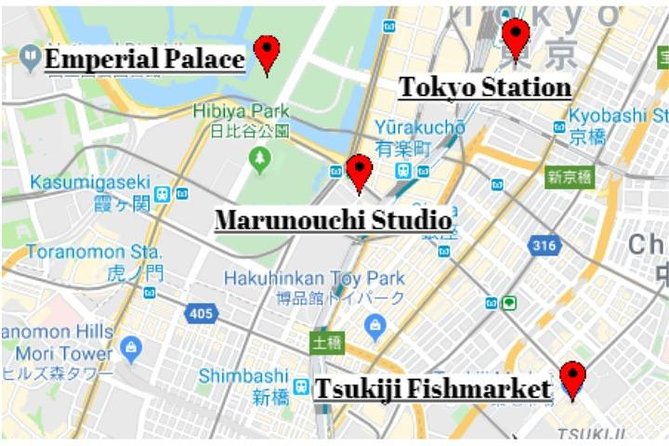
After the market, you head to ABC Cooking Travel for your lesson. Transportation between stops is included. And that’s not a minor detail. Tsukiji to the cooking studio area is a real change in vibe: you go from fish-market smells and stacked displays to a clean, structured kitchen environment where you can actually learn.
This change of setting is part of the value. It turns what you saw into what you can do. Once you’re in the studio, the guide has already done the “what it is” work. The cooking instructor takes over the “how it’s made” part.
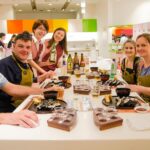
People repeatedly praise how professional the cooking school setup feels—organized, bright, and designed for classes. The studio environment is especially helpful if you’re new to Japanese home cooking, because you’re not trying to translate techniques from videos later. You’re doing it while someone guides your hands.
The washoku lesson: sushi roll and tamagoyaki that teach real technique
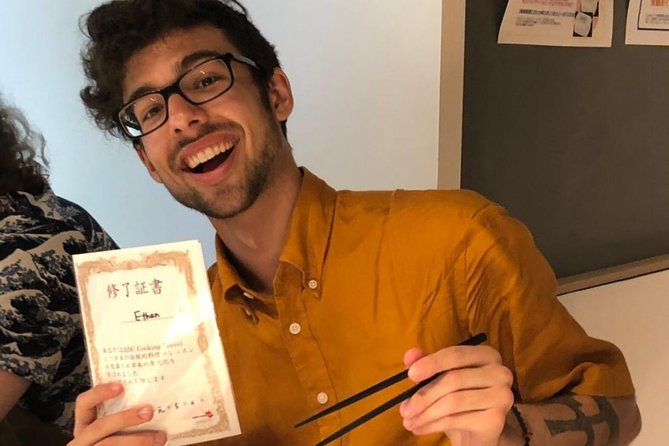
You’ll learn to prepare two washoku recipes, with washoku meaning traditional Japanese cooking focused on homemade methods. The class usually includes:
- A sushi roll
- tamagoyaki (Japanese-style omelet, often described as a rolled egg preparation)
- Side dishes that round out the meal
In reviews, instructors are described as patient and clear, with multiple names showing up: Miwako, Masayo, and Hiromi. Across those accounts, the common thread is instruction that breaks steps down rather than assuming you already know sushi terms.
What you’ll likely make (and why it’s a good skill set)
The sushi roll teaches the basics of rolling and assembling so the result actually holds together. It’s one thing to eat maki; it’s another to make it without the rice going everywhere.
The tamagoyaki lesson is a standout for many people. Several comments mention the excitement of making tamago at home and learning the rolled-egg method itself—not just being handed a plate. Even if you don’t become a full-time sushi chef, this is the kind of technique you can use for everyday Japanese-style breakfasts and lunch boxes.
You may also make components like stock and other parts of the meal, depending on the session and seasonal ingredient availability. ABC Cooking Travel notes that ingredients can differ from what you see in ads, and the contents can change with season and arrivals. The good news is that you still learn the same core cooking logic.
One heads-up: this isn’t an all-day culinary degree
A couple of reviews mention the class can feel basic or give limited context if you were hoping for deep market-to-sushi theory. So if you want a long lecture plus lots of extra dishes, treat this as a focused hands-on intro, not a masterclass marathon.
Lunch and drinks: turning the lesson into a full meal
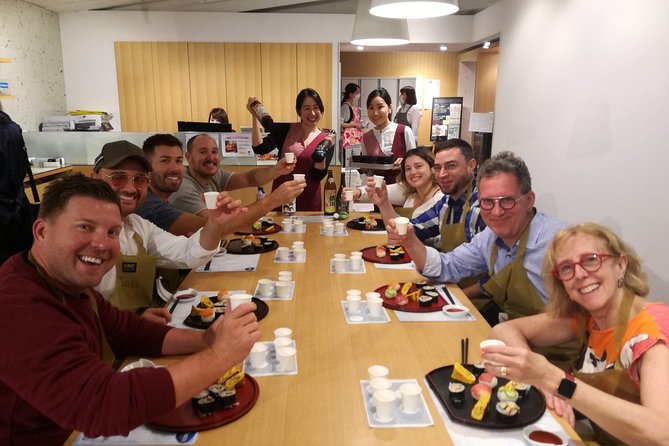
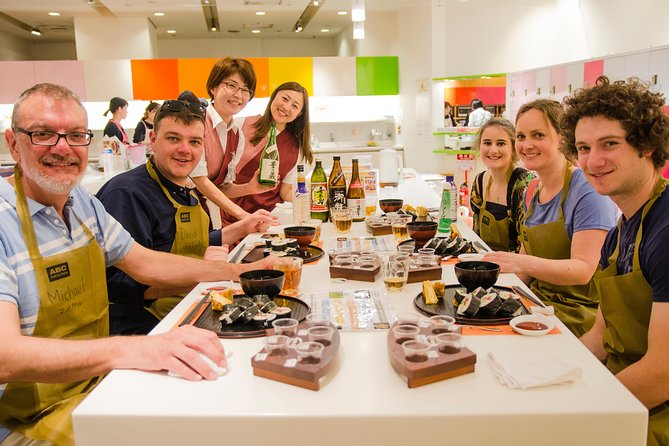
The end of the experience is built around eating what you made. After the cooking portion, you sit down for lunch and enjoy the meal you prepared.
You’ll also be offered a choice of drinks with lunch: wine, plum sake, or soft drinks. That’s a nice touch because it turns the day from “class + quick bite” into a proper meal experience.
In addition, you get drinking water at the studio, and you’ll wear an apron during cooking. Those small inclusions matter more than they sound, because they reduce the friction of showing up and figuring out what you need.
Price at $99.49: what you’re really paying for
Let’s talk value plainly. At $99.49 per person, you’re paying for:
- An English-speaking guide during the market portion
- Transport between the market and the studio
- A structured cooking class at a major cooking school
- Ingredients and tools for your lesson (apron, plus the food you cook)
- Lunch and drinks after cooking
- A small group format (max 6)
If your goal is simply to taste Tsukiji without extra structure, you could do portions on your own. But the main advantage here is conversion: you translate what you see in the market into what you can cook. The combination is what you’re paying for.
Also, the “small group” limit helps keep it from feeling like a factory tour. In a place like Tsukiji, that difference is real.
Who should book this Tsukiji + sushi making combo (and who should skip it)
You’ll likely love this tour if:
- You enjoy food markets but want help understanding what you’re looking at
- You want a fun, hands-on cooking lesson rather than a lecture
- You’d like to make sushi and tamagoyaki you can actually repeat later
It can be less satisfying if:
- You’re already a confident cook seeking advanced techniques and lots of additional recipes
- You’re expecting an ultra-deep market history and a long cooking seminar (this is time-efficient)
It’s also a strong family option. The experience has a minimum age of 9 and guidance notes it works for many travelers, including families with older kids and teens. Just remember: no strollers and no luggage are allowed.
If you’re short on time in Tokyo, this format gives you two major experiences in about 3 hours without needing to piece them together yourself.
Quick FAQ for planning your morning
You’ll probably have a few practical questions before you commit. Here are the ones you can answer from the provided details.
FAQ
How long is the Tsukiji Fish Market Tour and Sushi Making Lesson?
It runs about 3 hours (approx.).
How much does it cost?
The price is $99.49 per person.
Where do I meet, and where does it end?
You meet at Tsukiji Hongan-ji Temple (3-chōme-15-1 Tsukiji, Chuo City, Tokyo). The activity ends in a different location than the start (details are provided at booking).
Is the guide English-speaking?
Yes. The tour includes an English-speaking guide to help you understand the market and what you’re eating.
How many people are in the group?
The experience has a maximum of 6 travelers.
What is included in the tour price?
Included items are an English-speaking guide, transportation between Tsukiji Market and the cooking studio, use of an apron, and drinking water at the cooking studio.
What do you cook in the class?
You learn two washoku recipes. The class typically includes a sushi roll and Japanese-style omelet (tamagoyaki), plus side dishes.
What about tuna auction watching?
Tuna auction watching is not included.
What drinks do you get with lunch?
Lunch includes your choice of wine, plum sake, or soft drinks.
Is there a minimum age requirement?
Yes. The minimum age is 9 years old, and there is also a minimum height of 4.2 ft. (130 cm).
Should you book it? (My honest take)
If you want Tsukiji with context and you also want to leave with a skill you can repeat at home, book it. This is one of those rare Tokyo experiences where you don’t just look—you learn with your hands, then you eat the results.
Go in expecting a focused, time-efficient class that prioritizes technique and tasting over a long, lecture-heavy deep dive. With the small group size, English guidance, and the market-to-kitchen flow, it’s a strong fit for most food lovers—and especially for anyone who finds Tsukiji’s scale a little intimidating.