REVIEW · TOKYO
Amazing Tsukiji Fish Market and Akihabara Pop Culture of Tokyo
Book on Viator →Operated by HTFJ company(info and guide Tokyo) · Bookable on Viator
Two Tokyo obsessions, packed into one tour.
This combo visit pairs Tsukiji outer-market food energy with the Akihabara pop-culture shopping crawl, so you get two totally different Tokyo moods in just a few hours. I like that the guide helps you navigate the areas efficiently and points you toward smart lunch options. I also like that there’s time to wander on your own so you’re not stuck watching someone else’s plan. The main catch: lunch is on you, so you’ll want to budget extra for that stop.
What makes it feel personal is the guide: Hide-san (spelled a bit differently in one place) brings a family background in seafood plus hands-on experience working on video games for a Japanese electronics maker. That mix matters because you’ll get context when you’re choosing food in Tsukiji and when you’re hunting for retro games, gadgets, and capsule toys in Akihabara.
You’ll also move with a real “tour flow” that’s easy to follow: a mobile ticket, a 10:30 a.m. start, and a clear handoff at the end near Akihabara (so you can keep going your own way afterward) while still having support when it counts.
In This Review
- Key Points That Make This Tour Worth Your Time
- Tsukiji Jogai Market: Snack-First, Map-Second
- Lunch in Tsukiji: Pick Local Sushi or Go Your Own Way
- Getting from Tsukiji to Akihabara: Tokyo’s Two Worlds in Motion
- Akihabara’s Otaku Mecca: From Electric Town Past to Today’s Shops
- Retro Video Games: How to Shop Without Guessing
- Capsule Toys: The Fun Side of Tokyo Collecting
- Computer Parts Streets and Foreign-Friendly Souvenirs
- Optional Maid Cafe: Go In If You Want, Not If You Don’t
- Value for $36: What You Pay For (and What You Still Need to Cover)
- Timing, Meeting Points, and How to Start the Day Smoothly
- Who This Tour Fits Best
- Should You Book This Tsukiji and Akihabara Combo Tour?
- FAQ
- What does the tour cost, and what’s included?
- How long is the tour?
- Is lunch included?
- Can I explore independently during Tsukiji lunch time?
- What’s the Akihabara part of the tour focused on?
- Where does the tour start and end?
Key Points That Make This Tour Worth Your Time
- Tsukiji outer market, guided so you can get your bearings fast and choose what fits your taste for lunch
- A guide with seafood + gaming industry background, which adds meaning to both stops
- A structured Akihabara route that connects the area’s old electric-town roots to what you can buy today
- Time to customize, with options to pick your own lunch plan and then rejoin
- Capsule toys, retro video games, and computer-part streets grouped into one efficient walk
- Optional maid cafe at the end, with the guide’s support stopping before you go in
Tsukiji Jogai Market: Snack-First, Map-Second
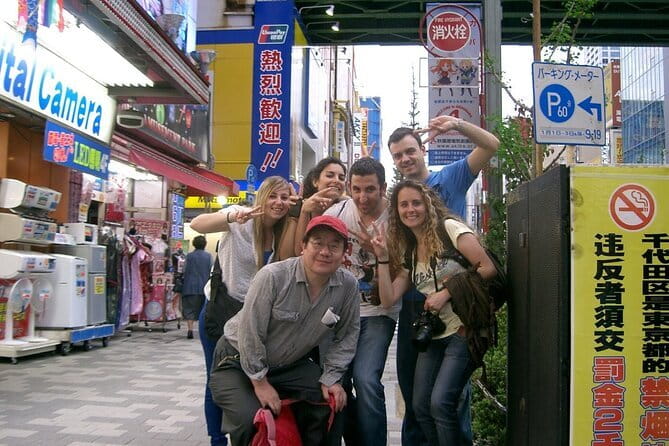
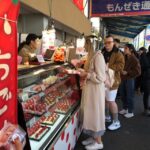
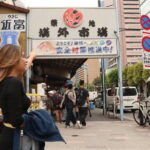
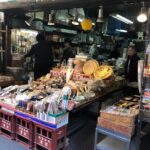
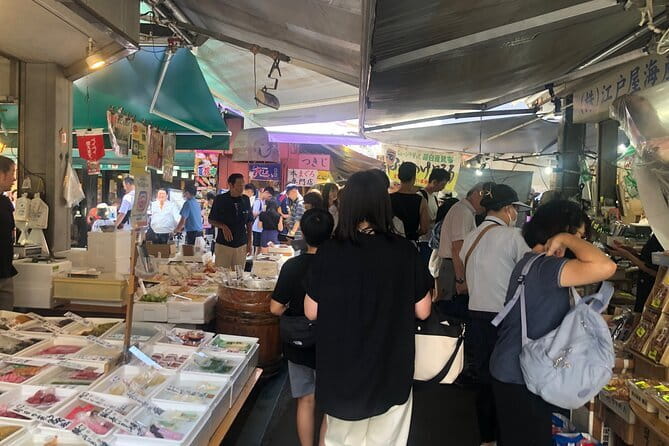
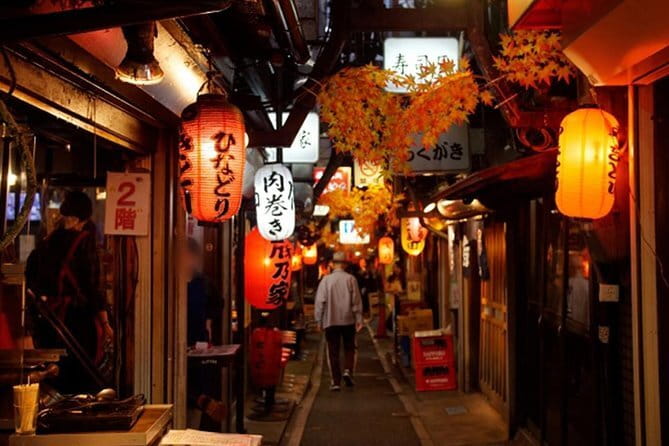
Tsukiji’s outer market is one of those Tokyo places where everything feels close and confusing at the same time. The streets and stalls can look similar if you’re walking solo, which is exactly why a guide helps. Here, the tour starts with Tsukiji Jogai Market, where you’re basically given a framework for what to look for and what kind of food choices make sense.
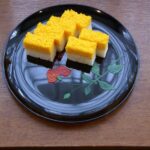
I love how the guide’s seafood background changes the tone of the visit. Instead of treating everything like random street-food sampling, you get practical pointers about what’s worth trying and how to think about lunch options before you commit. Even if you don’t eat much at first, this is still useful because you’re learning the “layout logic” of the market—where to focus and what’s more likely to suit your timing.
A good part of the experience is that you’re not expected to follow one rigid shopping list. You can get sightseeing tips around the market as you go, and you can ask the guide what’s best for your preferences. If you’re the type who likes to know why you’re ordering something, this will work well.
One consideration: this is a market setting, so you may feel the crowds and moving flow more than you would in calmer parts of Tokyo. If you’re sensitive to tight spaces, go into it expecting a busy, fast-moving environment.
You can also read our reviews of more tours and experiences in Tokyo.


Lunch in Tsukiji: Pick Local Sushi or Go Your Own Way
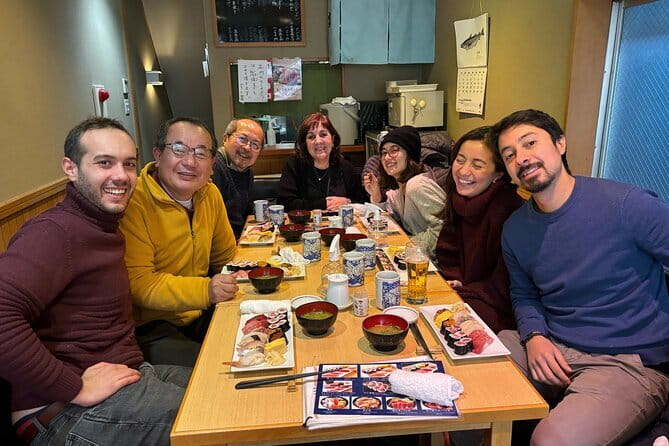
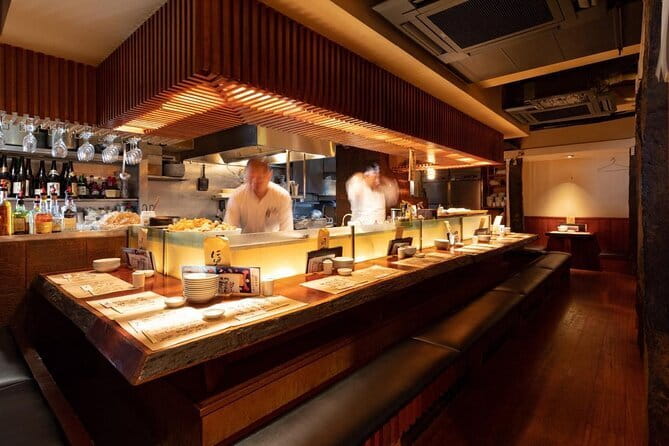
Lunch is where this tour gives you flexibility, which I really appreciate. You’re in Tsukiji for about three hours, and during that time the guide can take you to sushi options that are described as beloved by locals rather than built purely for tourists.
Here’s the practical math: lunch is not included. You’ll pay about 1,500 to 3,000 JPY per person, depending on what you choose. The upside of having the guide involved is that you’re less likely to waste time on a spot that doesn’t match your vibe, budget, or pace.
If you prefer independence, you can also use about an hour to explore on your own and then reconnect with the group. That’s a nice compromise if you want to follow your curiosity—grab something quick, compare a couple places, and then come back when it’s time to move on.
Getting from Tsukiji to Akihabara: Tokyo’s Two Worlds in Motion
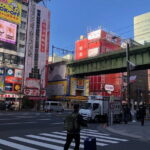
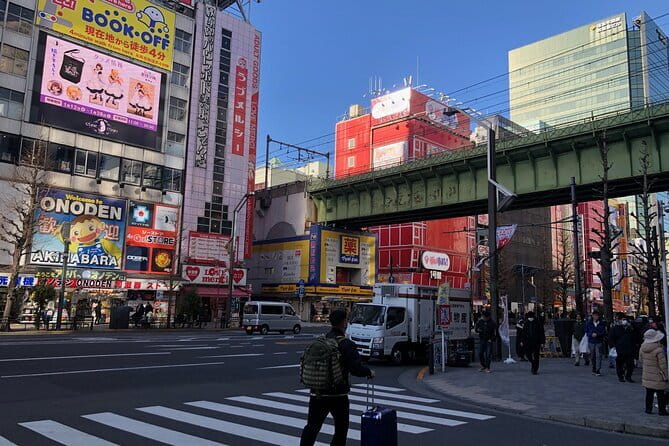
Once Tsukiji time is done, the tour shifts gears toward Ochanomizu / Akihabara / Kanda. This is where Tokyo’s identity changes again. One moment you’re focused on seafood market life and the next you’re in a zone built around electronics, fandom, and buying objects you didn’t even know you wanted.
The route is designed so you don’t feel like you’re just commuting between stops. Instead, you’re using that transit energy as part of the experience: you start with a “where it came from” overview (the remnants of Akihabara’s electric town past), then you move into what’s available now and what people actually shop for.
For me, this is a strong way to prevent Akihabara from feeling like a random list of stores. You understand the theme, then you shop inside it.
Akihabara’s Otaku Mecca: From Electric Town Past to Today’s Shops
Akihabara can feel like a full-on subculture if you’ve never been. That’s why the order of operations matters here: the tour begins with typical spots in this maze-like district, then you move into a walk that adjusts to what you’re into.
The guide’s pop-culture knowledge helps with decision-making. If your goal is souvenirs that foreigners actually like, you’ll get pointed toward shops that fit that demand. If your goal is fandom collecting, you’ll get sent toward stores focused on world-famous retro video games. If your goal is quirky novelty, you’ll spend time in the area most associated with capsule toys.
If you like a route that has clear categories (food, retro games, toys, electronics), this tour is set up for you. It doesn’t just throw you into the streets and hope you figure it out.
One small caution: because Akihabara has so many different storefronts, you can end up spending more time browsing than you planned. The tour helps keep you on track by moving you through the main zones, but you’ll still want to keep an eye on time so you don’t eat up all your energy before the end.
Retro Video Games: How to Shop Without Guessing
Retro video games are a huge part of what makes Akihabara feel like a specific kind of playground. The tour includes time to visit stores that specialize in retro titles, which is a gift if you’re not sure where to start.
I like that you’re not only wandering for fun—you’re walking with someone who understands the niche. A guide with experience in the gaming world (and specifically working on video games for a Japanese electronics maker) adds context that you won’t get if you treat the area like a general electronics mall.
You’ll likely find that asking the guide about what’s a good pick for your interests saves time. Maybe you want something easy to pack. Maybe you want something you’ll recognize instantly. Maybe you want a specific era. Either way, having support beats guessing.
Practical tip: your shopping will depend on what you’re willing to carry. Even if you find the perfect item, think about how you’ll get it back to your hotel. Keep your plan flexible so you don’t end up buying because you’re tired.




Capsule Toys: The Fun Side of Tokyo Collecting
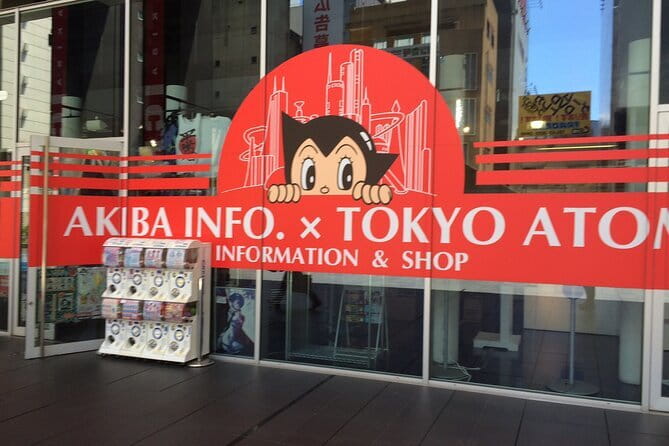
If you’ve ever wanted to understand capsule toy culture, this tour gives you a reason to care. You’ll hit the capsule toy side of Akihabara—the “mecca” vibe for these mini-collectibles—while still staying within a guided flow that makes it harder to get lost.
Capsule toys are ideal for travelers because they’re generally compact, and they’re fun whether you collect or just want a quirky reminder. Also, capsule toy shopping can be fast or slow depending on your mood: you can do quick buys and move on, or spend longer comparing options.
The guide’s role here is mostly about helping you spend efficiently. Instead of flitting between random machines, you can focus on where the good variety is likely to be and keep moving before your energy runs out.
Computer Parts Streets and Foreign-Friendly Souvenirs
Akihabara isn’t only about fandom. It’s also about electronics, and the tour includes time along streets lined with computer parts. That’s a cool contrast if you’re used to seeing only retail storefronts; here, you’re walking through a more specialized electronics corridor.
At the same time, you’re not forced into high-nerd shopping. The route includes stores featuring souvenirs suited for foreigners, which helps if you want something Japan-flavored but not too complicated to buy.
I find that mix is what makes Akihabara more enjoyable for first-timers. You can enjoy the culture even if you’re not chasing a specific part number or a collector’s item.
Optional Maid Cafe: Go In If You Want, Not If You Don’t

Near the end of the tour, there’s an optional suggestion: a visit to an authentic and reputable maid cafe. The structure matters. The tour ends at that point, and you’re free to go in without the guide.
That makes it feel less like you’re being pushed into an experience you’re unsure about. If you’re curious, you can try it. If you’d rather not, you’re not stuck—Akihabara is still right there, and you can keep exploring.
One thing to keep in mind: these are performance-driven spaces, so if you don’t like that kind of interactive atmosphere, skip it and use the extra time for the retro game shops or capsule toy stops you liked most.
Value for $36: What You Pay For (and What You Still Need to Cover)
This tour costs $36 and includes all fees and taxes plus a local professional guide. That’s a solid value for a Tokyo tour because the guide is doing two jobs at once: guiding through Tsukiji market decisions and navigating Akihabara’s specialized shopping zones.
What’s not included is where your personal spending comes in:
- Lunch: about 1,500 to 3,000 JPY per person
And beyond lunch, you’ll likely make optional purchases. The tour itself doesn’t list what market food or shopping items are included, so it’s smart to think of Tsukiji and Akihabara as places where you’ll probably buy your own snacks or take home souvenirs.
If you’re the type who likes structure, especially in crowded Tokyo areas, this price can feel like a bargain because it buys you time, context, and fewer wrong turns.
Timing, Meeting Points, and How to Start the Day Smoothly
The tour starts at 10:30 a.m. at the Haibara Unagi Tsukiji area (Tsukiji, Chuo City). The end point is Akihabara Super Bldg Parking Lot near Sotokanda.
You’ll receive a mobile ticket, which makes day-of logistics simpler—less paperwork, fewer steps. The tour is also described as being near public transportation, which matters in Tokyo where transfers are part of daily life.
Because it’s a private tour/activity, only your group participates, so you can ask questions without feeling like you’re sharing a megaphone with strangers. That’s especially useful if your interests are specific, like retro games versus seafood versus capsule toys.
Who This Tour Fits Best
This is a great fit if you want:
- a guided orientation to Tsukiji Fish Market’s outer area without getting overwhelmed
- a structured look at Akihabara’s otaku culture and shopping categories
- a guide who can explain both seafood choices and pop-culture odds and ends
- flexibility around lunch so you’re not locked into one restaurant only
It’s also good if you travel with someone whose interests are split. One person can be hungry for seafood and another for retro games, and the tour still serves both.
Should You Book This Tsukiji and Akihabara Combo Tour?
Book it if you want a Tokyo day that feels purposeful: you get guided Tsukiji exploration, a choice-driven lunch moment, then a pop-culture shopping walk in Akihabara with real context behind what you’re seeing. The standout strength is the guide—Hide-san’s mix of seafood roots and gaming/electronics experience makes the whole day click rather than feel like two unrelated stops.
Skip it if you already know exactly what you want to eat in Tsukiji and you’re comfortable navigating Akihabara on your own without needing store-by-store help. In that case, you might prefer a looser self-guided day.
FAQ
What does the tour cost, and what’s included?
The tour is $36 and includes all fees and taxes plus a local professional guide. Lunch is not included.
How long is the tour?
It runs about 4 to 5 hours total.
Is lunch included?
No. Lunch is for you to arrange and pay for yourself, and it’s listed as about 1,500 to 3,000 JPY per person.
Can I explore independently during Tsukiji lunch time?
Yes. You can join the guide at a local sushi restaurant, or you can spend about an hour exploring independently and then reconvene with the group.
What’s the Akihabara part of the tour focused on?
It includes Akihabara highlights and shopping areas, with time for retro video games, capsule toys, computer parts streets, and souvenirs suited for foreigners. An optional maid cafe is offered near the end.
Where does the tour start and end?
It starts at Haibara Unagi Tsukiji (10:30 a.m.) and ends at the Akihabara Super Bldg Parking Lot.