REVIEW · TOKYO
Dive into Tsukiji Fish Market Walking Friendly Food Tour
Book on GetYourGuide →Operated by Washoku club city and food tours · Bookable on GetYourGuide
Tsukiji can feel like sensory overload. This 4-hour, max-10 food walk keeps you moving with purpose, hitting key sights like Tsukiji Hongwanji Temple and Namiyoke Inari Jinja while tasting your way through the Outer Market. One drawback: you’re on your feet through busy lanes, so you’ll want comfortable shoes and a practical mindset.
What I like most is how the guiding feels tuned to real people. In particular, guides like Amber and Akira bring context to what you’re seeing, and they’re flexible when plans need to shift, including for a teenage son. Just note that alcohol isn’t included, so if you want beer or something stronger, you’ll be buying that separately.
In This Review
- Key highlights at a glance
- Tsukiji Outer Market: the part of Tokyo that smells like a lesson
- Start at Tsukiji Hongwanji Temple for a steadier beginning
- Outer Market tastings that actually cover seafood basics
- Guided time in the Outer Market (then room to browse)
- Kachidoki Bridge: a useful pause with a different perspective
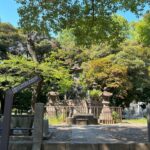
- Namiyoke Inari Jinja: a short cultural reset
- What’s included (and where you might spend extra)
- Price reality check: why $173 can feel fair here
- Small-group guidance in a place built for crowds
- Meeting point and how to get there without stress
- Who this tour suits best
- Should you book this Tsukiji walking food tour?
- FAQ
- How long is the Tsukiji Fish Market walking food tour?
- What’s the group size?
- Where do I meet for the tour?
- How do I get to the meeting point from Tsukiji Station?
- What languages are the guides?
- What food is included?
- Are drinks included?
- Is alcohol included?
- Is free cancellation available?
Key highlights at a glance
- Small-group comfort (up to 10) so you can ask questions without being herded
- Temple + market flow starting at Tsukiji Hongwanji Temple before you hit the food streets
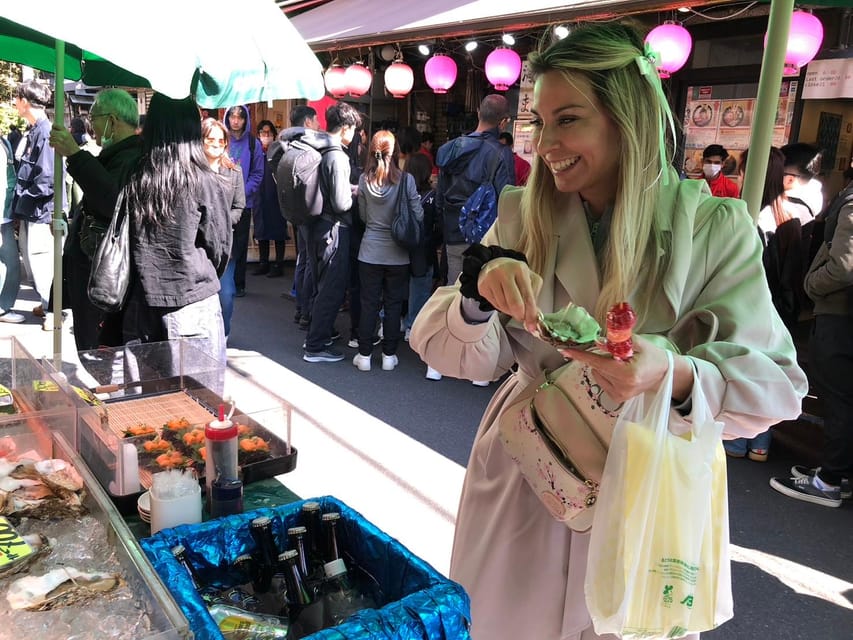
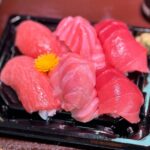
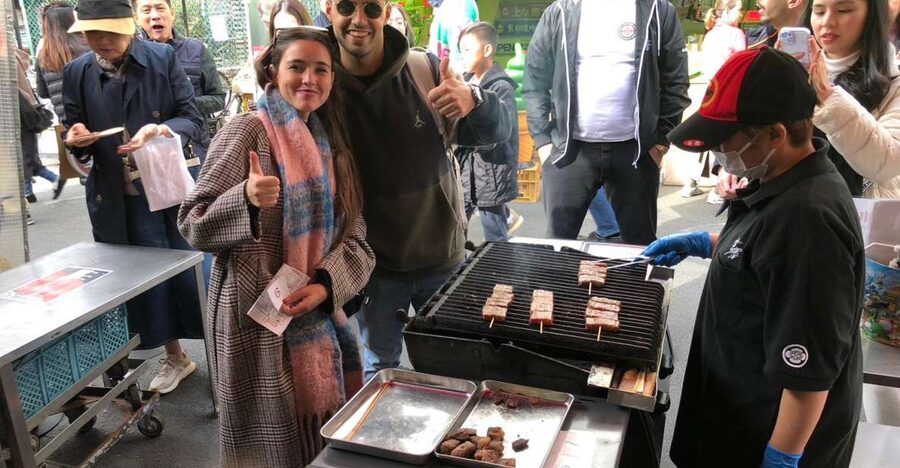
- A focused seafood lineup including sushi, grilled tuna and salmon, tamagoyaki, grilled oysters, and fresh sashimi
- Shopping time built in for Outer Market browsing, including food and kitchen utensils
- Two culturally themed stops with Kachidoki Bridge and Namiyoke Inari Jinja to break up the food focus
Tsukiji Outer Market: the part of Tokyo that smells like a lesson
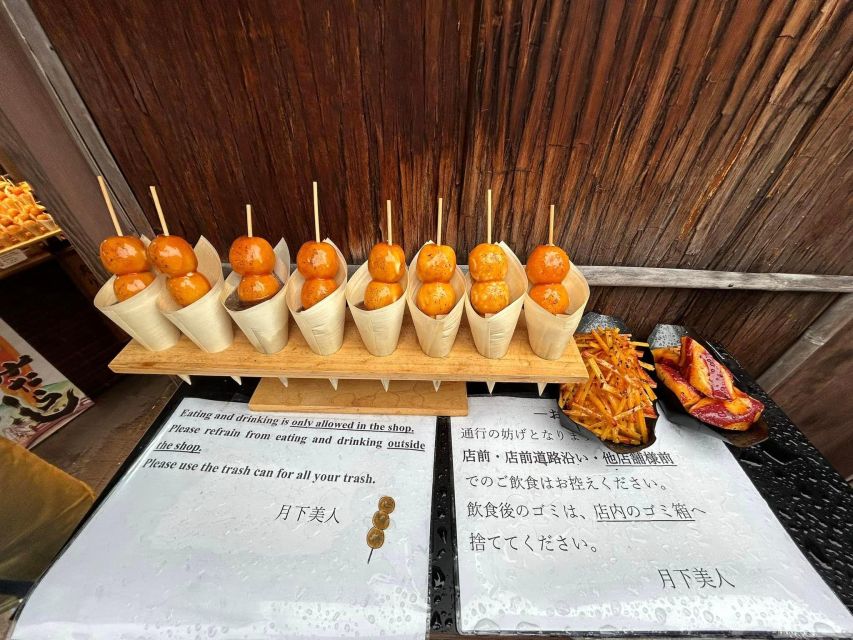
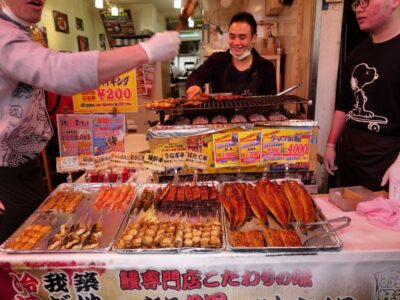
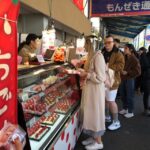
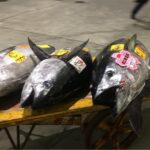
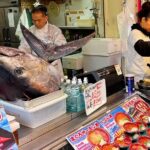
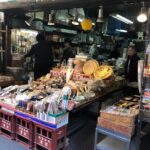
Tsukiji is one of Japan’s best-known fish market areas, set in central Tokyo, and it’s famous for a mix of speed, tradition, and seafood expertise. The Outer Market side is where you get a walk-through of the everyday world—there are about 400 shops along the streets selling fresh foods and kitchen utensils. It’s also an easy place to understand Japanese culinary culture without needing a class first.
This tour is priced for a reason: it’s not just sightseeing. It’s a guided food-and-sight walking format designed to help you interpret the scene—what you’re looking at, why it matters, and what to taste as you pass through.
You can also read our reviews of more tours and experiences in Tokyo.
Start at Tsukiji Hongwanji Temple for a steadier beginning
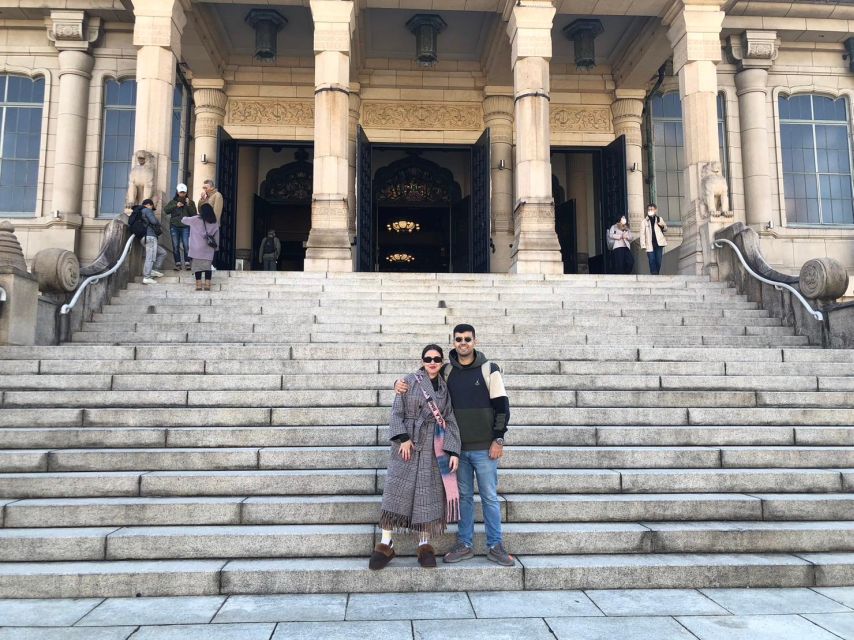
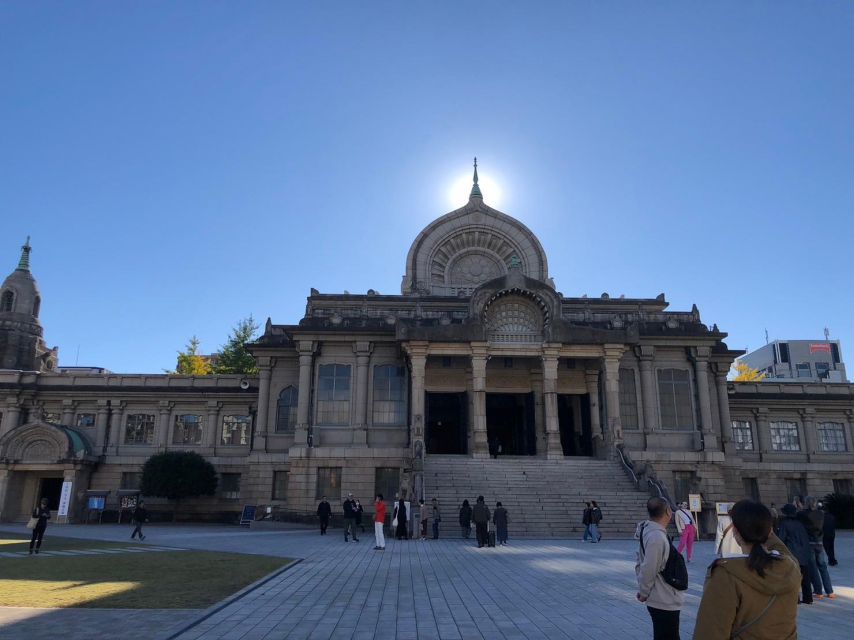
The tour kicks off at Tsukiji Hongwanji Temple (Honganji), right near Tsukiji Station. That matters more than you might think. When you start in a calm, grounded place, you arrive to the market with better focus. You also get a guided 30-minute visit that sets the tone before the crowds and shopping energy.
If you’ve ever wandered Tokyo markets without direction, you know the feeling: you see food, you smell food, you buy something random, and you miss what makes the place tick. Starting with a temple visit helps you get oriented. It also adds variety to a trip that could otherwise feel like nonstop eating.
Outer Market tastings that actually cover seafood basics
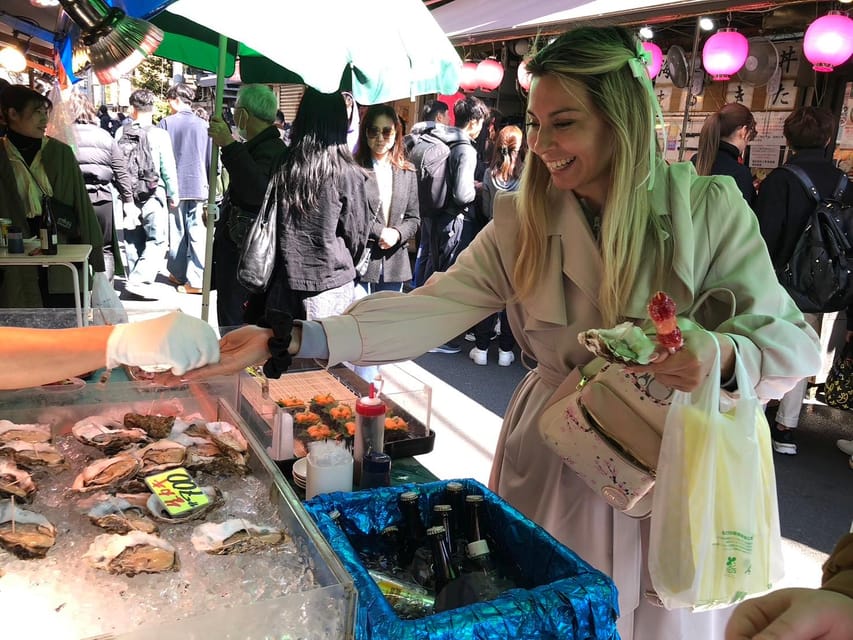
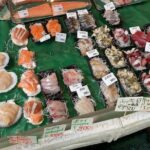
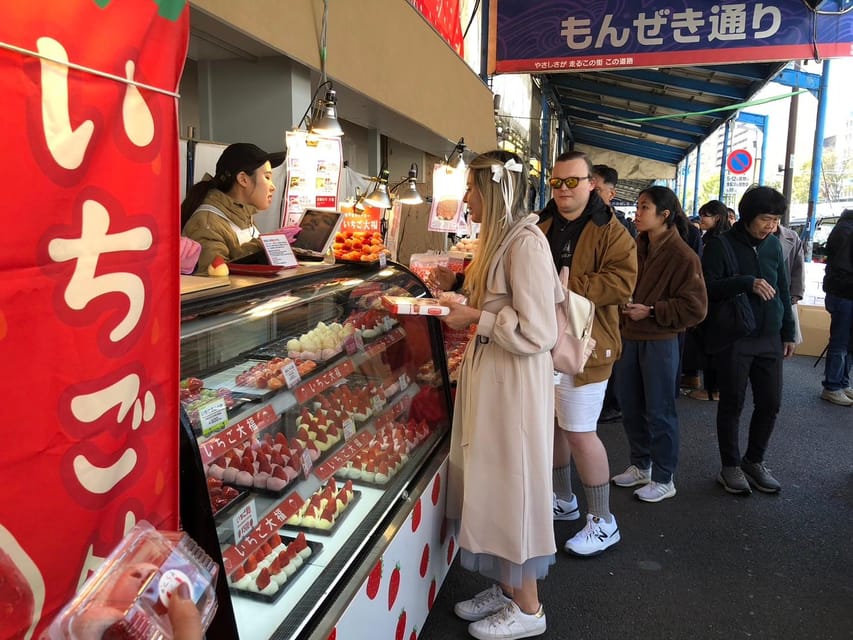
The heart of the experience is the Tsukiji Outer Market, where you’ll get guided time plus additional shopping time. The tastings are a big part of why this works as a food tour rather than just a market walk.
Based on what’s included, you can expect a menu that covers multiple seafood textures and styles:
- Sushi
- Grilled tuna and salmon
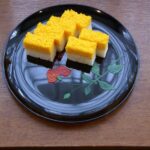
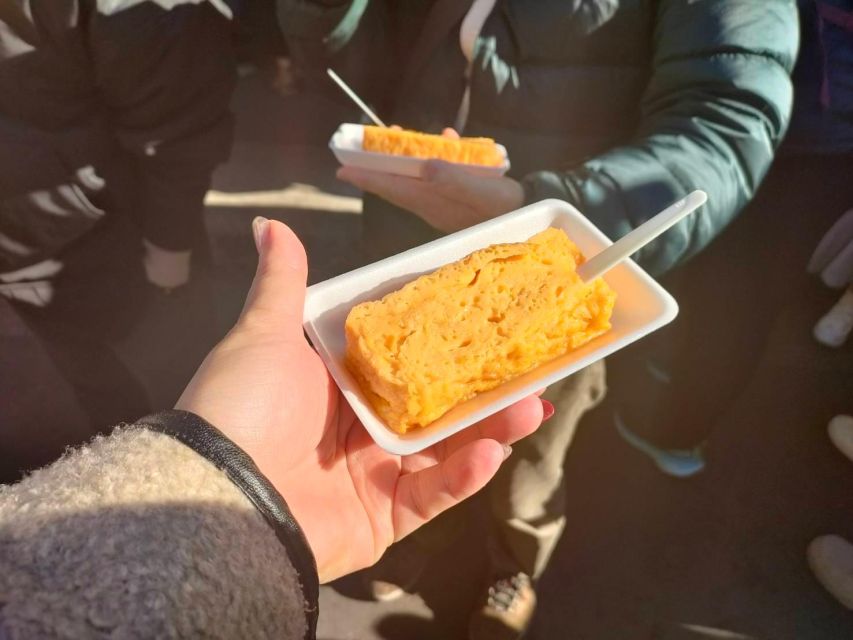
- Tamagoyaki
- Grilled oysters
- Fresh sashimi
- Plus desserts and snacks
- And 2 soft drinks and water
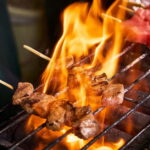
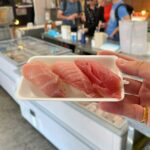
This is a sensible mix. Sushi and sashimi help you understand raw fish quality and cutting styles. Grilled tuna, salmon, and oysters give you the “heat and smoke” side of the seafood story. Tamagoyaki is also a useful counterpoint because it’s not fish-based—so you get a broader look at Japanese market eating beyond just seafood.
One practical point: the tour includes food, so you don’t have to gamble on which stall has the right item for your taste. You still get shopping freedom, but the core eating is planned.
Guided time in the Outer Market (then room to browse)
You get a guided look through the Outer Market and then additional shopping-focused time. That split is smart. The guided portion helps you make sense of what’s in front of you—what’s being sold, how people choose items, and what to pay attention to. Then the shopping time lets you apply that new understanding on your own.
You’ll also get to see the kinds of stalls that sell both food and practical items like kitchen utensils. That’s one of Tsukiji’s most fun aspects. Even if you’re not bringing a suitcase full of gadgets home, browsing utensil shops in a market like this feels like peeking into how locals actually cook.
Kachidoki Bridge: a useful pause with a different perspective
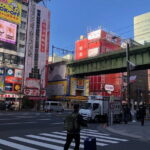
After the main market eating phase, you’ll head to Kachidoki Bridge for a guided 30-minute stop. This is a nice break in the day for two reasons.
First, it gives your body a rest from tight lanes and constant stopping. Second, a bridge area offers a different angle on the market zone—so the seafood focus doesn’t stay trapped at stall height. It’s the kind of viewpoint moment that helps the day feel like a route, not just a loop.
Even if your camera roll is already full from Tokyo streets, this is the point where the whole trip starts to “read” better: you see how the market sits in the city’s bigger structure.
Namiyoke Inari Jinja: a short cultural reset
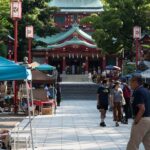
Next up is Namiyoke Inari Jinja, with another guided 30-minute visit. Inari shrines show up across Japan, and Tsukiji’s area has its own local flavor. This stop adds meaning to the walk by showing that the market world isn’t isolated from everyday religious life.
You’ll finish the day with your head clearer and your stomach calmer than if you stayed in pure food mode all afternoon. It’s also a fitting ending to a tour that’s about Japanese food culture: the spirituality isn’t separate from the food economy—it runs alongside it.
What’s included (and where you might spend extra)
The tour lasts 4 hours and is structured as a walking experience with tastings and guided segments. Included in the price are:
- Professional guide for the full tour length
- Desserts & snacks
- Sushi, grilled tuna & salmon, tamagoyaki, grilled oysters, fresh sashimi
- 2 soft drinks and water
- Guided stops at the temple, Outer Market sections, Kachidoki Bridge, and Namiyoke Inari Jinja
Alcohol is not included, though it’s available to purchase. If you want a beer to go with your grilled bites or something more, plan to treat it as an add-on. The rest of the food foundation is handled.
Price reality check: why $173 can feel fair here
At $173 per person for four hours, you’re paying for three things: expert guidance, a planned tasting lineup, and the convenience of a small group.
Would you spend less walking Tsukiji on your own? Probably. But it’s easy to miss value in places like Tsukiji—especially if you don’t know what to prioritize. Here, the tour already supplies a set of items that cover raw, cooked, and grilled seafood, plus desserts/snacks and drinks. That reduces the risk of buying the wrong thing at the wrong time.
Also, the maximum group size of 10 is part of the pricing logic. In a market packed with stalls and noise, a smaller group helps you get questions answered while you’re deciding what to buy or what to taste next.
If you’re the type of person who wants structure and interpretation—without giving up the chance to browse—this price often lands as reasonable.
Small-group guidance in a place built for crowds
This is a walking market with tight streets and active shops. That’s exactly where a small group becomes more than a marketing term. With a max-10 group, you don’t feel like a line item.
It also helps that the tour offers English and Japanese. Even if you’re comfortable enough in basic phrases, having someone interpret the food choices and what you’re seeing makes the day click.
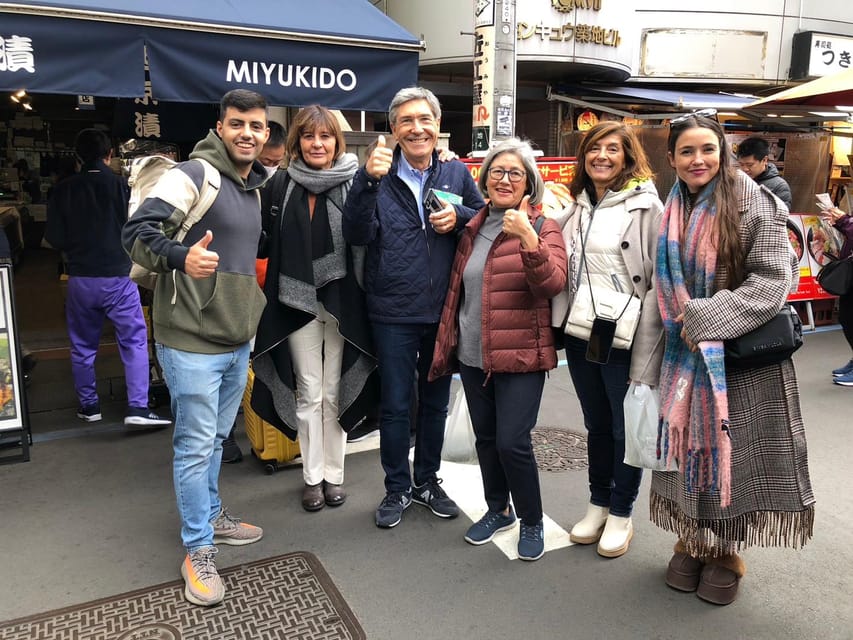
The guide names from the experience stand out for the way the day can flex. Amber is described as thoughtful and flexible with a teenage son, and Akira is praised for adding context and helping everything make sense while still keeping the focus on great eating. That combination—food plus explanations—turns Tsukiji from a photo stop into a lesson you can actually use.
Meeting point and how to get there without stress
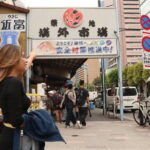
You meet in front of Tsukiji Hongwanji Temple. From Tsukiji Station on the Hibiya Line, take Exit A1 and turn left. The temple entrance is about 50 meters (55 yards) from the station.
If you like to arrive early to settle in, this is one of those tours where doing so helps. The meeting point is straightforward, and you’ll likely spend less time searching and more time ready to start.
Who this tour suits best
This walking food tour is a strong fit if you:
- Want a guided food experience rather than a self-guided stall sprint
- Enjoy seafood and want a planned range: sushi, sashimi, grilled tuna/salmon, oysters, tamagoyaki
- Like mixing food with culture through temple and shrine stops
- Prefer the vibe of a small group over large crowds
It might be less ideal if you want a lot of free time to wander without a schedule, or if you don’t handle walking comfortably. Still, with 4 hours and built-in breaks at temple/bridge/shrine, it’s not an all-day endurance event.
Should you book this Tsukiji walking food tour?
I’d book it if you want Tsukiji to feel guided and understandable, not just chaotic and crowded. The standout value is the combination of a small group, a structured tasting menu, and sight stops that keep the day varied—from Tsukiji Hongwanji Temple to Namiyoke Inari Jinja, with the market in between.
I’d skip or reconsider if you’re the type who already knows Tsukiji well and wants to design your own tasting route, or if you’re only looking for shopping and don’t care about seafood tastings.
If your goal is to leave Tsukiji feeling like you actually learned something about how Japanese seafood culture works, this one delivers.
FAQ
How long is the Tsukiji Fish Market walking food tour?
The tour is 4 hours.
What’s the group size?
It’s a small group with a maximum of 10 participants.
Where do I meet for the tour?
Meet in front of Tsukiji Hongwanji Temple.
How do I get to the meeting point from Tsukiji Station?
From Tsukiji Station on the Hibiya Line, take Exit A1 and turn left. The temple entrance is about 50 meters from the station.
What languages are the guides?
The live tour guide is available in English and Japanese.
What food is included?
You’ll have sushi, grilled tuna and salmon, tamagoyaki, grilled oysters, and fresh sashimi, plus desserts and snacks.
Are drinks included?
Yes. The tour includes 2 soft drinks and water.
Is alcohol included?
No. Alcoholic drinks are not included and are available for purchase.
Is free cancellation available?
Yes. You can cancel up to 24 hours in advance for a full refund.