REVIEW · PHUKET
Thai Cooking Class with Market Tour in Phuket by VJ
Book on Viator →Operated by Oh-Hoo · Bookable on Viator
A morning market can be more fun than a museum. This Phuket class pairs a quick market walk with hands-on cooking, so you learn what to buy and then cook it with Chef VJ. I loved the small group feel, which keeps questions from getting lost. I also liked that you don’t just watch—you make curry paste from scratch.
What really makes this class worth your time is the way it connects ingredients to flavor. You start with herbs, vegetables, spices, and fruit tasting, and then you return to cook with the same items you learned about. I also appreciated that you get a recipe book right after, so your best meals don’t vanish the next day.
One thing to consider: this is weather-dependent and it includes a market walk. If rain is heavy or walking feels like a drag, you may want to plan for that.
In This Review
- Key highlights worth planning around
- How the Phuket morning starts: pickup, timing, and your first Thai flavors
- The market tour: what you’re learning while you walk
- A practical note for your comfort
- Back at the school: how Chef VJ sets up the lesson
- Curry paste from scratch: mortar-and-pestle training that actually sticks
- The dishes you’ll cook: four Thai favorites plus learning patterns
- You’ll eat what you make
- Group size and pace: why small groups feel better in a cooking class
- Pickup and logistics: making it easy to say yes
- What you get for the price: value check for $91.48
- Clean, friendly, and well organized: the style that makes classes enjoyable
- Who this Phuket class is best for
- Who might want to think twice
- Should you book this Phuket Thai cooking class with market tour?
- FAQ
- What’s the duration of the Thai cooking class with market tour in Phuket?
- What time does pickup happen?
- What does the tour include?
- How many people are in the group?
- Where is the cooking class located?
- Do I get to take anything home?
- What if weather is bad?
Key highlights worth planning around
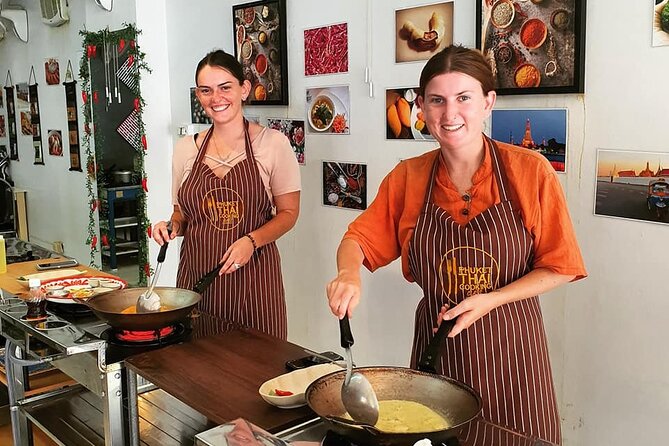
- Chef-led curry paste, made using mortar and pestle
- Market walk and fruit tasting before you cook
- Four Thai dishes plus curry paste, cooked from scratch
- Small-group attention (max 6, with tour size kept limited)
- Pickup offered, plus light drinks during the class
How the Phuket morning starts: pickup, timing, and your first Thai flavors
The day is designed to move at a friendly pace, without wasting time. If you’re using the pickup, it happens about 30–40 minutes before the scheduled start. On the standard schedule, pickup is 10:30–10:50am, then you head out toward the morning market.
This matters, because Phuket traffic can be unpredictable. A guided plan means you’re not guessing where to go or when to arrive. You also get a gentle transition: you leave your hotel, settle in, and by the time you reach the market, you’re ready to look closely at ingredients instead of just snapping photos.
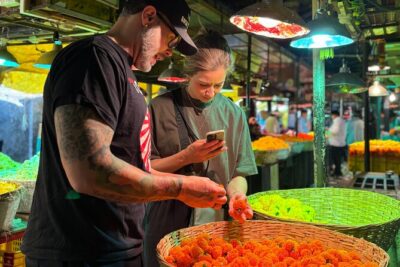
At the market, you’ll walk and learn what Thai cooks actually grab when they’re shopping. Expect a focus on fresh produce, herbs, and spices, not generic souvenirs. The experience is also built around food you can sample, including fruit tasting, which helps you understand how Thai sweet, sour, and aromatic flavors fit together.
You can also read our reviews of more tours and experiences in Phuket.

The market tour: what you’re learning while you walk
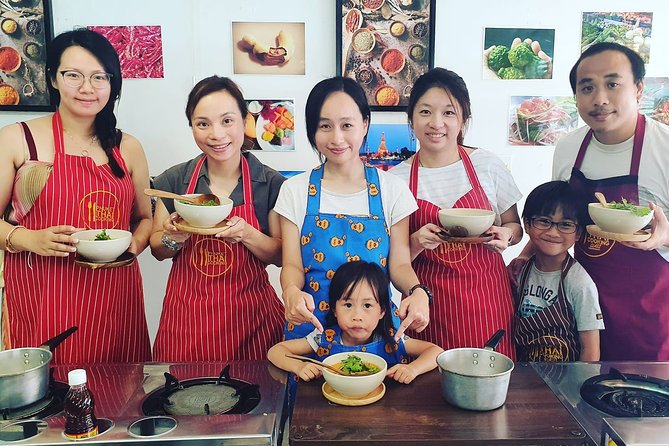
The market portion isn’t just a scenic stroll. You get a guided explanation of how Thai ingredients work, especially the role of herbs and spices in everyday cooking.
A few details that make this practical:
You’ll hear about how Thai cooks use multicolored spices—not as decoration, but as a shorthand for taste and aroma. That kind of explanation helps you later when you’re deciding what goes into your curry paste.
You’ll also learn what to look for when buying fresh ingredients. That’s a small thing that turns into a big advantage at home: you stop treating recipes like step-by-step instructions and start thinking like a shopper.
And because you’re walking the market with a chef guiding the “why,” you’re more likely to notice things you’d otherwise skip—like herb stems, aromatic roots, and the balance of textures in vegetables.
A practical note for your comfort
This is a walking market stop. If you’re sensitive to heat, bring water and plan on moving for part of the morning. Comfortable shoes help more than you’d expect.
Back at the school: how Chef VJ sets up the lesson
When you return to the cooking venue, you’re greeted with water and herbal drinks, plus time to settle in and get acquainted with your group. Arrival is typically around 11:45am, right before the home-style ingredient session starts.
This short pause is smart. You get your bearings fast, and you can mentally switch from market shopping mode to cooking mode. Then the class moves into a hands-on flow.
You’ll learn the basics of the key ingredients used in Thai cooking—herbs, vegetables, and spices—so you’re not only working by recipe. The goal is to help you understand what each component is doing.
Curry paste from scratch: mortar-and-pestle training that actually sticks
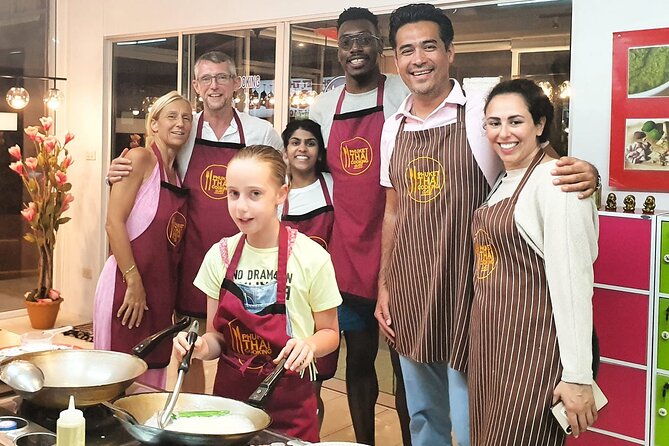
If Thai cooking feels intimidating, curry paste is often where that fear starts. This class addresses that directly by making curry paste the centerpiece of the lesson.
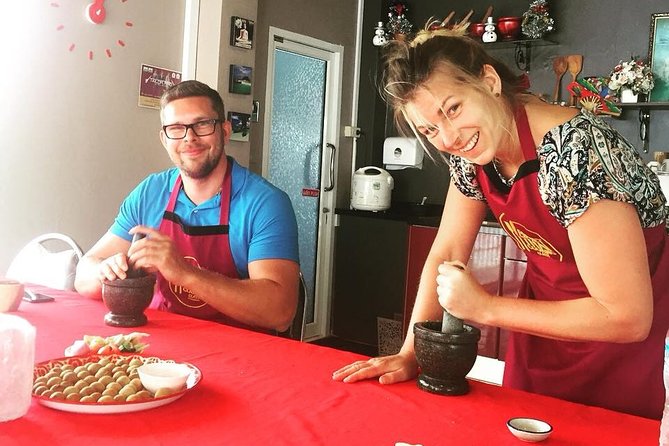
You’ll make your own curry paste from scratch, using a mortar and pestle. That detail matters. Blending paste another way can be convenient, but pounding and grinding teaches you how ingredients release aroma and how the paste changes texture as it comes together.
The class doesn’t just hand you a list. You get guidance on the herbs, spices, and components that go into the paste, and you get a chance to work through the process yourself.
This is also where the market learning pays off. When you’re holding and mixing the same ingredient categories you saw outside, it clicks: this isn’t random flavor—it’s intentional cooking technique.
The dishes you’ll cook: four Thai favorites plus learning patterns
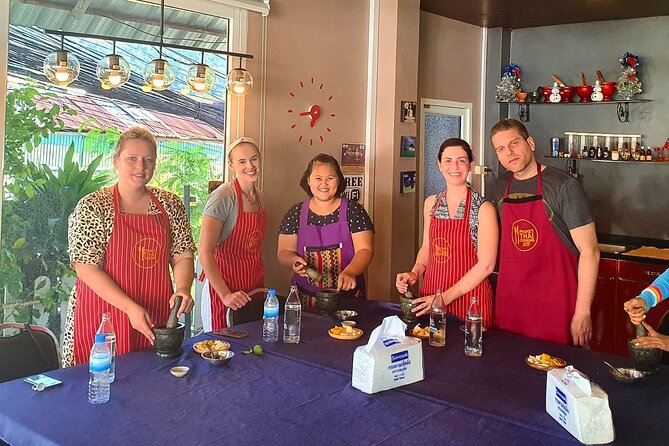
After the curry paste lesson, you move into cooking the dishes. The class is designed around making four different Thai dishes, using what you’ve prepared.
The examples given include:
- Pad Thai
- Spring rolls
- Papaya salad
- A curry
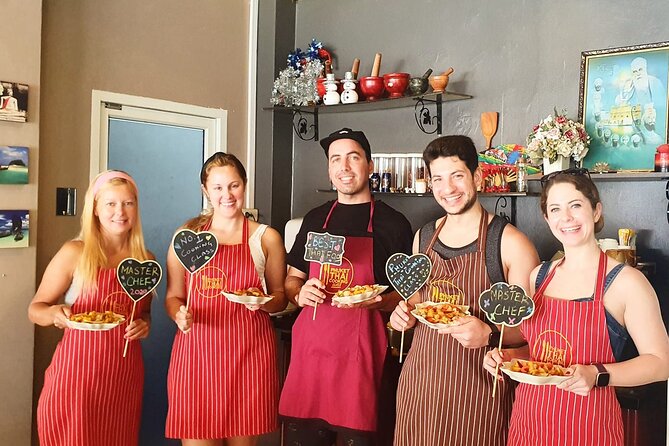
You’ll cook enough that you’re not left feeling like you only did one tiny task. The structure is meant so you can actively participate and learn how the flavors are built for each dish.
What I like about this setup is the learning pattern. You don’t just memorize four separate recipes. You see how Thai cooking repeats certain ideas—balancing sour and sweet, using herbs for freshness, and using curry paste as the backbone of deeper flavors.
You’ll eat what you make
The lesson includes serving and eating the food together. You’re not rushing through cooking and then sending everyone away. The meal portion helps you gauge what works and what needs adjustment the next time you cook.
Group size and pace: why small groups feel better in a cooking class
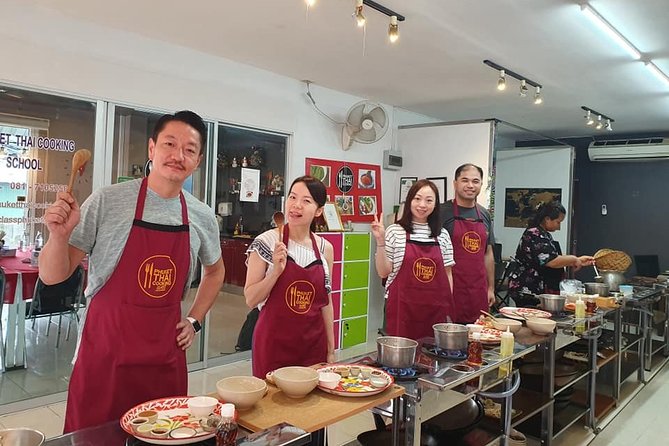
This tour is built for limited group size. The cap is described as small (with a maximum of 6), and the activity overall stays limited.
In a cooking class, bigger groups usually mean waiting turns. Here, the instructor can offer more attention when you’re chopping, mixing, or stuck on a step. That’s exactly what you want when you’re learning Thai cooking techniques that aren’t usually familiar.
The total time is about 3 hours. That’s short enough to fit into a Phuket schedule, but long enough to cook and eat real food rather than just assembling a couple of bites.
You’re basically doing:
- Market learning and sampling
- Ingredient orientation
- Curry paste making
- Cooking four dishes
- Eating together
- Returning around 2:00pm
Pickup and logistics: making it easy to say yes
Most cooking classes fail at one thing: making you do too much planning. This one is simple.
It includes pickup offered, with pickup roughly 30–40 minutes before the start. Your tour starts at the cooking school address on Patak Rd (31 Patak Rd, Tambon Karon, Amphoe Mueang Phuket). The activity ends back at the meeting point.
That return detail matters. You avoid the stress of figuring out transport right after eating a full meal. If you’re on a tight itinerary, this predictability helps.
What you get for the price: value check for $91.48
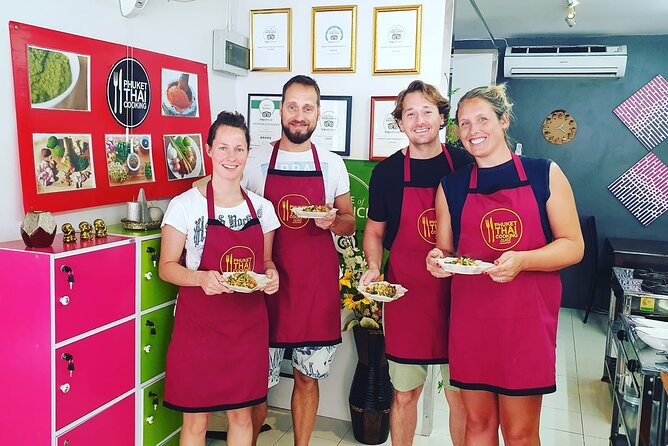
At $91.48 per person, you’re paying for more than ingredients. You’re paying for:
- A guided market tour
- Chef-led teaching in a small group
- All ingredients provided
- A recipe book
- Light refreshments during the class
- The main effort: making curry paste and four dishes
For me, the best value signal is the recipe handout right after cooking. That turns the experience into something you can repeat at home. Market knowledge fades fast unless you’ve got some kind of reference, and a recipe book helps anchor what you learned.
Also, you’re not just tasting Thai food. You’re learning how it’s assembled—especially curry paste. That’s the kind of skill that can keep paying off long after your trip ends.
Clean, friendly, and well organized: the style that makes classes enjoyable
The overall tone from feedback is that the class runs smoothly and feels welcoming. People highlight that Chef VJ communicates clearly and adds humor, which matters when you’re learning techniques with unfamiliar ingredients.
You’ll also get help when you need it. The class is described as attentive and easy to follow, with drinks provided and a clean, comfortable setup.
One more useful note: the market portion can include the chance to take some ingredients back home. If you like cooking, that’s a win because you’re not limited to what you bought on a tourist street.
Who this Phuket class is best for
This is a great fit if you want hands-on learning in a short time window. I’d especially recommend it for:
- Food lovers who want more than a tasting menu
- People who struggle with recreating curry flavors at home
- Couples or small groups who like a chatty, guided vibe
- Anyone curious about herbs, spices, and how Thai shopping connects to cooking
Who might want to think twice
It’s not recommended for children aged 1–8. Also, since it includes a market walk and depends on good weather, you may want to plan accordingly if you’re traveling with mobility concerns or you hate wet weather surprises.
Should you book this Phuket Thai cooking class with market tour?
Book it if you want a compact, practical way to learn Thai cooking, not just “do an activity.” The combination of market context plus cooking—especially making curry paste with your own hands—makes this class feel like a skill-building day.
Skip or reconsider if you prefer minimal walking and you’re traveling during a period when weather might be unpredictable. In that case, you’d be happier with a more indoor, low-movement activity.
If you like structured learning, small-group attention, and eating the results, this one is hard to beat for the price.
FAQ
What’s the duration of the Thai cooking class with market tour in Phuket?
It runs for about 3 hours.
What time does pickup happen?
Pickup is typically 10:30–10:50am, and it’s offered about 30–40 minutes before the scheduled start time.
What does the tour include?
You get a market visit and a cooking class where you learn to make curry paste from scratch and four Thai dishes, plus all ingredients, a recipe book, and light refreshments.
How many people are in the group?
It’s a small-group experience with a maximum of 6 people, and the tour overall is limited to a maximum of 10 travelers.
Where is the cooking class located?
The class meeting point is at 31 Patak Rd, Tambon Karon, Amphoe Mueang Phuket, Chang Wat Phuket 83100, Thailand.
Do I get to take anything home?
You receive a recipe book. During the market portion, you may also be able to bring some ingredients home, depending on what’s offered and available.
What if weather is bad?
This experience requires good weather. If it’s canceled due to poor weather, you’ll be offered a different date or a full refund.