REVIEW · PHUKET
Phuket Easy Thai Cooking Class and Market Tour
Book on Viator →Operated by Oh-Hoo · Bookable on Viator
Thai cooking feels easier after you shop first. This Phuket class pairs a quick market tour with hands-on work in an open kitchen, so you understand ingredients before the first stir-fry. You can choose a morning (lunch) or afternoon (dinner) session, and the group stays small enough for real back-and-forth.
I especially like that the kitchen is set up for comfort—one big plus people highlight is the presence of AC. My other caution: pickup isn’t automatically free for everyone. Free transfers are listed only for 2+ people in select Phuket areas, and some farther beaches cost extra.
In This Review
- Key highlights at a glance
- The Phuket market stop: learning Thai flavors you can actually repeat
- Open kitchen cooking with real instruction (and AC that people care about)
- What you’ll cook: from curry to noodles, with menus that can vary
- Morning lunch vs afternoon dinner: how the schedule affects your day
- Small-group limits (max 12) and why you’ll cook better
- Price and value: what $69.32 buys you in Phuket
- Practical logistics: meeting point, tickets, and what to bring
- Who this class is best for (and who might not love it)
- Should you book this Phuket Easy Thai Cooking Class?
- FAQ
- What dishes will I learn in this Phuket Thai cooking class?
- How long does the cooking class last?
- Is pickup included, and from where?
- What are the start times for the morning and afternoon classes?
- What’s included in the price?
- What if I’m traveling with someone who won’t cook?
- What happens if weather is bad or the minimum group size isn’t met?
Key highlights at a glance
- Market visit that teaches herbs, vegetables, and spices quickly (so you can buy with purpose)
- Open kitchen cooking with AC—important in Phuket heat
- Small group capped at 12, so you’re not lost in a crowd
- A practical menu you can repeat at home, with popular dishes taught step-by-step
- Pickup and drop-off from select areas, with extra fees for some beaches
The Phuket market stop: learning Thai flavors you can actually repeat
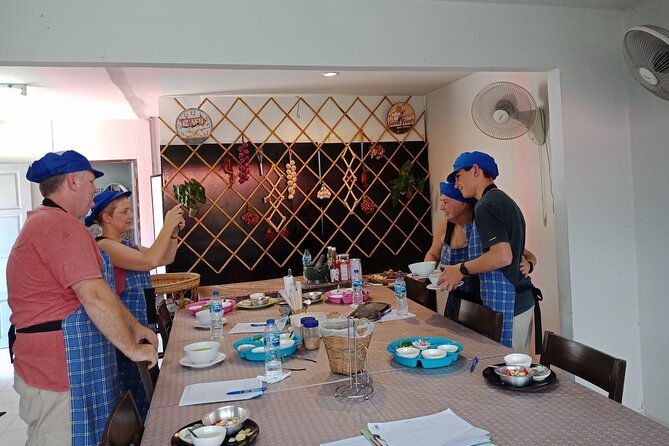
This experience starts with a short transfer to the cooking school area, then you head out to a local market for a lesson that focuses on what’s inside Thai food. The market time is about 30–45 minutes, which is just long enough to get oriented and learn the names and roles of common ingredients without turning it into a long shopping marathon.
What I like about this setup is the way it turns shopping into a skill. Thai cooking is all about balancing: sweet, sour, salty, heat, and aroma. When someone shows you what to look for—herbs, vegetables, and spices—you stop thinking of Thai food as a mystery. You start thinking in ingredients and substitutions.
You’ll also be able to pick up what you need for the dishes you’ll cook later. Even if you don’t plan to buy everything back home, the market lesson helps you understand what makes a curry taste like curry, what makes a noodle dish smell like it does, and why certain herbs show up again and again.
One more practical note: markets in Phuket can be warm and active. Go with light clothing and expect you’ll be doing some walking. This is one reason the comfort factor matters for the next step—so you’re not cooked by the time you reach the kitchen.
You can also read our reviews of more tours and experiences in Phuket.

Open kitchen cooking with real instruction (and AC that people care about)
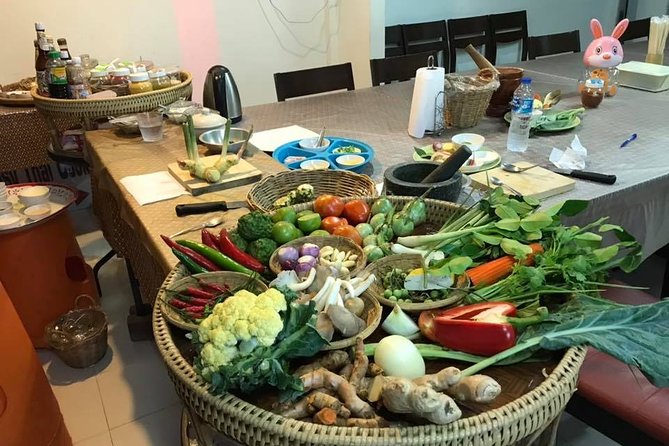
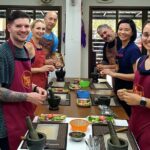
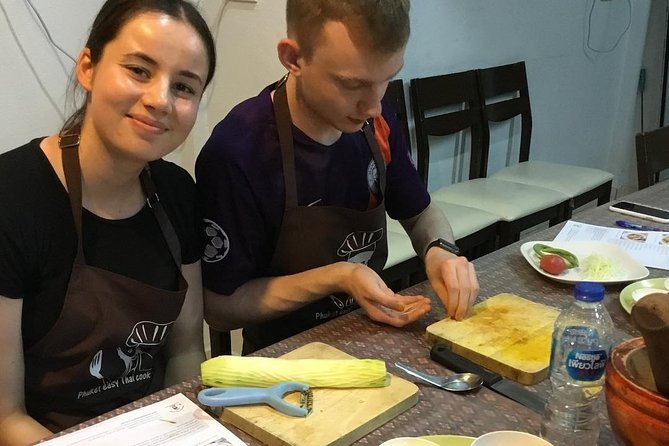
The cooking lesson runs for about 2 hours, and it takes place in an open kitchen that’s equipped with what you need. The point isn’t just to watch a chef work. The class is designed so you can follow along and cook your own dishes while a certified Thai teacher gives English instructions.
In a lot of cooking classes, open-air kitchens can feel like a sweat test. Here’s the big thing: people consistently highlight that there’s AC in the class setup. That matters. When your hands can stay focused and you’re not fighting the heat, you cook better and learn faster.
The teaching style comes through in the way the instructors are described—people specifically mention instructors like Tik, Karn, and Kam as funny, engaging, and detail-oriented. The common thread is that they guide you step by step and explain ingredients clearly, not just recipes mechanically. I think that’s what helps you end up with techniques you can reuse, instead of a one-night performance.
Also, the class size cap (12 people max) isn’t just a comfort promise. It usually means you’re more likely to get help when you hit a problem—like a curry paste that’s not behaving, noodles sticking, or tasting too salty. You’re also more likely to understand what you’re doing because you can ask questions and actually hear the answers.
What you’ll cook: from curry to noodles, with menus that can vary
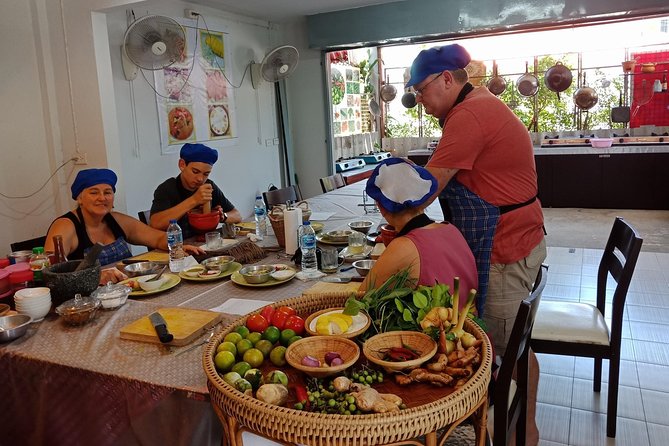
The description says you’ll learn five different dishes, and the included list says 4 dishes. That mismatch can happen when class formats are updated, or when the offer is written in two different ways. Either way, you should expect a set of multiple dishes, plus the ingredient sourcing that supports them.
What’s consistent: you’ll cook popular Thai favorites, often including things like curry and classic stir-fries/noodles. Based on the dishes people mention learning, the menu can include items such as:
- Pad Thai
- Green curry
- Penang curry
- Spring rolls
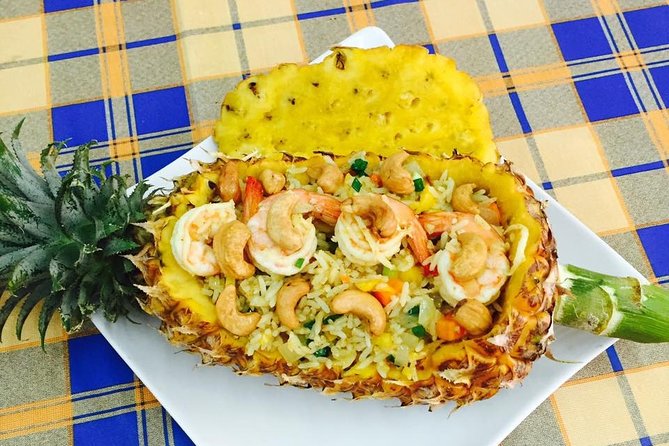
- Pineapple fried rice
- Mango with sweet rice
- Banana fritters
A smart way to think about the class is this: the dishes give you a mix of Thai building blocks. Curries teach paste aroma and simmer timing. Noodle and fried-rice dishes teach wok heat and seasoning order. Desserts teach the sweet side and how Thai flavor is built, not just how it’s plated.
And food quantity matters. One highlight that pops up is that portions were more than enough to enjoy a real meal, and in at least one case people said there was enough to take some home too. With lunch or dinner included, you’re not paying just to cook—you’re leaving fed.
Morning lunch vs afternoon dinner: how the schedule affects your day
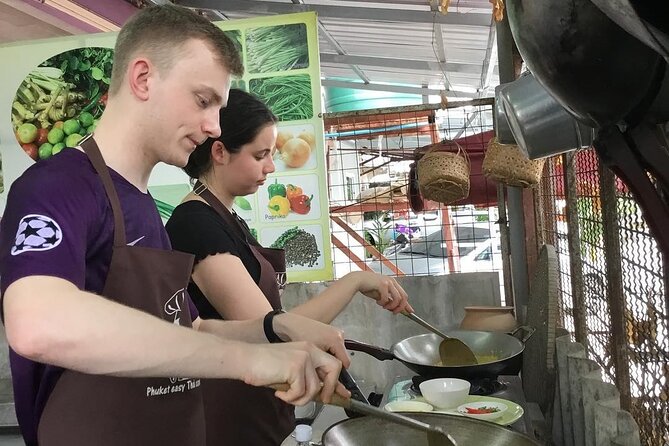
You can book either a morning or afternoon session. Both are built around the same flow: pickup → market lesson → cooking lesson → eat what you made → return transfer.
Morning (lunch) timetable
- Pickup around 08:30–09:00
- Market visit around 09:30
- Cooking session and lunch around 11:00
- Transfer back around 14:00
Afternoon (dinner) timetable
- Pickup around 14:30–15:00
- Market visit around 15:30
- Cooking session and dinner around 16:00
- Transfer back around 19:00
Here’s the small practical thing to plan for: one person noted that the afternoon start felt earlier than expected based on the printed start time, and the real cooking flow began around 2pm. That’s not something you can predict perfectly, but it’s a good reminder to confirm your pickup window the day before and be ready earlier than you’d normally schedule.
Why timing matters: if you’re trying to pack in beach time or a Phuket viewpoint before your class, the morning option is usually easier. Afternoon slots work well if you like sleeping in and letting the day cool down a bit—though you’ll still be out in the market heat.
Small-group limits (max 12) and why you’ll cook better
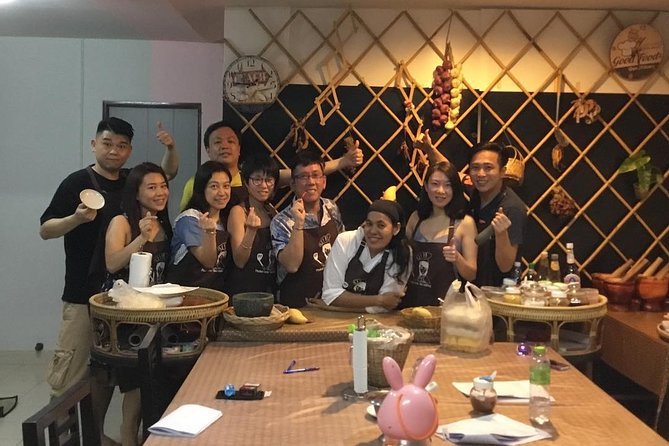
A maximum group size of 12 is a big deal in cooking. Thai recipes can be fast-changing—heat turns things quickly, and flavors build in stages. With more people, you either wait your turn or you follow passively.
With a small group, you’re more likely to:
- get close attention from the teacher
- understand what substitutions mean when ingredients vary
- taste as you go, instead of eating and hoping it worked
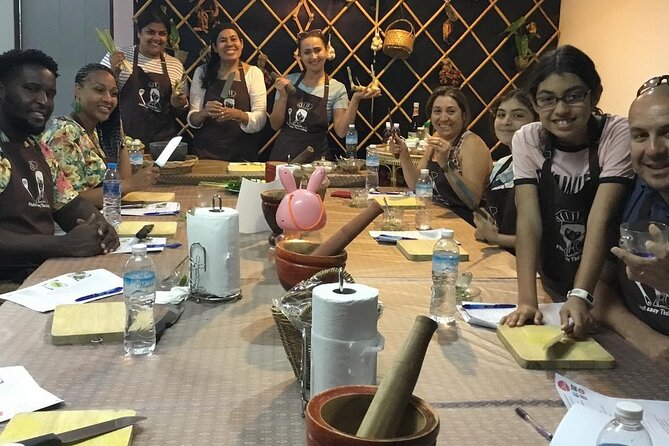
The class also uses an open kitchen layout, so you’re not stuck in a single corner. You can see the process and stay engaged, which helps if you’re cooking alongside someone rather than watching from the other side of the room.
It’s also why the instructors’ styles matter. When people mention that Tik, Karn, or Kam didn’t hold back on details and kept things funny, that usually means they’re not rushing and they’re checking that you’re following. Humor isn’t just entertainment—it’s what makes a dense lesson feel manageable.
Price and value: what $69.32 buys you in Phuket
At $69.32 per person, this class sits in a sensible mid-range for Phuket, especially because several key costs are wrapped into the experience.
Here’s what’s included:
- Market tour
- All ingredients for cooking
- Lunch or dinner, depending on your session
- Bottled water, tea, and coffee
- English instructions
- A class with a Thai teacher and kitchen equipment
Then consider what can cost extra:
- Extra transfer charges by area
- 300 THB per person (round trip) for Ao Makham, Surin, Kamala, and Bangtao Beach
- 600 THB per person (round trip) for Nai Yang, Nai Thon, and Mai Khao
- 1,000 THB extra for non-cooking participants
Pickup is another value factor. Free transfer is listed for 2 or more guests in specific areas (Patong, Karon, Kata, Chalong, Rawai, Kathu, Town). If you’re traveling as a solo person, you may need to plan around the meeting point or the transfer structure, depending on your area.
So the value case is strongest when:
- you’re ready to eat a full lunch or dinner you cooked yourself
- you want ingredient knowledge, not just a recipe card
- you’re going with a friend/couple to make pickup simpler and more cost-effective
Practical logistics: meeting point, tickets, and what to bring
The class meets at Phuket Easy Thai Cooking at 106 25 Soi Madsayid, Tambon Rawai, Phuket 83130. The activity also notes it’s near public transportation, which is helpful if your pickup doesn’t perfectly match your exact hotel location.
You’ll receive a mobile ticket, so have that accessible on your phone. You don’t need to show up with ingredient bags—the class includes what you’ll cook with.
What you should bring:
- Comfortable clothes and shoes (market walking plus kitchen time)
- A light layer if you personally feel cold in AC rooms
- A water bottle habit, even though bottled water is included
If you’re sensitive to heat, the open-air parts plus cooking time can still be warm before you reach the AC-covered cooking setup. Start hydrated and plan to take it easy right after the class.
Who this class is best for (and who might not love it)
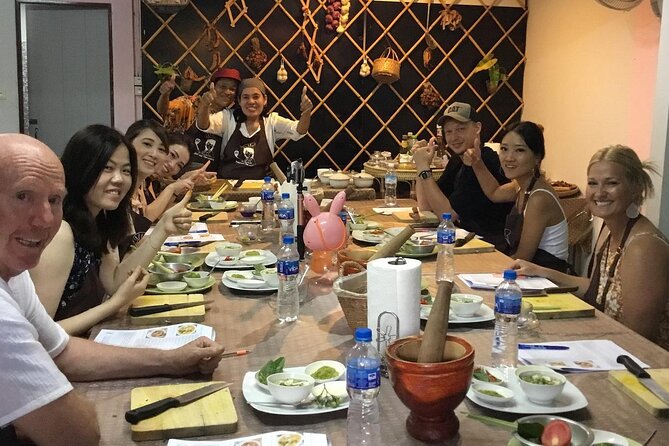
This is a strong fit if:
- you love Thai food and want to understand why it tastes the way it does
- you’d rather cook than just eat at a restaurant
- you want a small-group class with a teacher who can answer questions
- you plan to bring a few recipes home and actually make them again
It’s also a good choice for couples and small families because the experience is structured around eating what you cook, and people often find it memorable beyond the food.
Less ideal if:
- you’re very short on time and can’t handle a full 4-hour block
- you dislike markets or don’t want to spend time learning ingredient names
- you need a very flexible schedule day-of (because the experience requires good weather and can be affected by weather)
Children under 7 are free with an adult, and children aged 7–14 have a child ticket. If you’re coming with a non-cooking companion, there’s a 1,000 THB additional fee for them.
Should you book this Phuket Easy Thai Cooking Class?
Book it if you want a fun, practical way to learn Thai cooking in Phuket—especially if you care about ingredient details, not just finished dishes. The best reasons are the combination of a market lesson plus hands-on cooking, the small group size, and the comfort of AC in the open kitchen setup.
Skip or think twice if pickup costs will be high from your area, or if your schedule is so tight that the ~4-hour window and market timing could cause stress. Also, if weather is a major concern for your trip dates, remember the class requires good weather.
If you’re choosing between options, I’d pick this one when your goal is to leave with techniques you can repeat at home—because the format is built around understanding ingredients first, then cooking step by step.
FAQ
What dishes will I learn in this Phuket Thai cooking class?
The experience is described as learning five different dishes, and the included details also list 4 dishes. The menu can include popular Thai dishes such as Pad Thai, Green Curry, Penang curry, spring rolls, pineapple fried rice, mango with sweet rice, and banana fritters, but the exact set may vary by class.
How long does the cooking class last?
It runs about 4 hours in total. The market tour takes roughly 30–45 minutes, and the cooking lesson is about 2 hours.
Is pickup included, and from where?
Free transfer is provided for 2 or more guests from select Phuket areas: Patong, Karon, Kata, Chalong, Rawai, Kathu, and Town. Extra transfer charges apply for Ao Makham, Surin, Kamala, and Bangtao Beach (300 THB per person round trip) and for Nai Yang, Nai Thon, and Mai Khao (600 THB per person round trip).
What are the start times for the morning and afternoon classes?
Morning (lunch): pickup around 08:30–09:00, market visit around 09:30, cooking and lunch around 11:00, and return transfer around 14:00.
Afternoon (dinner): pickup around 14:30–15:00, market visit around 15:30, cooking and dinner around 16:00, and return transfer around 19:00.
What’s included in the price?
The price includes the market tour, all ingredients for cooking, lunch or dinner, bottled water, tea, coffee, and English instructions. The class also includes the cooking session with the Thai teacher and kitchen equipment.
What if I’m traveling with someone who won’t cook?
Non-cooking participants are charged an extra 1,000 THB.
What happens if weather is bad or the minimum group size isn’t met?
The experience requires good weather. If it’s canceled due to poor weather, you’ll be offered a different date or a full refund. If the minimum number of travelers isn’t met, you’ll also be offered a different date/experience or a full refund.