REVIEW · UBUD
Ubud : Regular or Vegetarian cooking class with market visit
Book on GetYourGuide →Operated by Group Wonderful Activities · Bookable on GetYourGuide
Ubud is full of cooking classes. This one earns its spot with hands-on Balinese food and a proper morning stop at a local market. I like the way you cook with your own hands, then taste everything you make right away. I also like how organized it feels, from the pickup process to a very clean kitchen. One thing to consider: if the idea of seeing animal products at a market doesn’t sit well with you, the morning option may feel uncomfortable, and the afternoon class is a smarter choice.
This is a vegetarian and vegan program designed for mixed households too. I’ve heard it works when one person eats vegan and another eats meat, because you’re making your own meal builds. Guides like Tata, Yogi, Harry, and Komah bring energy and clear instruction, which matters when you’re cooking in a group in the Bali heat.
In This Review
- Key things you’ll notice fast
- Why this Ubud cooking class feels like Bali, not a show
- Pickup, timing, and the morning-vs-afternoon choice
- Morning market and rice paddies: the food starts before the kitchen
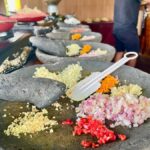
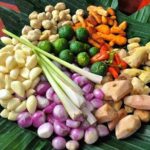
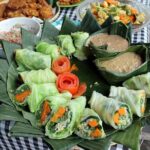
- The cooking part: 8 Balinese dishes you make with your own hands
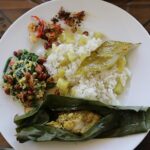
- Lunch or dinner buffet: eating your work (while it’s still hot)
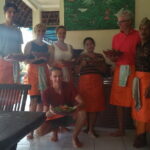
- Guides you’ll actually understand, from Tata to Yogi to Komah
- Price and value: $23 for food, context, and a repeatable skill
- What to bring and what to watch for
- Who this Ubud class suits best
- Should you book this Ubud cooking class?
- FAQ
- Is this a vegetarian and vegan cooking class?
- How many dishes will I cook?
- Does the class include a market visit?
- Are rice paddies part of the experience?
- What do I eat during the class?
- What cultural activity is included in the afternoon class?
- What’s included in the pickup and drop-off?
- What should I bring with me?
- Is alcohol included?
Key things you’ll notice fast
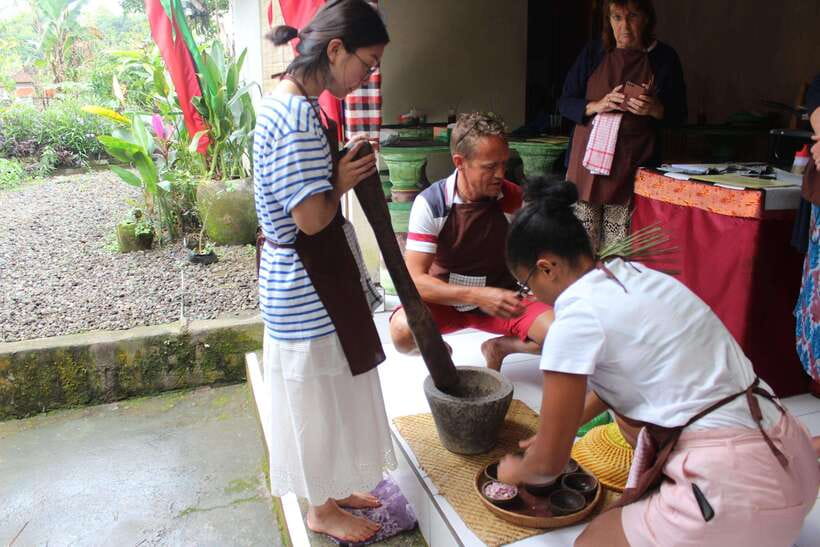
- You cook the food yourself using the kitchen setup and equipment provided, then you eat what you made
- Morning option includes a market (25–30 minutes) plus an explanation of how rice grows in local paddies
- Expect about 8 dishes, and the program also describes learning at least 9 recipe steps, depending on the flow
- You get a recipe PDF you can actually use at home for lunch or dinner
- Afternoon option adds a Hindu offering (canang) lesson instead of the market tour
- It’s well run with clear guidance, plenty of water, and a transport plan back to Ubud
Why this Ubud cooking class feels like Bali, not a show
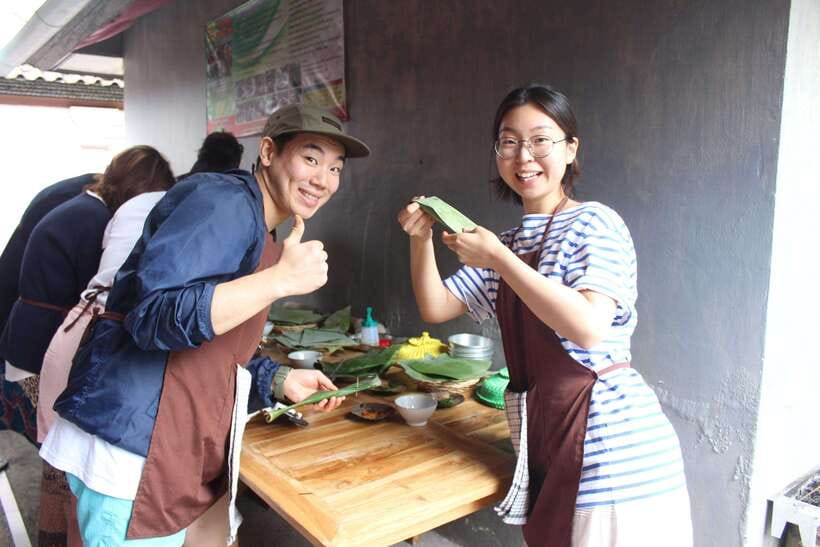
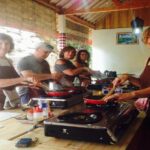
If you’ve done enough “tourist cooking classes,” you know the pattern. You watch someone cook, you get a quick taste, and you leave with recipes you’ll never repeat. This class flips the ratio. You’re not just watching. You’re cooking with your hands, step by step, and you end up eating a full spread you created.
What makes it particularly Bali is that the day is built around food from the ground up. If you choose the morning class, you start with a local market and a rice field visit. That helps your brain connect ingredients to daily life, not just to a dish name on a menu.
Also, it’s designed around vegetarian and vegan versions of Balinese cooking. And the practical advantage here is huge: even if your group isn’t 100 percent plant-based, the class structure still helps people enjoy their meal without you feeling stuck in one dietary lane.
One more plus: the whole thing is taught in English. That sounds obvious, but in Bali it’s not always guaranteed. Here, it’s part of the plan.
You can also read our reviews of more tours and experiences in Ubud.
Pickup, timing, and the morning-vs-afternoon choice
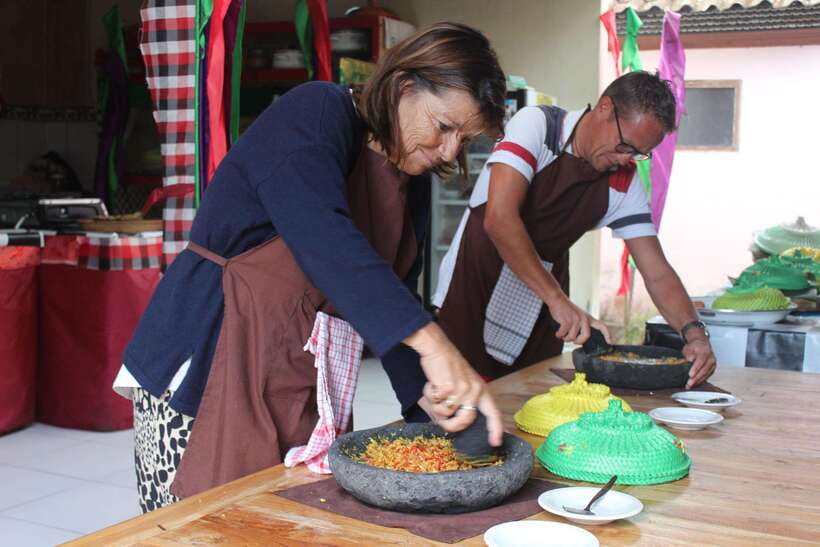
The pickup point is simple: the guide waits in front of Ubud Palace. Pickup is at 07:30am for the relevant class option, and drop-off returns you to the meeting point in the Ubud area center.
From there, your day depends on whether you book morning or afternoon:
- Morning class option: market tour (about 25–30 minutes) + local rice paddies explanation + cooking + lunch buffet
- Afternoon class option: you skip the market, and you’ll have a lesson on making a Hindu offering called canang, then cooking + dinner buffet
That choice matters more than people think. The morning route is more cultural context. The afternoon route is a calmer option if you prefer not to include a market stop.
And yes, it can get hot. One review specifically noted that even with fans, you’ll likely feel the heat during the cooking period. The good news is that they provide bottled water.
Morning market and rice paddies: the food starts before the kitchen
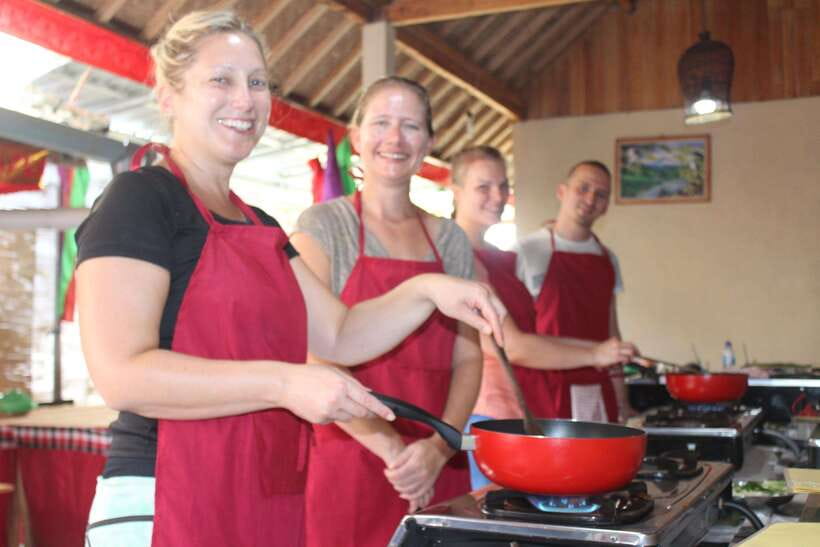
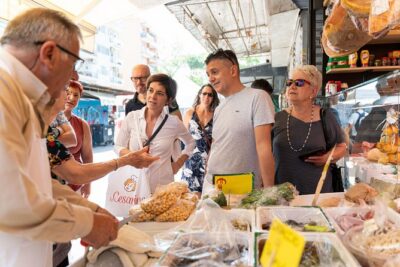
If you book the morning class, you’ll head out for the local market first. The market time is short—about 25 to 30 minutes—so you’re not trapped wandering for hours. Instead, it’s focused: you’ll learn how people sell and buy items used for cooking, including food ingredients.
There’s also a reality check here. Markets can include animal products. One person in the reviews said the lack of animal welfare there was upsetting, and recommended the afternoon class as a better fit for some vegans. So if you’re sensitive to that topic, treat the morning market stop as a deliberate decision, not an automatic bonus.
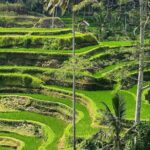
After the market, you move on to rice paddies for an explanation of how rice grows in Bali. You also get to see the rice paddies for photos, and learn there are different kinds of rice in Bali. The tour includes talk about harvest timing too, which helps you understand why rice is such a constant in everyday Balinese food and routines.
Even if you’ve eaten rice your whole life, this part changes how you see it. You start thinking in seasons, not just side dishes.
The cooking part: 8 Balinese dishes you make with your own hands
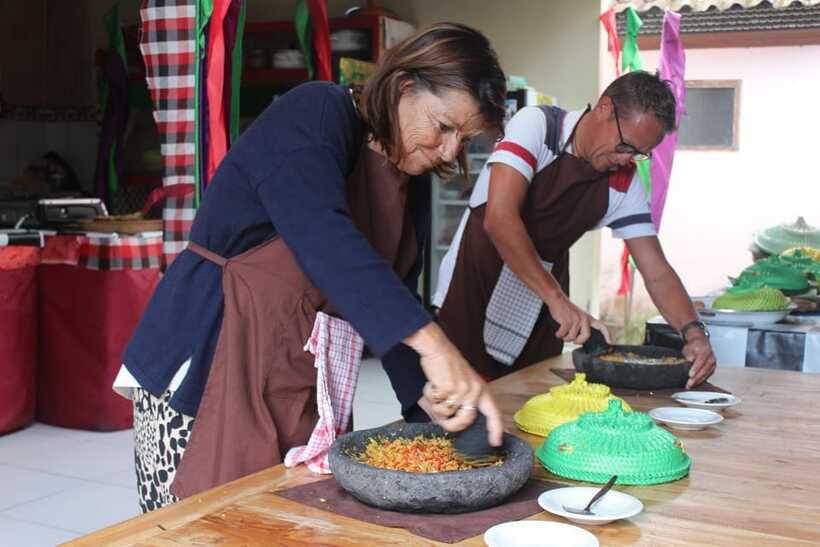
Now for the main event: the class kitchen. This is where the value really shows.
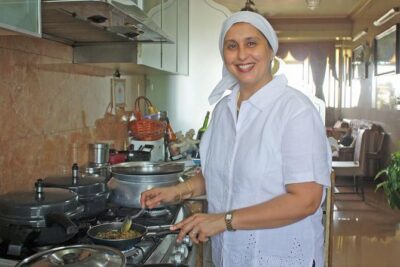
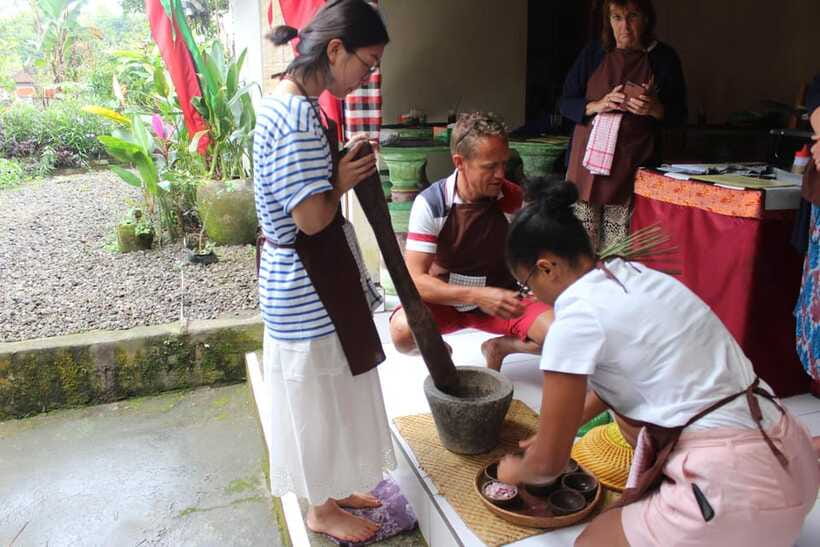
You’re guided by a Balinese chef (with a local host/guide support) step by step as you prepare at least 9 recipe steps, with the menu centered around 8 Balinese dishes. Depending on how the class flow goes that day, you may feel it as “eight big dishes” plus extra preparation along the way.
What you can expect, in practical terms:
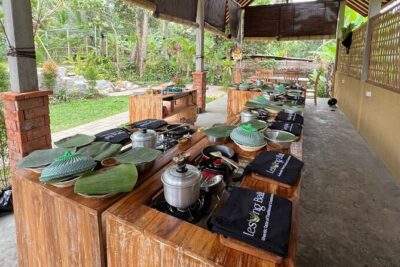
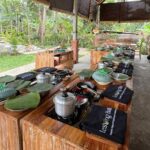
- You cook using the kitchen setup and equipment provided
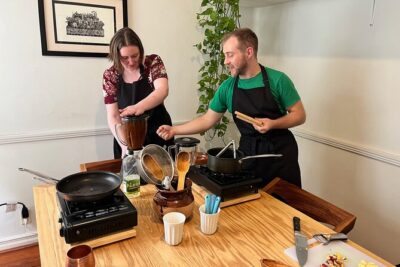
- You build dishes by following the chef’s instructions in a group setting
- You taste during the process, not just at the end
One review praised the organization and even mentioned laminated photos of the meals you’ll prepare. That kind of visual help is underrated. It reduces confusion when you’re juggling ingredients, heat, and a group pace.
Also, the class is set up to support mixed diets. One review said the class catered to a vegan participant and a meat-eater partner, and it worked because everyone was cooking their own meal builds in the class environment.
Diet notes you should keep in mind: this is a vegetarian/vegan program. Alcohol is not included. So if you want a drink with dinner later, plan it separately.
Lunch or dinner buffet: eating your work (while it’s still hot)
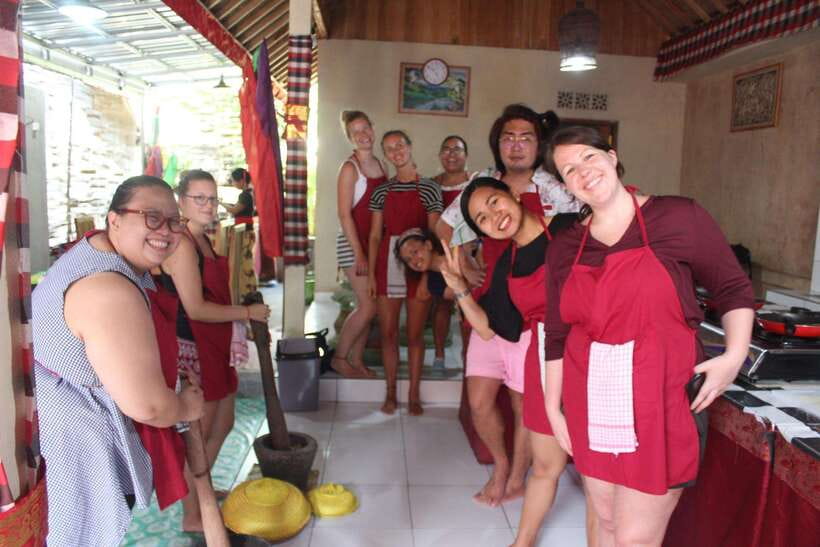
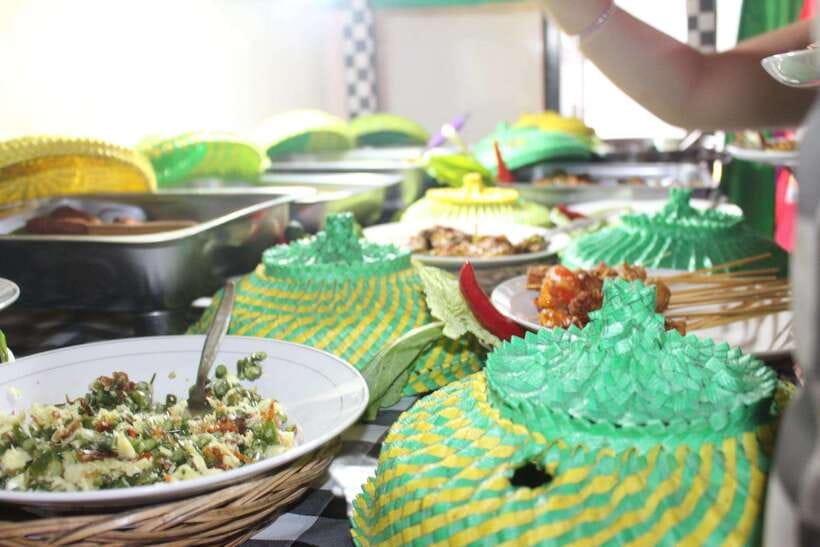
At the end, you sit down for a lunch or dinner buffet, depending on your class option. This is more than a reward. It’s part of the learning. You’ll taste what you made and get immediate feedback on seasoning, texture, and balance.
A few reviews also pointed out that there’s plenty of mineral water during the activity, which helps when you’re cooking in Bali warmth. One person even mentioned cold bottled water for the afternoon class.
If you’re the type who rushes straight past the tasting part in other classes, slow down here. Eat, compare bites, and pay attention to what you did. That’s how the flavors stick in your memory for when you cook at home.

Guides you’ll actually understand, from Tata to Yogi to Komah
A big reason this class scores high is how teaching happens. You’re not left alone with a cutting board and a vague recipe card.
From the reviews, you might meet guides such as:
- Yogi, who was described as helpful and funny
- Tata, noted as friendly and knowledgeable
- Komah, praised for making the class fun while sharing lots of food and culture information
- Harry, mentioned as taking people through the market and sharing info about rice fields and markets
And beyond names, it’s the style that matters. People commented on clear communication, organized materials, and a clean workspace. One review also mentioned efficient transport and a safe driver, plus strong communication so you can find the vehicle easily.
Translation for you: if you’re worried about “Will I be able to follow this?” the odds are better than average.
Price and value: $23 for food, context, and a repeatable skill
At $23 per person, this isn’t a luxury splurge. It’s more like a well-priced cultural lesson that ends with a meal.
You’re getting several things bundled together:
- Pickup and drop-off within Ubud area center
- A local guide/host and step-by-step coaching
- Market tour and rice paddies (only on the morning option)
- Cooking instruction and ingredient/equipment support
- Food tasting
- A lunch or dinner buffet
- A recipe PDF so you can repeat it at home
The recipe PDF is a quiet but important part of the value. Many cooking classes end with your stomach full and your notes unread. Here, you have a way to cook again for family later.
So who should judge this as “worth it”? Anyone who wants the whole package: hands-on cooking plus a bit of local food context.
If you only want a single cooking lesson and don’t care about market or rice fields, you might consider the afternoon option for a simpler day.
What to bring and what to watch for
You’ll want to bring cash. The tour notes specifically call this out, so don’t assume everything is card-only.
You also shouldn’t plan on large luggage. Oversize luggage isn’t allowed, so pack light.
The class isn’t listed as suitable for wheelchair users, and there may be steps involved around the kitchen area. If mobility is a concern, it’s smart to message the provider before booking and ask what the access looks like.
Finally, keep expectations realistic about heat. The kitchen experience is active, outdoors time can happen before cooking, and at least one review mentioned it was quite hot in the afternoon.
Who this Ubud class suits best
This is a great match for:
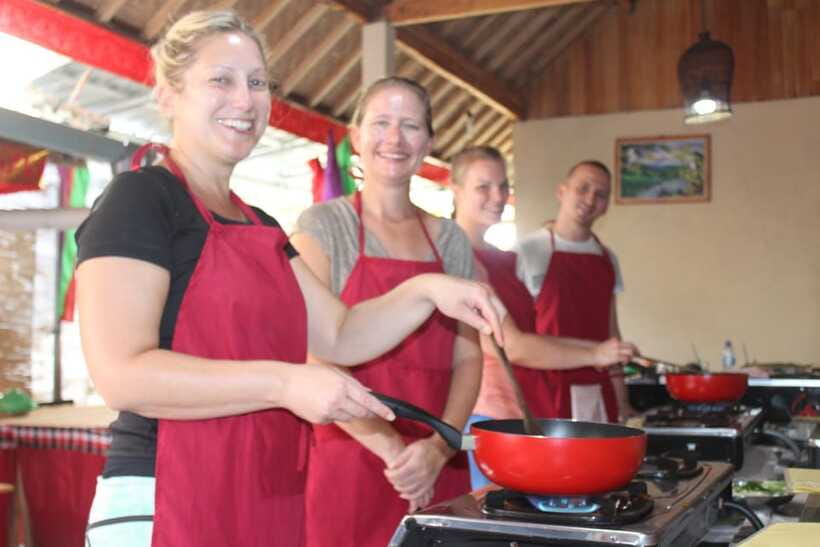
- Food lovers who want hands-on cooking
- Vegans and vegetarians who want Balinese flavors without missing the culture
- People traveling in mixed-diet pairs (vegan plus meat-eater)
- You if you like structured teaching and clear visuals
It’s less ideal if:
- You strongly prefer to skip markets that may involve animal products
- You need wheelchair-friendly access
- You want a quiet, private experience (this is a group class)
Should you book this Ubud cooking class?
Yes, if you want a plant-forward Balinese cooking day that’s practical and repeatable. The key strengths are the hands-on cooking, the organized teaching, and the fact that you leave with a recipe PDF you can use.
Book the morning class if you want market and rice context and you’re comfortable with seeing what a local market contains. Book the afternoon class if you’d rather avoid the market stop and focus more on cooking plus the canang offering lesson.
If you’re on a tight schedule in Ubud, prioritize the option that matches your comfort level with the market. Either way, you’re paying for a full day of cooking plus a meal, not just a photo op.
FAQ
Is this a vegetarian and vegan cooking class?
Yes. The program is vegetarian and vegan focused, and you’ll learn Balinese cooking with an emphasis on plant-based dishes.
How many dishes will I cook?
The program highlights making 8 Balinese dishes, and it also describes learning at least 9 recipe steps. The exact flow can vary by class, but you’ll be actively preparing multiple dishes.
Does the class include a market visit?
Only if you book the morning class. The market tour runs about 25–30 minutes. If you book the afternoon class, the market tour is not included.
Are rice paddies part of the experience?
Yes, but only for the morning class option. You’ll visit local rice paddies and learn how rice grows and when harvest happens.
What do I eat during the class?
You’ll have food tasting and then a lunch or dinner buffet, depending on whether you booked the morning or afternoon option.
What cultural activity is included in the afternoon class?
The afternoon option includes learning to make a Hindu offering (canang).
What’s included in the pickup and drop-off?
Pickup is at 7:30am and drop-off returns you to the meeting point in the Ubud area center. The guide meets you at the front of Ubud Palace.
What should I bring with me?
Bring cash, since it’s listed as required. Also avoid oversize luggage.
Is alcohol included?
No. Alcohol drinks are not included.