REVIEW · UBUD
Balinese Ubud cooking school (9 Dish Cooking and Market Tour)
Book on Viator →Operated by Wayan Aris · Bookable on Viator
Nine dishes, one Bali morning. This Ubud cooking school experience pairs serious cooking with a market tour and local farm viewing, so you’re not just copying recipes—you’re learning what ingredients mean in real life. I like that you’ll make nine Balinese classics (not just a couple), using kitchen tools and ingredients that are tough to replicate at home. One thing to keep in mind: pickup is Ubud area only, so if you’re farther out, you’ll need to plan for extra transport.
The second reason I’m a fan is how the pace works for mixed skill levels. The class is step-by-step with a Balinese chef, and the kitchen is set up so you can actually cook, not just watch. With a small maximum of 14 people, it feels more like a workshop than a factory line.
Finally, the value is strong for the full package—market snacks/tastings, food you cook, lunch or dinner buffet, and recipe copies to take home. The one drawback I’d flag is that the schedule depends on choosing the morning option for the market, so check your timing before you book.
In This Review
- Quick hits before you go
- Nine dishes, market shopping, and rice fields: what you’re really buying
- Why the market stop matters (more than you think)
- From Ubud Palace meeting point to the kitchen: how logistics affect your comfort
- Time expectation
- Morning market tour: learning the ingredients behind Bali’s everyday cooking
- What you gain for your cooking session
- Rice paddies and Subak-style farming: why the farm visit isn’t just for photos
- A small benefit that adds up
- In the kitchen: how this class sets you up to actually cook
- Your guides: the human touch
- Your nine Balinese recipes: what you’ll cook and why each one is a lesson
- The real takeaway: Balinese flavor isn’t one flavor
- Spice levels: tell them how you want it
- Lunch or dinner buffet: the best moment is the last one
- Pack-up is a real possibility
- Value check: is $58 a good deal for this format?
- Who should book this Ubud cooking school experience
- Should you book this 5-hour Balinese 9-dish cooking tour?
- FAQ
- Is the market tour included in the experience?
- How long is the cooking school tour?
- Does the price include pickup and drop-off?
- Do I get to eat what I cook?
- Can I choose a vegetarian menu?
- How many dishes will I learn to make?
- Are rice paddies included?
- What’s included in the kitchen session?
Quick hits before you go
- Market tour in the morning where you see how locals shop and what they choose for daily cooking
- Nine recipes including staples like Lawar Bali, Sambal Matah, and Klepon
- Rice paddies visit tied to how rice is grown on Bali (Subak-style context)
- Regular or vegetarian menu that still includes the full set of dishes
- Small group (max 14) with enough stations so you’re actively cooking
Nine dishes, market shopping, and rice fields: what you’re really buying
At $58 for about 5 hours, you’re paying for more than a cooking class. You’re buying a full food day in Ubud: pick ingredients with a guide, learn what makes Balinese flavors work, then cook and eat multiple dishes you’d otherwise only sample one at a time at warungs and restaurants.
The tour’s structure is simple. You start with local context (market and rice paddies), then move into a cooking school kitchen where you prepare at least 9 recipes. The goal isn’t just to make food. It’s to help you understand the building blocks—spice pastes, fresh aromatics, coconut-based sauces, and banana-leaf cooking—so you can cook a few dishes later without guessing.
You can also read our reviews of more tours and experiences in Ubud.
Why the market stop matters (more than you think)
A lot of cooking classes skip the sourcing. This one doesn’t. In the market visit, you learn what people actually buy and how they pick fruits, vegetables, spices, and sweets. That’s useful because Balinese dishes often depend on small details: the type of chili, the freshness of herbs, and the way ingredients are combined.
It also helps your cooking session make sense. When you later touch ingredients in the kitchen, you’re not thinking, What is this? You’re thinking, Oh, I saw it in the market and now I know what it’s for.
From Ubud Palace meeting point to the kitchen: how logistics affect your comfort
You’ll start at Ubud Palace (Jl. Raya Ubud No.8). Pickup can be offered inside the Ubud area, with the tour ending back at the meeting point. That’s great if you’re staying in central Ubud and want a low-stress start.
Two practical points matter here:
- If you’re outside Ubud, you may need to pay additional transport.
- The tour asks you to show your booking reservation and bring cash if extra transport is needed.
Also, bring your camera. The itinerary includes a market and rice paddies stop, which are both photogenic in a real, everyday way—not staged tourist scenery.
Time expectation
Plan for roughly 5 hours. The morning version tends to feel like a single continuous food day: market → rice paddies viewing → kitchen cooking → lunch or dinner buffet.
Morning market tour: learning the ingredients behind Bali’s everyday cooking
If you choose the morning schedule, you get the traditional market visit with a guide. The focus isn’t shopping for souvenirs. It’s learning how people sell and buy food—especially the ingredients that show up in Balinese classics.
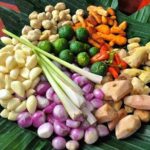
In the market, you’ll also try samples of local produce and sweets. One of the best parts of this stop is how it resets your expectations of what ingredients can taste like. You might taste fruits you’ve never seen before, plus local snacks and desserts that look simple but carry strong flavors.


What you gain for your cooking session
By the time you step into the kitchen, you’ll have a mental map of:
- Which ingredients are “daily staples” versus special treats
- How spice flavor works in the dish—fresh chilies vs ground spice paste
- What “sweet” means in Balinese desserts (often palm sugar and sticky textures)
That’s why this market stop feels worth it even if you’re short on time.
Rice paddies and Subak-style farming: why the farm visit isn’t just for photos
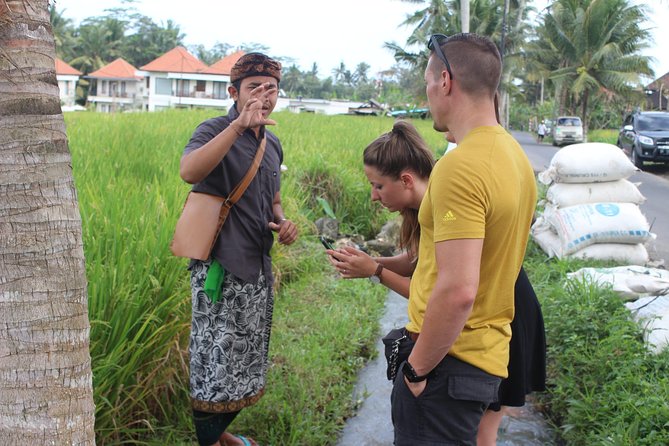
The itinerary includes a visit to rice paddies (described with Subak-style context). Even if you just want photos, the stop is still practical. Rice farming is central to Bali’s food culture, and seeing the paddies helps you understand why certain ingredients show up everywhere.
You’ll learn about how rice is grown in Bali—along with the idea that different types of rice exist and harvesting timing matters. That matters because Bali’s cooking often pairs rice with dishes that are rich, spicy, and coconut-heavy. When rice is treated as a reliable foundation, the rest of the meal can be bold.
A small benefit that adds up
This farm stop can also slow your day down in a good way. You’re not only sprinting through a schedule. You’re getting a short cultural reset before the hands-on cooking begins.
In the kitchen: how this class sets you up to actually cook
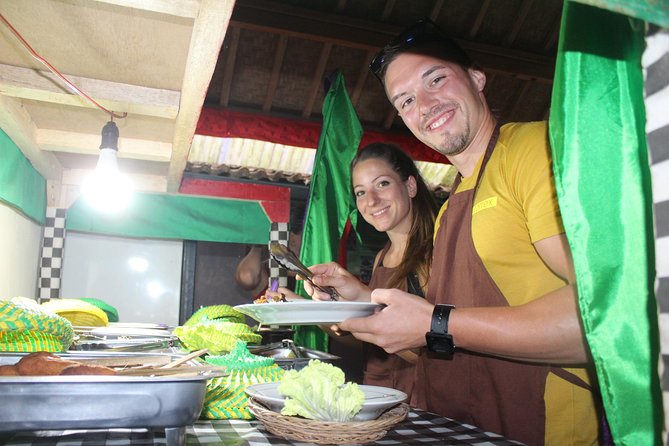
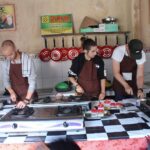
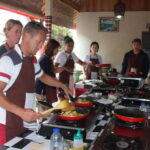
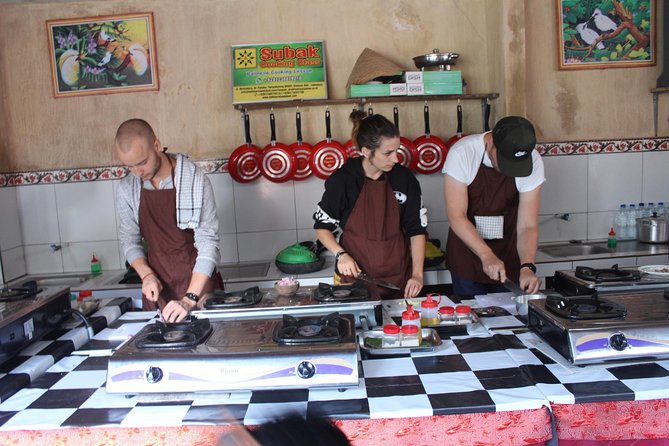
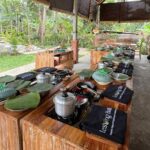
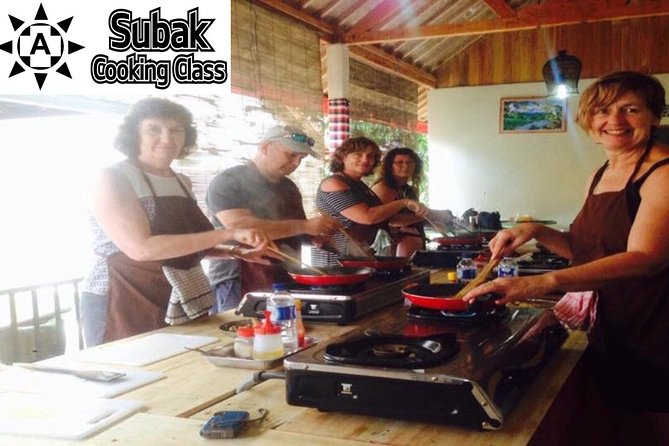
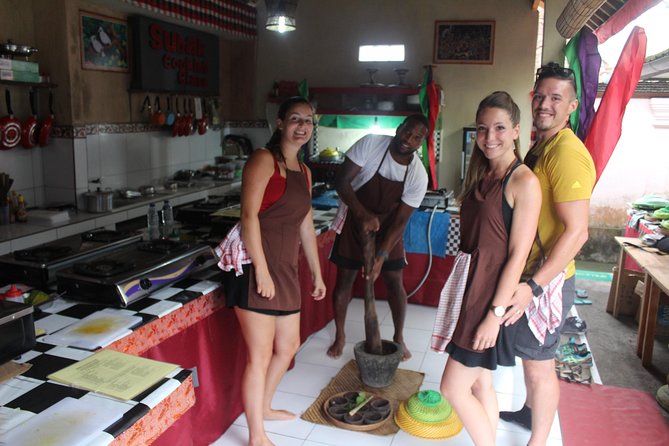
Once you arrive at the cooking school, the experience becomes a true workshop. The chef and kitchen staff guide you step-by-step through prepping and cooking. You’ll work through at least 9 recipes, and you’ll have the equipment you need—so you’re not stuck trying to cook with tools you didn’t bring.
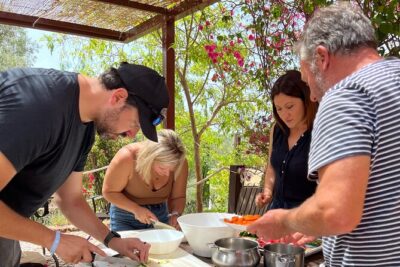
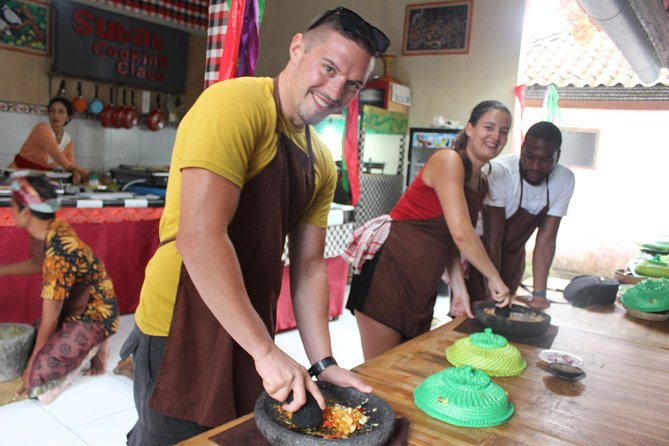
The setup encourages participation. Reviews describe multiple stations so people can feel hands-on while still getting support when needed. If you’re traveling with family or a friend, it’s also easy to stay engaged because you’re cooking in parallel.
Your guides: the human touch
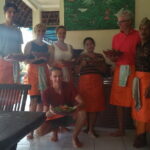
The people running the experience often come across as warm and funny, and they tend to speak clear English. Named examples in the team include chefs and instructors such as Yogi, Tata, and Putu/Putu (spelling can vary), plus guides like Wayan. Even if your exact guide differs, you can expect a similar style: friendly explanations, lots of Q&A, and guidance that keeps you from getting lost in the steps.
Your nine Balinese recipes: what you’ll cook and why each one is a lesson
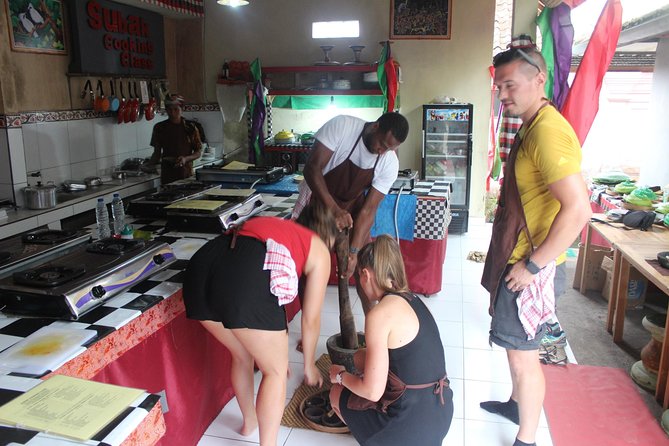
This is where the class earns its reputation. You’re not just making a main dish. You’re learning how Balinese meals build flavor across soup, savory mains, spice condiments, and dessert.
Here’s what’s on the regular menu:
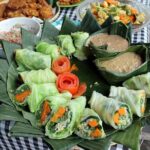
- Soup Sayur Bali (Balinese vegetable soup)
- Ayam santan Bumbu Bali (fried chicken with coconut milk)
- Tempe Manis (sweet fried tempe)
- Sate Lilit Bali (Balinese chicken satay)
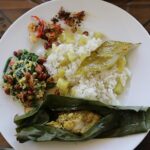
- Pepes Ayam (grilled/steamed chicken in banana leaf)
- Lawar Bali (mixed vegetables with Balinese spices)
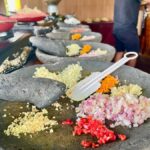
- Sambal Matah (raw spices with coconut oil)
- Base Gede (basic spices paste)
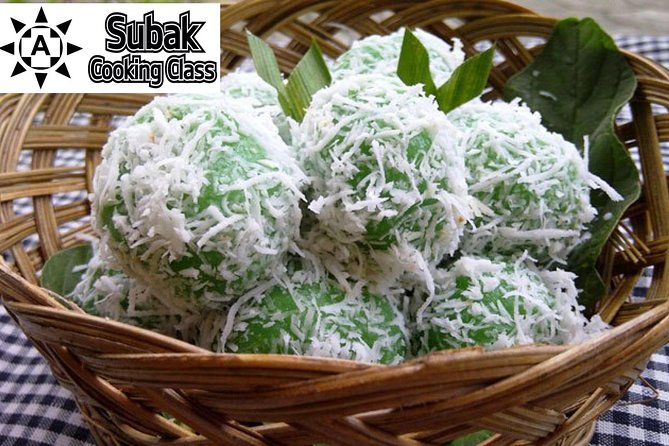
- Klepon Cake (boiled sticky rice circles with palm sugar)
- Plus: mains served with white rice
And the vegetarian menu swaps several items while keeping the same structure:
- Tofu Bumbu Bali
- Sate Tempeh with peanut sauce
- Pepes Tofu in banana leaf
Everything else stays the same: soup, Tempe Manis, Lawar Bali, Sambal Matah, Base Gede, and Klepon, with white rice.
The real takeaway: Balinese flavor isn’t one flavor
If you only tried one dish at a restaurant, you might think Balinese cooking is simply spicy or simply coconut-rich. Cooking nine dishes shows you the real range:
- Base Gede teaches you how spice pastes become the backbone for multiple dishes.
- Sambal Matah shows how raw aromatics can taste bright and punchy without needing long cooking.
- Pepes teaches banana leaf technique—steaming/grilling in leaf helps perfume the food.
- Lawar Bali demonstrates how vegetables and spices can be mixed into something hearty, not just a side.
And then dessert: Klepon is sweet, sticky, and palm-sugar centered. It’s a reminder that Balinese meals often close with something comforting, not just a plain afterthought.
Spice levels: tell them how you want it
The menu includes sambal and spice paste elements, so expect heat to be part of the cooking. The good news is that you can often cook your portion to your preferred level—just make sure you communicate your comfort with spice early in the process.
Lunch or dinner buffet: the best moment is the last one
After cooking comes the best part: eating what you made. You’ll have lunch or dinner buffet featuring the food you cooked, plus mineral water during the experience.
There’s also food tasting built into the day, especially around ingredients you sample earlier. The day works because you’re eating in sequence. You cook a dish, then you taste it. You learn what finished food should taste like, not just what it looked like mid-prep.
Pack-up is a real possibility
If you end up with more food than you can finish, you can often take leftovers back. The tour runs like a full meal day, so going in with a big appetite is smart.
Value check: is $58 a good deal for this format?
For Ubud, $58 is not just “a cooking class price.” You’re getting:
- A market visit in the morning option
- Rice paddies stop
- At least 9 cooked dishes
- Copy of recipes to take home
- A full lunch or dinner buffet
- Food tasting and bottled water
- Pickup/dropoff inside Ubud area
That value jumps if you’re the type of traveler who likes practical skills. Recipes alone are nice, but ingredients are the real advantage here. You’ll use local components and techniques like banana-leaf steaming and palm sugar dessert methods—things that are hard to recreate well without seeing how they’re handled.
Who should book this Ubud cooking school experience
This fits you if:
- You love food and want more hands-on than a typical class
- You want a cultural day tied to ingredients, not just cooking steps
- You’re traveling with a partner, friends, or family and want a shared activity
It might not be the best fit if:
- You hate any schedule where the market matters, and you’re only interested in cooking fast
- You’re staying well outside Ubud and extra transport costs would change the math
- You prefer classes that are fewer dishes and more relaxed (this one is a full menu)
Should you book this 5-hour Balinese 9-dish cooking tour?
Yes, if you want a real food day in Ubud with market context and enough cooking to learn how Balinese flavors are built. The main strength is the scope: nine recipes plus the ingredient story behind them.
If you’re deciding between morning and afternoon, pick morning when you want the market stop. Choose vegetarian only if you truly want that menu—because the entire set is mapped to it, not treated as a last-minute swap.
And a simple tip: go hungry. You’ll be tasting, cooking, and then eating a full meal. It’s not a light snack class.
FAQ
Is the market tour included in the experience?
The market visit is included with the morning class option. It’s described as a traditional market visit for the morning schedule.
How long is the cooking school tour?
The duration is about 5 hours.
Does the price include pickup and drop-off?
Pickup and drop-off are included for the Ubud area only. If you stay outside Ubud, additional charges may apply.
Do I get to eat what I cook?
Yes. Your lunch or dinner buffet includes the food you cook, and there is also food tasting during the experience.
Can I choose a vegetarian menu?
Yes. You can choose either a regular menu or a vegetarian menu.
How many dishes will I learn to make?
You’ll learn to prepare at least 9 recipes.
Are rice paddies included?
Yes, the experience includes a visit to the rice paddies (morning option refers to the market tour, while rice paddies are listed as included).
What’s included in the kitchen session?
Included are kitchen equipment, copies of recipes to take away, mineral water, and guidance from a local guide/host and Balinese chef step-by-step.