REVIEW · UBUD
Ubud: Balinese Cooking Class and Market Tour
Book on GetYourGuide →Operated by Group Wonderful Activities · Bookable on GetYourGuide
The market is your ingredient list. This Ubud experience pairs a local market tour with a chef-led workshop where you cook 9 Balinese dishes by hand and eat what you make. It’s a short, very hands-on way to taste how Balinese cooking starts before you ever touch a pan.
I especially like the small-group feel, with a limit of 14 participants, so you get real attention while you’re chopping, mixing, and learning technique. I also like that the cooking isn’t just watching: you’re guided step by step, then you sit down and taste everything together.
One consideration: the traditional market stop is for the morning option only, and it can feel intense in a very real-market way. If you prefer ultra-clean, tourist-smooth stops, this may not match your style.
In This Review
- Quick hits before you go
- Price and logistics in Ubud: what $23 really buys
- Choosing morning vs afternoon: market and rice or Canang and compound life
- Morning option: market + rice paddies + cooking
- Afternoon option: cooking + Canang offering
- The traditional market tour: how guides translate Balinese food shopping
- Rice paddies visit (morning only): why rice shows up everywhere
- Cooking class inside a Balinese family setting: hands-on, step by step
- Mentors you may hear by name
- The Canang offering (afternoon only): a small ritual with big meaning
- Tasting at the same time: a meal that teaches you
- The PDF recipe handout: how to use it without losing the taste
- Food choices and dietary needs: what’s supported
- What to bring (and what to skip)
- Who should book this cooking class in Ubud
- Should you book it or pass? My straight answer
- FAQ
- How long is the Ubud Balinese cooking class and market tour?
- Is hotel pickup included?
- Does the tour include a market visit?
- Are the rice paddies visit and fruit tasting part of the experience?
- How many dishes will I cook?
- Is there an afternoon option if I do not want the market?
- What language is the tour guide?
- What should I bring?
- Is the class suitable for kids or wheelchair users?
- What’s the cancellation policy?
Quick hits before you go
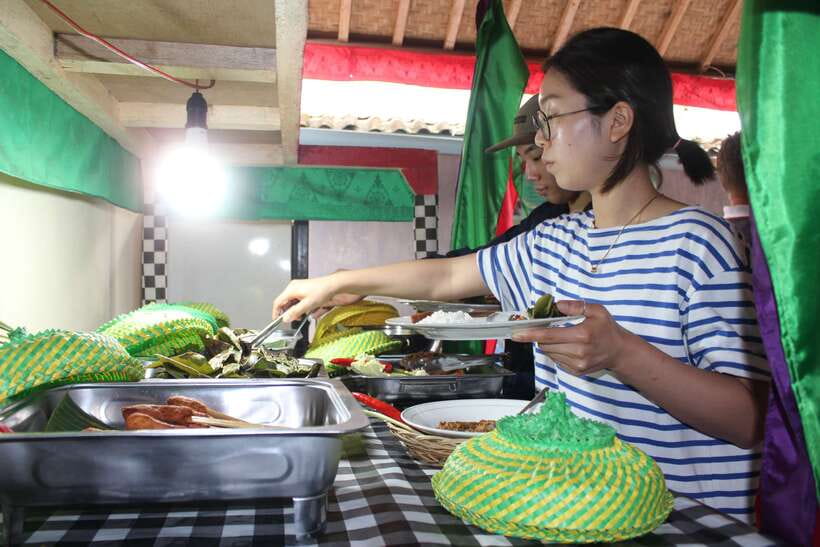
- Morning market tour + fruit tasting gives you context for the flavors you’ll cook later
- Cook 9 signature dishes with a chef, not a lecture
- Small group (up to 14) keeps the experience personal
- Rice paddies visit (morning only) adds culture beyond the kitchen
- PDF recipe copy included so you can recreate the dishes later
Price and logistics in Ubud: what $23 really buys
At about $23 per person for a 4-hour experience, the value is mostly in what’s included: pickup and drop-off within the Ubud area, a guide, 9 Balinese dishes, plus a PDF copy of recipes. For Bali, that’s not just a class price. It’s closer to a full cultural-food package.
You’re also not stuck in a huge crowd. With a small group (limited to 14), the chef and guides can help when your technique needs a nudge. That matters, because Balinese cooking often hinges on getting the right texture and balance in spice pastes, sauces, and seasoning.
Do note the boundaries: pickup and drop-off is only in the Ubud zone. If you’re staying outside Ubud, you’ll need to meet the shuttle around the Ubud Palace area or make your own way to the start point.
You can also read our reviews of more tours and experiences in Ubud.
Choosing morning vs afternoon: market and rice or Canang and compound life
This experience comes in two main formats, and your choice affects what you’ll see.
Morning option: market + rice paddies + cooking
In the morning, you get the full arc: market tour with tasting, then a visit to local rice paddies, then the cooking workshop where you make 9 recipes. If you care about ingredients and the meaning behind the food, this is the better pick.
Afternoon option: cooking + Canang offering
In the afternoon, you skip the market and rice paddies portion. Instead, you get a cooking class focused on Balinese food-making and include a Canang offering setup. That’s a nice cultural layer, because Canang offerings are part of daily Balinese religious life, and you’ll hear what the ritual means while you’re learning to cook.
If you’re the type who likes seeing where things come from before you cook them, go morning. If you just want maximum cooking time and a cultural add-on, afternoon can be perfect.
The traditional market tour: how guides translate Balinese food shopping
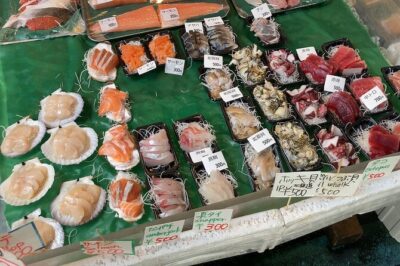
For the morning option, the market stop is the real-world warm-up. You’ll walk through a traditional setting with a guide and learn how locals buy and sell key ingredients for everyday cooking. You’ll also taste local fruit along the way.
Here’s why this part matters: Balinese flavors don’t start in a recipe card. They start at the market, where you learn what’s seasonal, what’s fragrant, and what people actually reach for when they’re cooking at home. The guide’s job is to connect those everyday shopping choices to what you’ll cook later.
One more honest note. This is a local market, not a staged food court. The sights and sounds can be gritty and intense. If you’re easily put off by tight spaces and raw-food realities, you might find this section uncomfortable. I’d call it fascinating rather than stressful, but your tolerance matters.


Rice paddies visit (morning only): why rice shows up everywhere
If you choose the morning session, there’s a stop at local rice paddies. Even if you’re not a plant nerd, it’s worth the time. You’ll hear about how important rice is to Balinese life and why it’s more than a staple ingredient.
This kind of stop can do something that cooking alone can’t. In the kitchen, you learn how food tastes. At the paddies, you learn why rice matters to the rhythm of the culture. It helps you understand why so many Balinese dishes are tied to offerings, timing, and community life.
Cooking class inside a Balinese family setting: hands-on, step by step
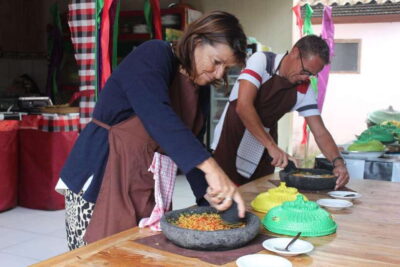
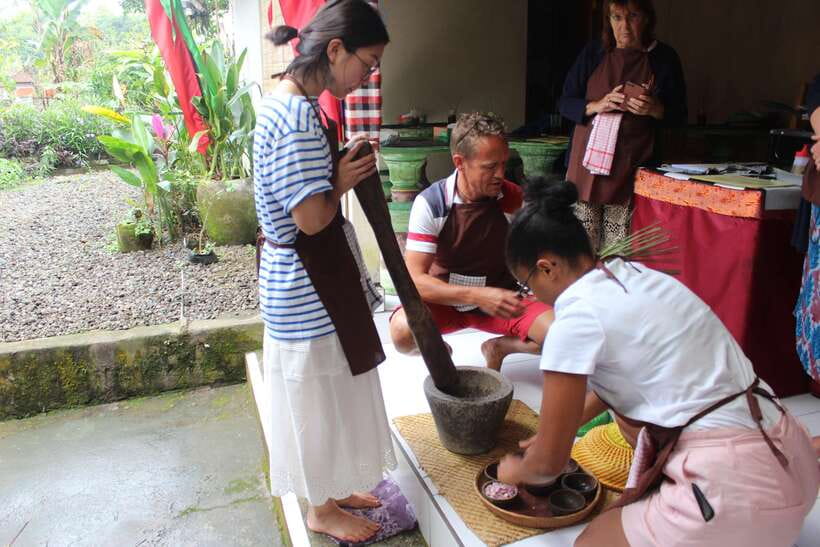
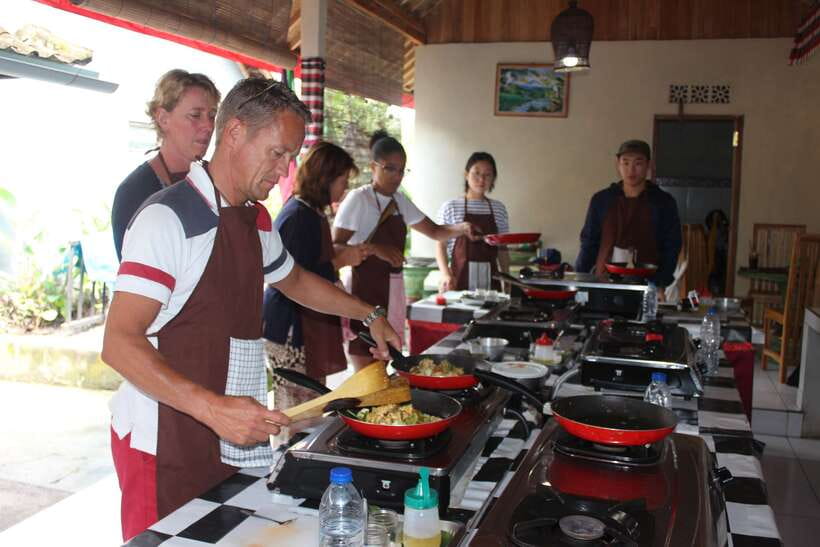
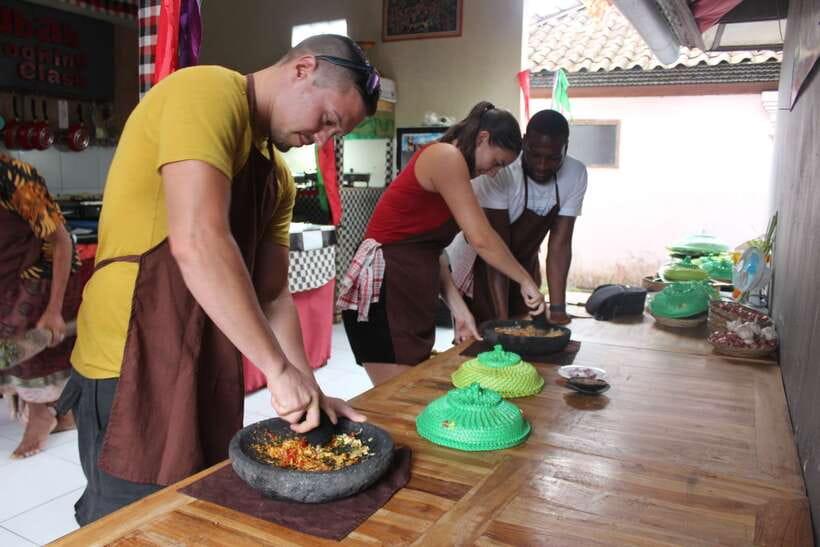
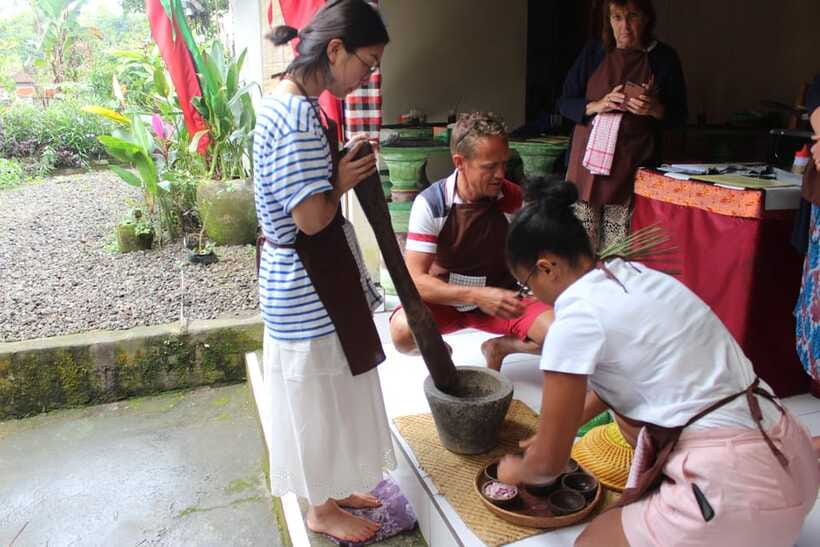
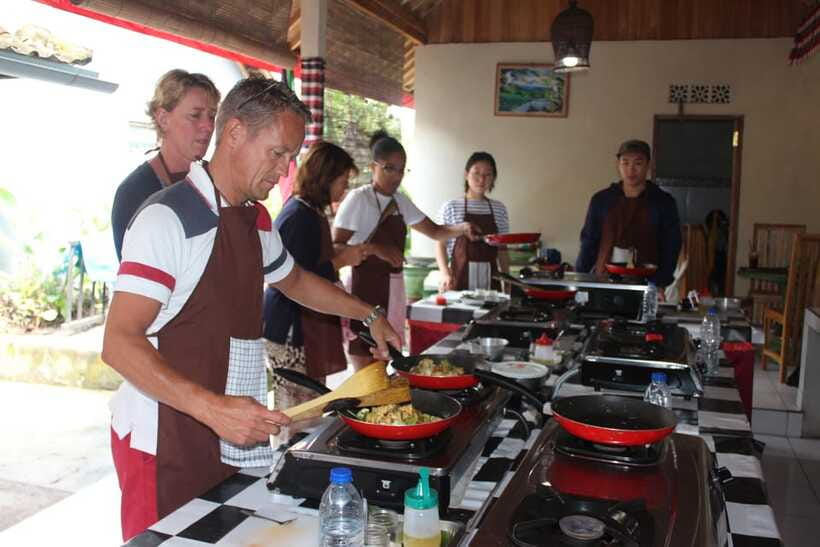
The cooking workshop is the heart of the day. You’ll be guided by a Balinese chef who teaches step by step how to make at least 9 Balinese recipes, with plenty of hands-on time. The class runs as a small-team operation inside a family compound setup, so the vibe tends to be relaxed but focused.
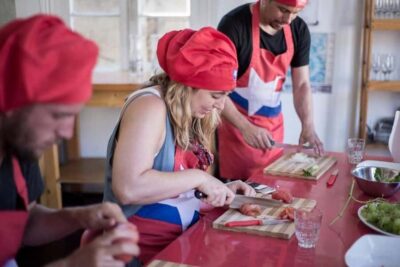
What I like about this format is how it removes the intimidation factor. You’re not expected to know the cuisine already. The chef and staff break the process into manageable steps—mixing, shaping, cooking, adjusting seasoning—and you keep moving through the menu while your instructor corrects technique in real time.
From the way the class is described, you can expect a balance of guided instruction and you doing the work yourself. That’s important for value. A cheap cooking class that mostly watches won’t stick in your brain. This one is built for getting your hands in it.
Mentors you may hear by name
Different runs have different hosts, but from the experience details shared, guides and instructors like Putu (market guide) and Wayan (cooking instructor) are often mentioned as key people who run the sessions with clarity and warmth. If your guide’s style is anything like that, you’re in good hands.
The Canang offering (afternoon only): a small ritual with big meaning
If you do the afternoon session, you’ll make a Canang offering as part of the program. The offering setup is included, which means you’re not just told about it. You’ll learn the steps and create your own offering as part of the class flow.
Why it’s more than a side activity: Canang offerings connect daily life, spirituality, and food. When you make an offering in the same overall session where you cook, it gives you a more grounded picture of how Balinese cooking sits inside the culture, not beside it.
Tasting at the same time: a meal that teaches you
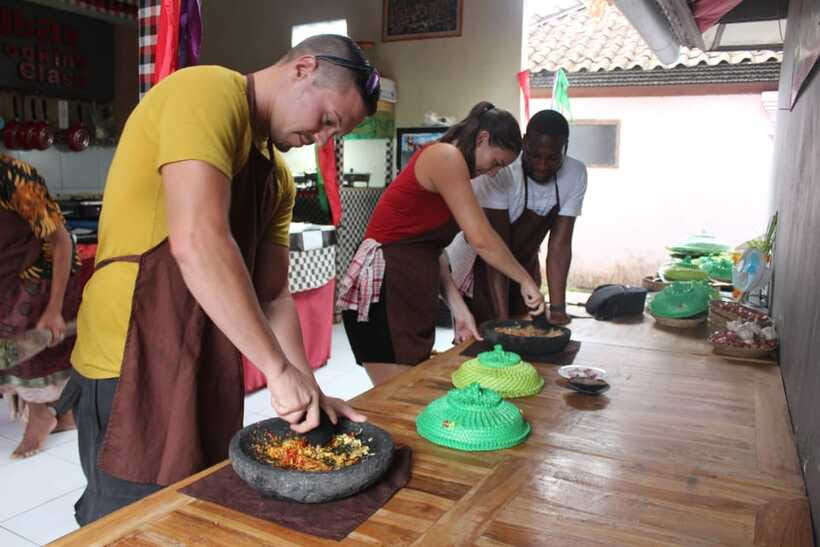
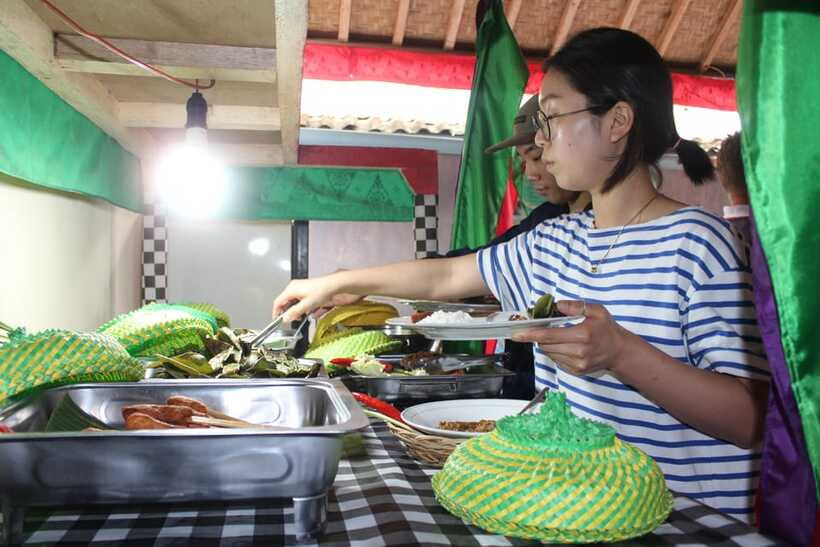
A big highlight is that you savor what you’re making as the session goes on. You don’t just produce dishes and wait until the end. You taste along the way, which helps you learn what each dish should feel like when it’s right.
That pacing also keeps the session from becoming one long cooking marathon. Because you’re eating together, the food becomes part of the conversation. You’ll notice differences between sauces, mains, and the final dishes—then you can connect those flavors to what you did with your hands.
And yes, it ends with a meal you cooked, so you leave fed, not just educated.
The PDF recipe handout: how to use it without losing the taste
You get a PDF copy of recipes, which is the smart part of a cooking class. Recipes matter less if they’re vague, and more if you can follow them later.
To make this worth it after you return home, do this: take a few photos during the class (camera works well here), then use the PDF as your checklist at home. If you remember the technique—how you mix, cook, and adjust seasoning—you’ll get way closer to the real flavor.
Also, if you’re picky about heat level, pay attention during instruction. The experience notes that vegetarian and vegan options are available, and there’s also a non-spicy menu possibility for people who need it.
Food choices and dietary needs: what’s supported
This class supports flexibility. The experience details confirm vegetarian and vegan options, and you can request a non-spicy menu when needed. There are also constraints: the experience notes it’s not suitable for children under 6 years and not suitable for wheelchair users.
If you have dietary restrictions beyond vegetarian/vegan or spice level, it’s wise to ask directly before you go. The data doesn’t list specifics beyond those categories.
What to bring (and what to skip)
Bring what the experience asks for: camera, headphones, and cash.
- Camera helps you capture dishes and setup so you remember the look and texture later.
- Headphones can be useful for clear listening during instruction.
- Cash is handy for small extras you might want while you’re out, especially in a market setting.
Skip bulky bags. The space is active, and you’ll be moving between cooking stations and tasting points.
Who should book this cooking class in Ubud
You’ll love this if:
- You want real Balinese cooking, not a quick demo
- You like learning ingredients at the local market (morning option)
- You want a hands-on class where you cook 9 dishes
- You like small groups and clear guidance from English-speaking staff
You might prefer something else if:
- You hate local-market intensity and want only polished tourist areas
- You strongly prefer private classes (this one is small-group, not private)
- You’re outside the Ubud pickup zone and don’t want to coordinate your meeting point
Should you book it or pass? My straight answer
Book it if you want a high-value mix of culture and technique in just 4 hours. The combination of market context, rice paddies (morning), and a chef-led hands-on cooking class with 9 dishes is exactly the kind of experience that makes Bali feel real fast. The PDF recipes also make it easier to keep the learning alive after your trip.
Pass only if the traditional market stop would stress you out. Otherwise, for most people visiting Ubud, this is one of the best ways to leave with both great food and usable skills.
FAQ
How long is the Ubud Balinese cooking class and market tour?
The experience is listed as 4 hours, with starting times varying by availability.
Is hotel pickup included?
Yes, hotel pickup and drop-off are included for locations in the Ubud area.
Does the tour include a market visit?
The traditional market visit is included for the morning class option only.
Are the rice paddies visit and fruit tasting part of the experience?
For morning classes, yes: you’ll visit local rice paddies (morning only) and taste local fruit during the market tour.
How many dishes will I cook?
You’ll cook 9 Balinese signature dishes with the chef step by step.
Is there an afternoon option if I do not want the market?
Yes. Afternoon sessions include a cooking class and making a Canang offering, but the market and rice paddies stops are for morning classes.
What language is the tour guide?
The live tour guide works in English.
What should I bring?
Bring a camera, headphones, and cash.
Is the class suitable for kids or wheelchair users?
It is not suitable for children under 6 years and not suitable for wheelchair users.
What’s the cancellation policy?
Free cancellation is available up to 24 hours in advance for a full refund.