REVIEW · UBUD
Ubud: Cooking Class with Transfers and Optional Market Visit
Book on GetYourGuide →Operated by Ubud Costume Dress · Bookable on GetYourGuide
Spices first, then serious cooking. In Ubud, you’ll get an optional market stop (morning option), cook classic Balinese dishes with local chefs, and finish with the meal you make in a small group of up to 10.
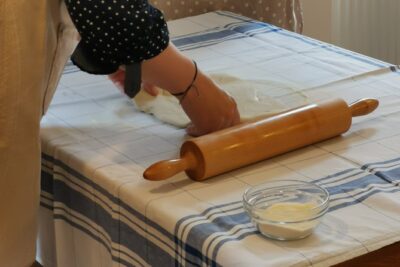
What I really like is how hands-on it feels—your hands do the work (chopping, grinding, mixing) instead of watching from the sidelines. The other big win is the culture context, where your guide explains why ingredients and dishes matter in everyday Balinese life, not just what goes into the pot.
One thing to consider: if your hotel isn’t in the Ubud Center zone (Sebali or Keliki area), there’s an extra 50,000 per person, and the whole experience is tight at 2–3 hours.
In This Review
- Key highlights worth planning around
- Ubud Kitchen Basics: How the 2–3 Hours Works
- Morning Market vs Afternoon Cooking: Choose Your Style
- The Cooking School Setup: Small Group Energy and Real Tasks
- What You’ll Cook: Curries, Satay, and Dessert
- Learning the Why Behind the Food
- The Meal at the End: Communal Table, Not Takeout
- Transfers and Meeting Points: Don’t Get Tripped Up
- Price and Value: Why $21 Can Feel Like a Lot
- Tips to Get More Out of Your Class
- Who Should Book This Cooking Class in Ubud
- Should You Book This Ubud Cooking Class?
- FAQ
- How long does the Ubud cooking class last?
- Is hotel pickup included?
- Do I get a market visit?
- What does the class include besides cooking?
- What kind of dishes will I learn to make?
- How big is the group?
- What language is the instruction in?
- Where is the meeting point?
- Is there an extra fee for some areas?
- Is it flexible to book or cancel?
Key highlights worth planning around
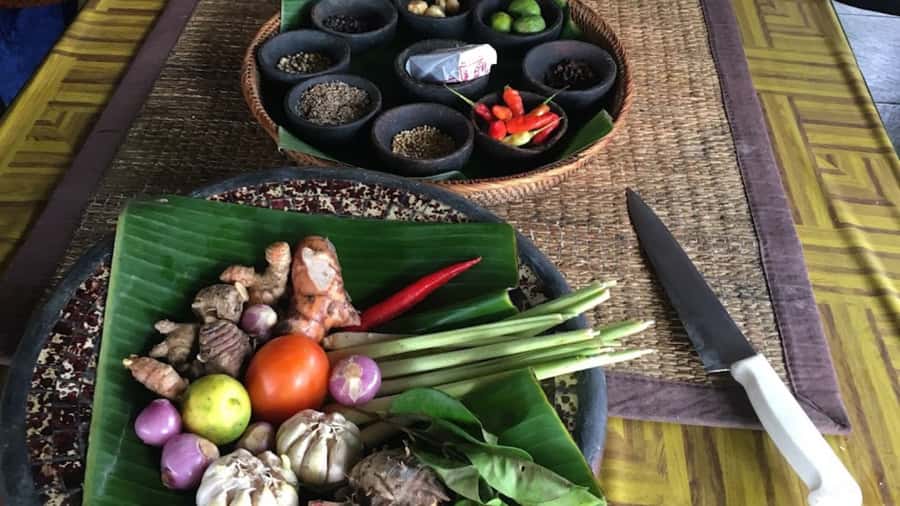
- Optional market tour in the morning: pick ingredients with a guide, then cook with the same produce and spices
- Small group size (max 10): you get real tasks, not a token role
- Hands-on Balinese cooking: you’ll make curries, satays, and dessert, plus learn practical prep techniques
- Cultural extras during the lesson: offering-making and practical explanations of Hindu-Balinese food traditions
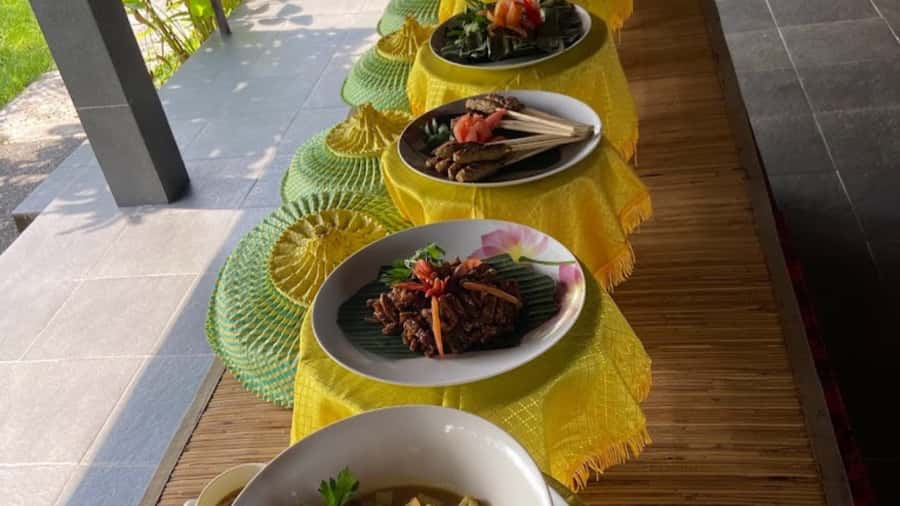
- You eat what you cook: a shared meal at the end (often with around 10 dishes depending on the group)
- English support: live English guide plus English audio guide
Ubud Kitchen Basics: How the 2–3 Hours Works
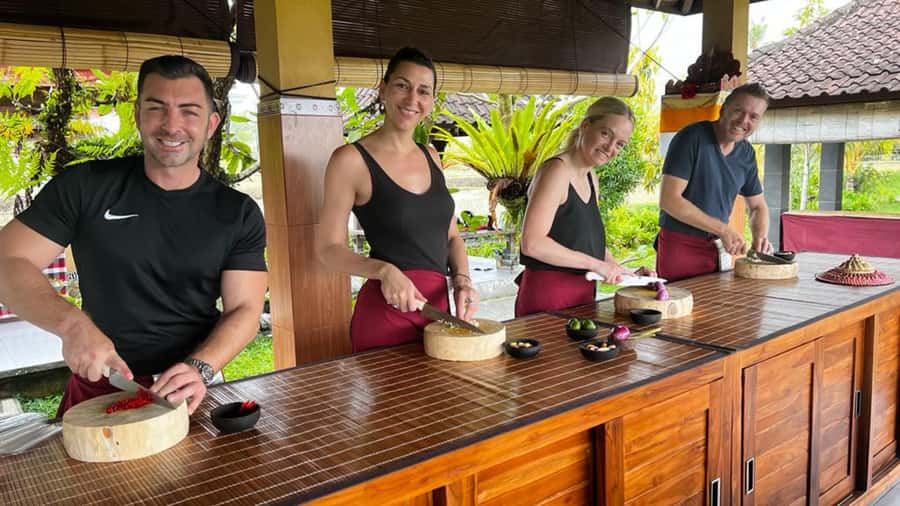
This is a fast-moving, high-participation class. Expect a total time of 2–3 hours, which is ideal if you want a memorable Ubud activity without losing half a day. You’ll start with transport (for many departures), then go into ingredient prep and cooking, and you finish by eating together.
The biggest practical upside is the pace matches the format. With a small group, the instructors can keep everyone working. That means you’re not waiting around for other people’s steps—you’re usually cutting, mixing, or assembling something of your own.
Also worth knowing: you’ll likely cook enough food for a full meal plus dessert. Some groups report making around 10 dishes, and the end meal is often served buffet-style.
You can also read our reviews of more tours and experiences in Ubud.
Morning Market vs Afternoon Cooking: Choose Your Style
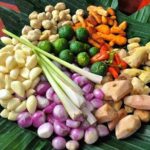
If you choose the morning option, you’ll add a market visit before the cooking starts. This is where the class becomes more than recipes. You’ll walk through stalls packed with produce, herbs, and spices, and your guide helps you understand what you’re actually buying and why it’s used.
If you hate crowds or you’d rather stay relaxed during your holiday, the afternoon option can be the smarter pick. You still get the full cooking lesson and the meal, just without the market portion.
Either way, your cooking day is built around ingredient awareness. When you pick spices and produce yourself, it’s easier to remember what flavors to look for later when you try cooking at home.
The Cooking School Setup: Small Group Energy and Real Tasks
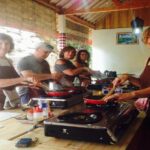
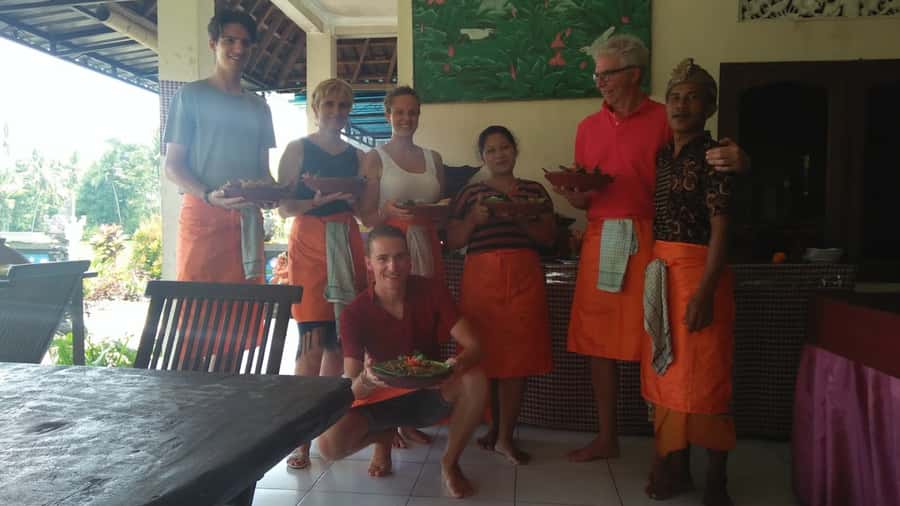
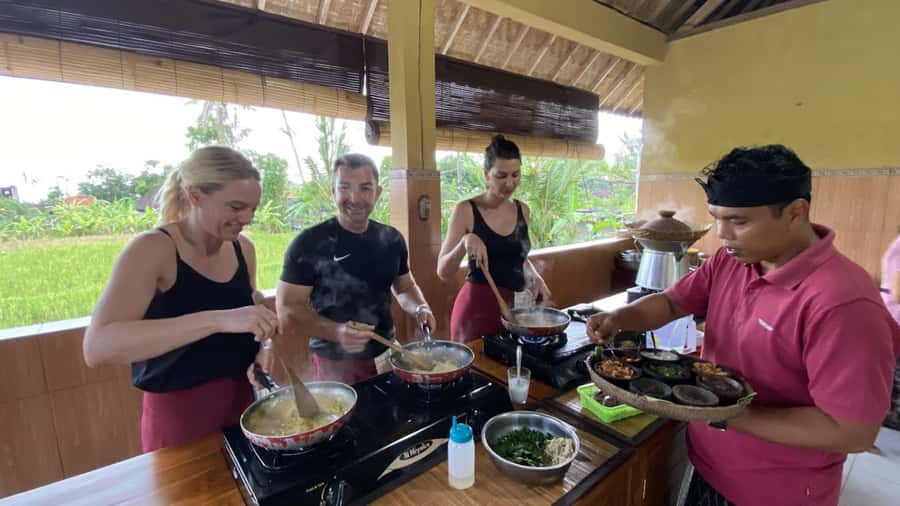
The class runs with small groups (limited to 10 participants), and that changes the feel fast. You get personalized attention, and instructors can correct technique while you’re doing it.
From the way classes are described, you shouldn’t feel like you’re just standing near a counter. You’re typically assigned jobs—some people chop, some mix, some handle assembly steps, and everyone works as a team. One review specifically praised how the instructors involved the whole group without taking away the fun, which is exactly what you want from a cooking class.
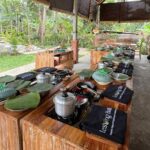
You may also notice details like clean preparation stations and organized cooking flow. Several reviews mention that equipment and tools are ready and that things run on time, which matters when you only have a couple of hours.
What You’ll Cook: Curries, Satay, and Dessert
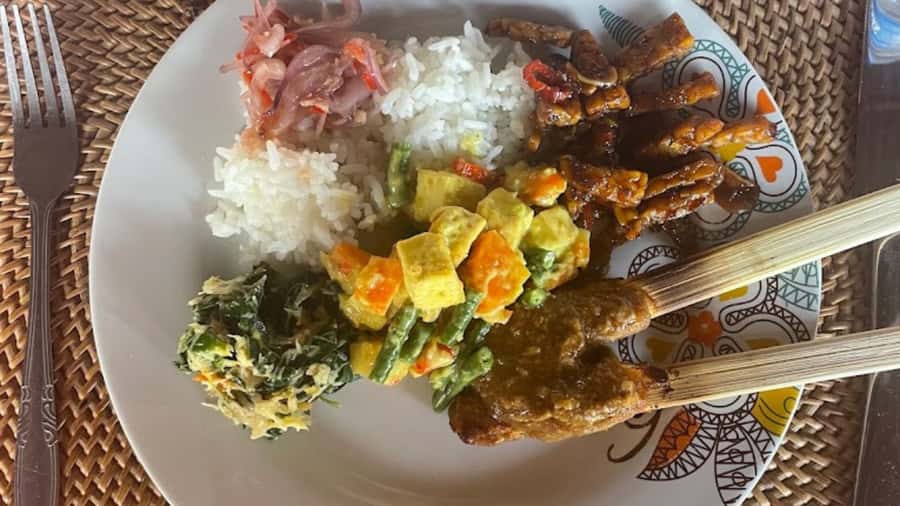
The highlights say it all: you’ll learn to make fragrant curries, savory satays, and desserts. But the valuable part isn’t just the finished dishes—it’s the way the instructor teaches process.
In most versions of this class, you’ll practice core Balinese cooking skills such as:
- mixing spices for flavor depth
- chopping and prepping ingredients with speed and consistency
- cooking techniques that balance aroma, saltiness, and heat
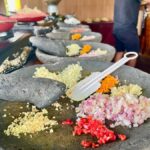
Some groups also mention learning supporting items that show up in Balinese meals, like sambal-style chili preparations and other side components that make the final feast feel complete.
Dessert is not an afterthought here. Reviews point to items like pancakes and sweet tempeh, and that’s a good sign: you’re learning a full meal arc, not only the “main cooking part.”
Learning the Why Behind the Food
This is where the class goes beyond the usual cooking-class script. Instead of treating dishes like isolated recipes, your guide explains how food connects to belief, family life, and daily Balinese rhythm.
You may hear discussion of things like:
- how Balinese Hindu offerings relate to food culture
- why certain ingredients show up repeatedly
- how dishes fit into celebrations and family meals
A standout detail in the reviews is the chance to make a Canang offering (an offering box), including the cultural significance. Even if you’ve never made an offering before, it’s usually taught step-by-step and becomes a memorable “only in Bali” moment—then you return to cooking with a better sense of what you’re participating in.
Some classes also reference traditional knowledge like grinding techniques and older methods of preparing ingredients. That’s practical. When you understand why spices are ground a certain way or how preparation impacts taste, your home-cooking attempts get more accurate.



The Meal at the End: Communal Table, Not Takeout
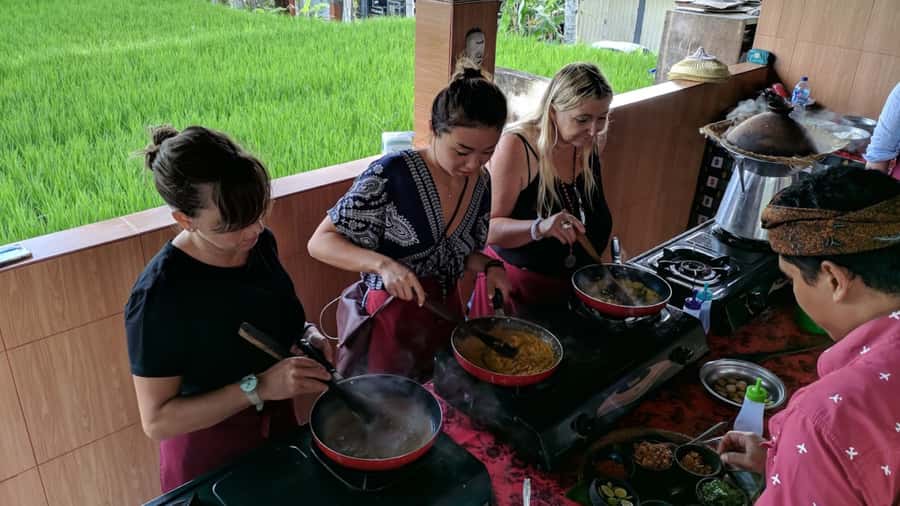
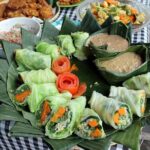
After cooking, you sit down and eat what you made. This is included, and it’s one of the main reasons this class lands as great value.
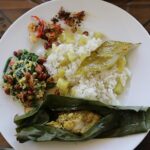
Reviews often describe the meal as delicious and plentiful, sometimes with a buffet-style spread. That matters for you because you’re not paying to “learn” without eating. You leave with a full sensory check: the flavors make sense together, and you understand what should taste right.
You’ll also share the table with other people in the group. With small groups, that social part doesn’t feel forced. If you want a break from Bali’s constant day-trips, this can be a calmer, human-sized experience.
Transfers and Meeting Points: Don’t Get Tripped Up
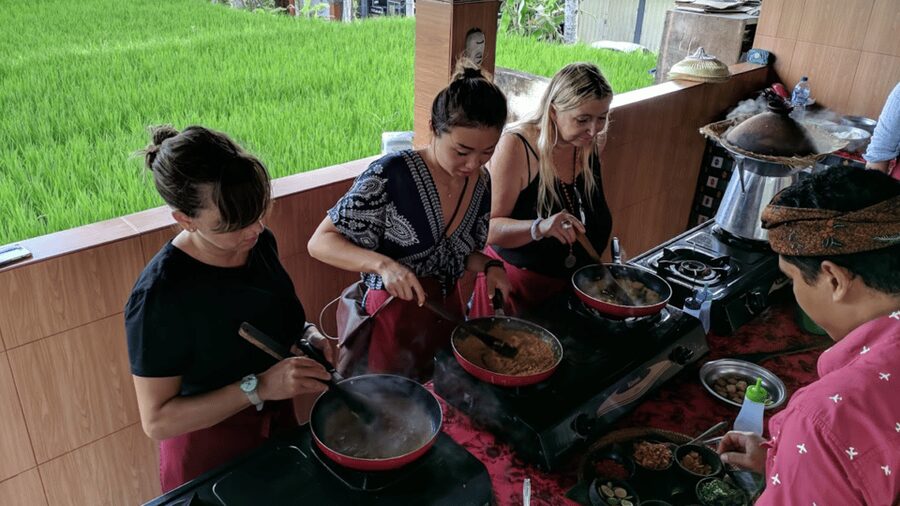
If you want the easiest day, plan around the transport details.
Hotel pickup and drop-off are included at Ubud Center for morning or afternoon options. If you’re not in that zone, you should expect extra cost for Sebali or Keliki areas (extra 50,000 per person).
Pickup is optional, but if you choose it, you’ll typically wait in your hotel lobby. For night departures, one practical point is the meeting point in the Parking Field because traffic can be unpredictable. That’s actually useful information: it hints that the route/arrival timing can differ from day times, so don’t assume it’ll look like a normal street-side pickup.
If you’re driving a scooter or using your own transport, you may be able to meet directly near the cooking location, but only do that if you confirm the location and timing with your operator.
Price and Value: Why $21 Can Feel Like a Lot
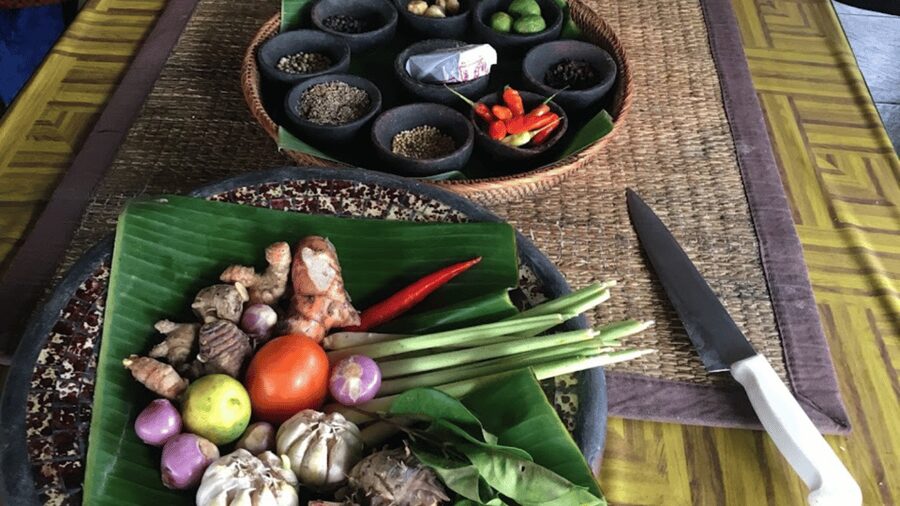
At $21 per person, this class is priced in the “budget-friendly but not cheap” range. The reason it can feel like great value is that you’re not just learning one dish—you’re learning multiple dishes plus the structure that connects them.
You get:
- market access (morning option)
- cooking instruction and guidance throughout
- a full included meal
- English live guidance and an English audio guide
That combination is what makes it good value for many people. If you’ve ever taken a cooking class elsewhere and felt like you paid for a show, this format is different. The small-group setup means you do actual work, then you eat the results. The certificate of completion is a nice extra if you like collecting small travel wins.
Tips to Get More Out of Your Class
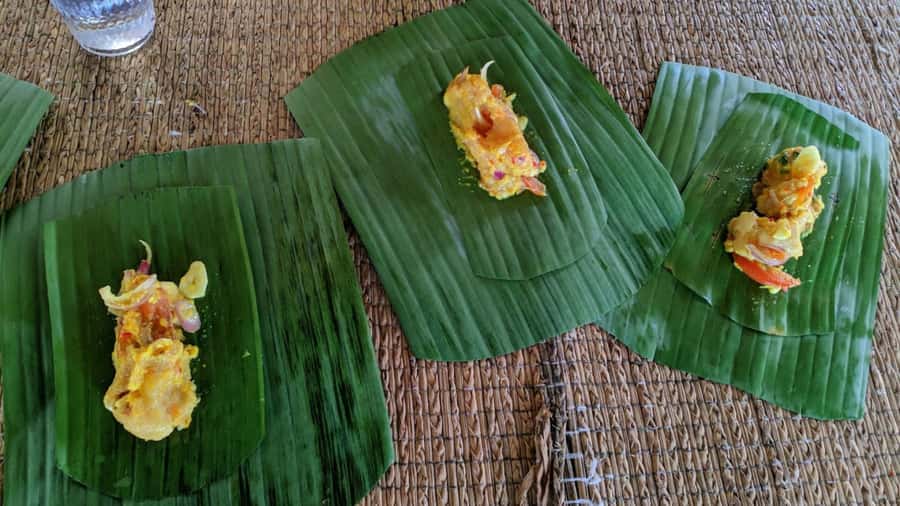
A few practical moves will make your day smoother:
- Go hungry. You’re cooking and then eating a full meal plus dessert.
- Wear clothes you don’t mind getting spice-scented or a little messy.
- If you have dietary preferences or allergies, bring them up during confirmation. Several reviews mention the team can handle different needs, but it’s still smart to flag it clearly.
- If you want the most “Balinese flavor education,” pick the morning market option. If you just want to cook, afternoon works well.
- Ask questions while you cook. The format is set up for interaction, and that’s when the culture explanations make the most difference.
Who Should Book This Cooking Class in Ubud
This class fits best if you:
- want a hands-on activity in Ubud that isn’t just sightseeing
- care about food culture and how ingredients connect to daily life
- like small-group interactions (not big bus groups)
- want a practical cooking experience you can repeat at home
It’s also a strong option if you’re traveling with teens or family members who want an active lesson. One review specifically mentioned bringing teenagers and still having a great time because everyone had roles to play.
Should You Book This Ubud Cooking Class?
If you want an experience that combines market ingredients, real cooking tasks, and a sit-down meal in just a few hours, I’d book it. At $21, the math works because you’re getting both instruction and food out of the same session.
But if you’re short on time and already plan to do a big food tour (or you hate markets), choose the afternoon option so you don’t lose time on stalls you won’t enjoy. And if your hotel is outside Ubud Center, double-check the pickup area because Sebali or Keliki can cost extra.
Overall: this is the kind of Ubud activity that leaves you with something tangible—skills, flavors, and a better story to tell when you’re back home.
FAQ
How long does the Ubud cooking class last?
It lasts 2–3 hours.
Is hotel pickup included?
Hotel pickup and drop-off at Ubud Center are included if you choose the morning or afternoon option. Pickup is optional, so you may need to request it and wait in your hotel lobby.
Do I get a market visit?
You get a market tour only with the morning option.
What does the class include besides cooking?
The package includes a guide, the cooking class, and a meal. You’ll also receive a certificate of completion.
What kind of dishes will I learn to make?
You’ll learn dishes like fragrant curries, satays, and desserts.
How big is the group?
The class is a small group limited to 10 participants.
What language is the instruction in?
The live tour guide is English, and an English audio guide is also included.
Where is the meeting point?
The meeting point is in the Parking Field, which is used because night traffic can be difficult.
Is there an extra fee for some areas?
Yes. If you’re in the Sebali or Keliki area, there is an extra 50,000 per person charge.
Is it flexible to book or cancel?
You can cancel up to 24 hours in advance for a full refund, and you can use reserve now & pay later for flexibility.