REVIEW · SEVILLE
Spanish Cooking Class & Triana Market Tour in Sevilla
Book on Viator →Operated by Taller Andaluz de Cocina · Bookable on Viator
One quick hint: cook where the ingredients live. This Seville experience pairs a walk through Mercado de Triana with a hands-on Spanish lunch in the market area. You’ll start with fresh finds from the stalls, then work with the chef to turn them into classic dishes you can actually recreate later.
What I like most: you get real participation in the cooking (not just watching), and you leave with written recipes plus tips for doing it at home. One thing to consider is that the meeting spot can be a little tricky to locate inside the market, so aim to arrive a few minutes early and follow directions to stalls 75–77.
In This Review
- Key things to know before you cook in Triana
- Triana Market First: Why This Starts in the Right Place
- Quick note on finding the meeting point
- Inside the Cooking Class Kitchen: What You Really Do
- Group size and how that affects your experience
- The Three-Course Menu: Salmorejo, Chickpeas, and Paella That Make Sense
- Salmorejo: chilled, creamy, and more than just tomatoes
- Spinach with chickpeas: a classic comfort pattern
- Paella Valenciana: technique and teamwork
- Sangria and Drinks: How the Food Pairing Actually Works
- Why this matters for value
- What You Take Home: Recipes You Can Actually Use
- Price and Value: Is $90.70 Worth It?
- Timing and Logistics: What to Expect on the Day
- A practical tip for smoother morning
- Is This Best for You? Who Should Book It
- Should You Book This Seville Cooking Class?
- FAQ
- What does the class include?
- Where is the meeting point?
- What time does it start, and how long is it?
- What dishes do you cook and eat?
- What drinks are included?
- Are dietary restrictions accommodated?
- Is pickup or drop-off included?
- How big are the groups?
- What language is the tour offered in?
- Can I get a refund if my plans change?
Key things to know before you cook in Triana
- Market-first learning: you tour Mercado de Triana before stepping into the kitchen.
- Three-course lunch, three big flavors: salmorejo, spinach with chickpeas, and Paella Valenciana.
- Drinks included: homemade sangria during the class plus up to two drinks with your meal.
- Dietary adjustments available: vegan, gluten-free, no seafood, no pork, and more can be handled if you request changes in advance.
- Small group size: capped at 16 travelers, so questions and hands-on time stay easy.
- In-market kitchen setup: four kitchens in the Triana area, but you always meet inside the market at stalls 75/77.
Triana Market First: Why This Starts in the Right Place
Seville has a strong food culture, and this class gets it right by beginning where the food comes from: the stalls of Mercado de Triana. Instead of starting with recipes and ingredients you already recognize, you start with the market reality. You see produce, meats, cheeses, and local goods in the setting where locals buy them every day.
That order matters. When you learn what you’re about to cook, the cooking part clicks fast. You’ll also pick up practical context, like how ingredients are used and how local farming choices shape what ends up on plates. It’s the difference between memorizing steps and understanding why the steps work.
And yes, it’s also just fun. The market has a specific rhythm. You’ll walk among stalls, learn what to look for, and get ideas for what to buy if you want to recreate the meal later.
You can also read our reviews of more tours and experiences in Seville.
Quick note on finding the meeting point
The chef and team run the kitchens in the Triana area (there are multiple kitchens tied to the same activity), but the meeting point stays consistent: inside Triana Food Market, stalls 75/77. If you arrive right on time, you might feel rushed. I’d give yourself a buffer so you can get your bearings fast.
Inside the Cooking Class Kitchen: What You Really Do
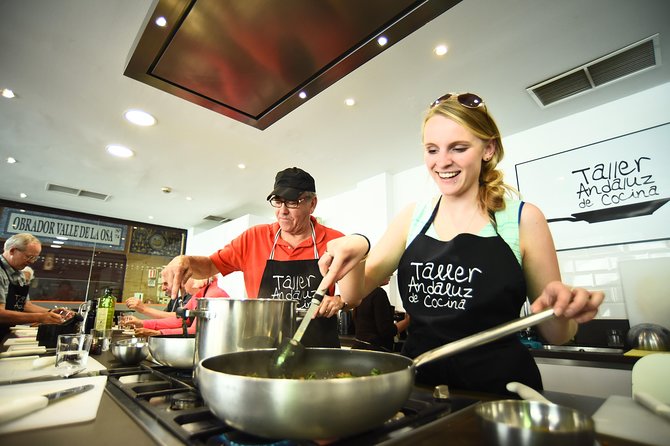
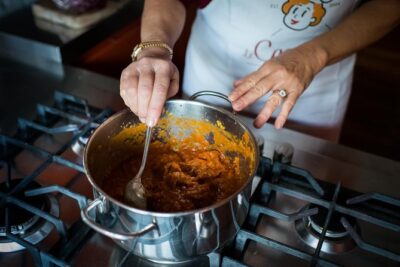
After the market walk, you move into the cooking area. It’s not a classroom. It’s a working kitchen, and the format is built around you doing the prep.
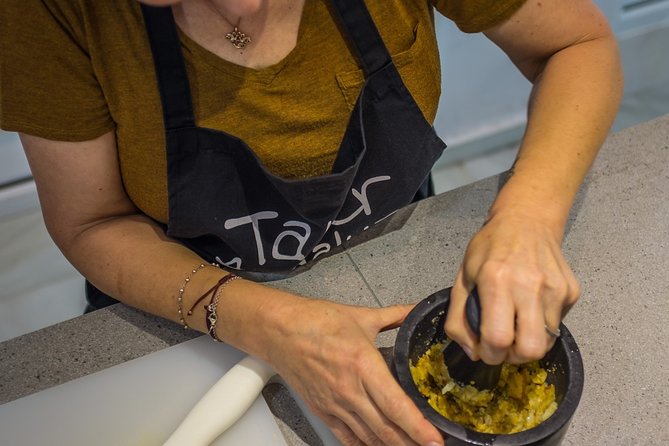
The class includes all the basics you need: an apron, a chopboard, knives, and the utensils required. That lowers the usual barrier with cooking classes. You don’t have to worry about carrying gear or missing one key tool.
You’ll cook a menu designed to show off Andalusian flavor and Spanish technique. Based on the standard sample menu, you’ll work on:
- Starter: Salmorejo
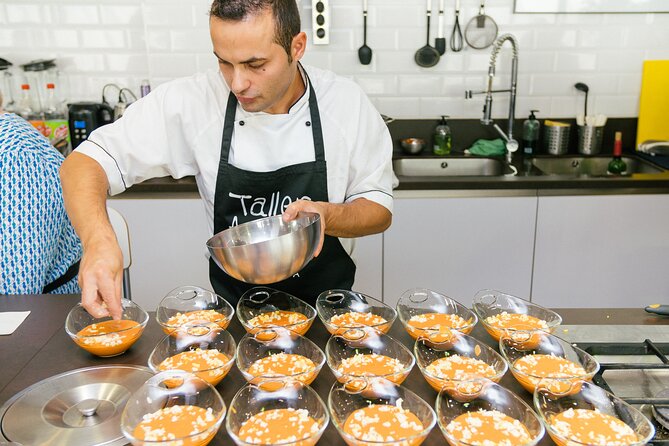
This is a chilled tomato cream from Córdoba. It’s smooth, tangy, and built for texture. Cooking something cold also changes your pacing compared to hot dishes.
- Main: Spinach with chickpeas
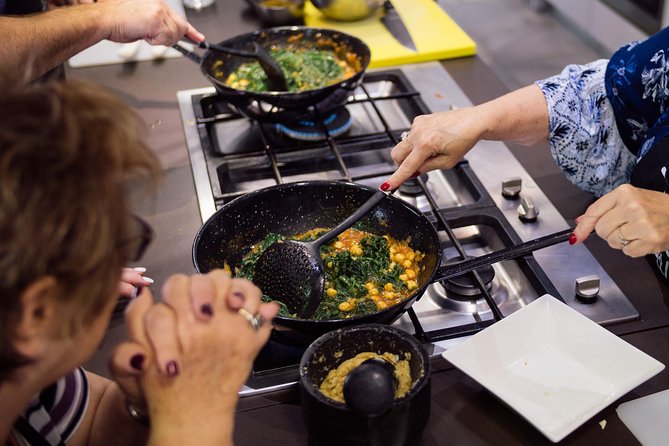
A classic Sevillian-style tapa. This one is especially helpful because it teaches how simple ingredients become deeply satisfying with the right balance.
- Main: Paella Valenciana
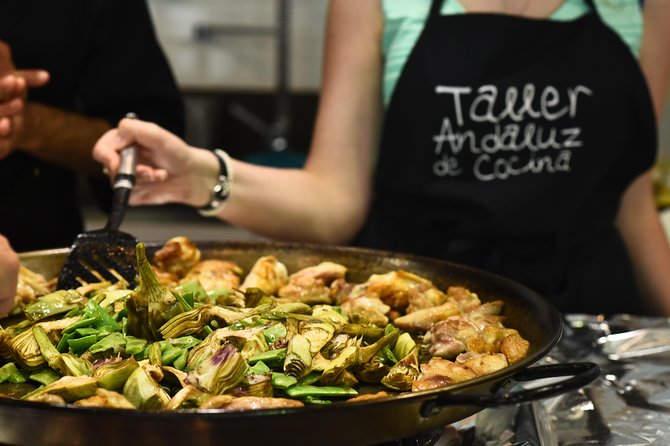
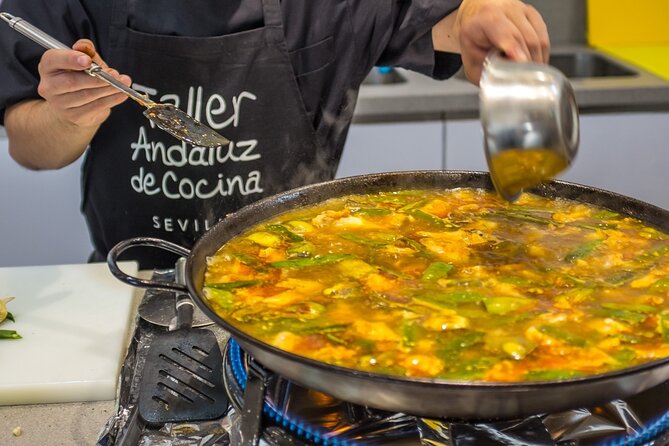
A very recognizable dish, made with chicken and vegetables in the standard menu. If you’ve got dietary needs, you may see variations (for example, you might get a vegetarian-style paella when requested).
In multiple reviews, people mention learning specific hands-on skills, like breaking down a whole chicken and prepping elements that go into paella (including artichoke). Even if your exact hands-on tasks vary by group and kitchen, the pattern is the same: you’re not standing on the sidelines.
Group size and how that affects your experience
The group max is 16. That keeps the kitchen from turning into a slow-moving bottleneck. You’ll typically have a clear role and enough time to ask questions without feeling like you’re interrupting a production line.
The Three-Course Menu: Salmorejo, Chickpeas, and Paella That Make Sense
This menu is well-chosen because it teaches you a range: cold starter, hearty tapa, and the showpiece rice dish.
Salmorejo: chilled, creamy, and more than just tomatoes
Salmorejo can look simple until you make it. The key lesson is texture. You’re learning how tomatoes turn into a chilled, spoonable cream that’s thick and flavorful, not watery.
If you’ve tried salmorejo before and didn’t love it, this is exactly the kind of course that can change your mind. The way it’s prepared here is built around correct consistency and seasoning.
Spinach with chickpeas: a classic comfort pattern
This is a great “learning dish” because spinach and chickpeas are forgiving but still demand attention. You’ll get a feel for how to manage timing and seasoning so the dish tastes balanced, not heavy or bland.
It also helps you understand why tapas-style cooking matters in Andalusia. It’s not about fancy presentation. It’s about getting flavor right with straightforward ingredients.
Paella Valenciana: technique and teamwork
Paella is the dish most people come for, but what you’ll value is that the cooking approach is taught step by step. You’ll likely practice key tasks that make paella workable: prep for vegetables, portioning ingredients, and understanding the flow of cooking.
Paella is also flexible in real life. Since the operator states they can handle dietary restrictions, the paella you eat may match your needs. The core goal remains: learn the method, not just copy the end result.
Sangria and Drinks: How the Food Pairing Actually Works
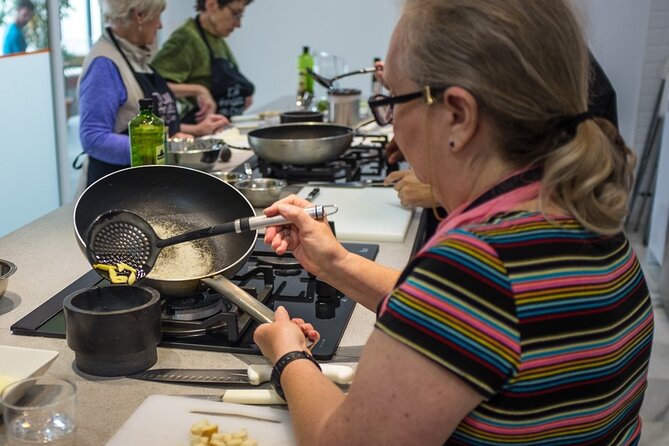
Food classes often stop at dinner. This one keeps the momentum with drinks at two different points.
During the cooking, you’ll enjoy homemade sangria. It’s part of the kitchen atmosphere and gives you a Spanish taste while you work.
Then when you sit down to eat what you cooked, you get up to two drinks: soft drinks, Spanish wine, or local beer. You’ll also have the full three-course lunch you prepared, and dessert rounds it out.
Dessert on the standard menu is lemon sorbet with cava—a light finish that doesn’t weigh you down after three courses.
Why this matters for value
This is one of the reasons the price feels fair. You’re not paying for a quick meal. You’re paying for instruction, ingredients, tools, and meal-time drinks. You end up eating a real lunch, not a snack plate.
What You Take Home: Recipes You Can Actually Use
A cooking class isn’t worth much if it hands you a vague memory and a few blurry photos. This one gives you something more practical: written recipes after the class, plus plenty of tips for recreating what you made.
That matters because Spanish cooking has little details—timing, texture, seasoning balance—that you won’t guess easily. Having the written guide makes it far more likely you’ll cook again at home instead of just telling people you had paella in Seville.
If you like the market part too, the recipe sheets help you translate what you saw in Triana into a shopping list you can use later.
Price and Value: Is $90.70 Worth It?
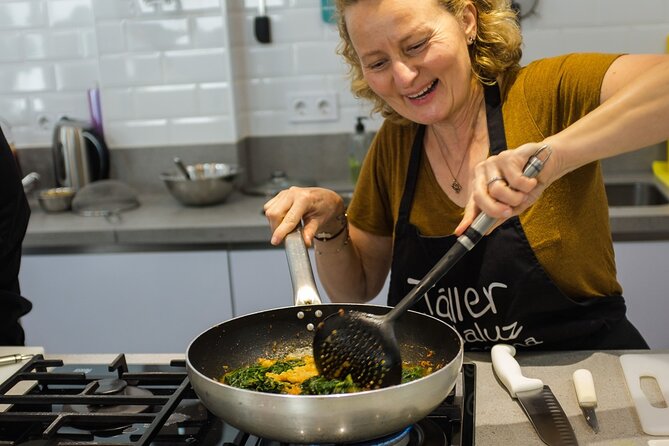
For $90.70 per person, you’re paying for several things at once:
- a Triana Market tour with guidance on ingredients and local food context
- hands-on cooking with provided utensils and kitchen setup
- a three-course lunch that you eat after cooking
- two drinks included with your meal, plus homemade sangria during the class
- written recipes to take home
If you’ve done other food tours, you know the common pattern: either you get a guided tasting with no real cooking, or you do a cooking class with no market context. This experience links both. That’s usually where the value shows up, because you learn the ingredient logic and the cooking process together.
The other value lever is group size. With a max of 16, the class can stay hands-on rather than turning into a demo.
In plain terms: you’re not just buying lunch. You’re buying skills plus a meal built around them.
Timing and Logistics: What to Expect on the Day
The start time is 10:30 am, and the duration is about 3 hours 30 minutes.
You should also plan around the fact there’s no private pickup and drop-off. You’ll meet at the market inside Triana Food Market, stalls 75–77, and the experience ends back at the meeting point.
It’s near public transportation, so getting there is usually straightforward once you’ve picked your route.
A practical tip for smoother morning
Wear comfortable shoes. You’ll be walking in the market area, then shifting into a kitchen setup. Also, keep an eye on directions. One reviewer even noted getting a little lost finding the class inside the market. You can avoid that with a few extra minutes and a firm check of where stalls 75–77 sit.
Is This Best for You? Who Should Book It
This fits best if you want more than a meal. You should book it if you like:
- hands-on cooking (you want to do the work, not just watch)
- learning how Spanish staples connect to the market and region
- eating a complete lunch made from what you prepared
- bringing home recipes you’ll actually use
It’s also a solid choice if you’re traveling with someone who wants something different from museums and walking tours. Food here is both practical and social, and the small group size makes it easier to chat with others and ask questions.
If you have dietary restrictions, this is especially worth considering. The team says they can accommodate many needs (vegan, gluten-free, no seafood, no pork, and more) if you tell them in advance.
Should You Book This Seville Cooking Class?
I think it’s a strong pick if you want a real Seville food experience with market learning plus hands-on cooking. The best sign is that the format is built around participation: you cook the dishes, eat what you make, and leave with written recipes.
Book it if you’re happy to spend part of your morning in the Triana market area and you want a practical skill you can repeat at home. I’d also book it if you care about the “why” behind ingredients, because the market walk is part of the lesson, not an add-on.
Skip it only if you want a low-effort activity where you do minimal prep, or if you strongly dislike navigating busy places without clear outside cues. In the end, this class rewards curiosity and a hands-on attitude.
FAQ
What does the class include?
You get a Triana Market tour, a three-course Spanish lunch that you cook, aprons and kitchen tools, and drinks. Sangria is included during the class, and up to two drinks are included with your meal. You also receive written recipes after.
Where is the meeting point?
You meet inside Triana Food Market at stalls 75–77. The activity ends back at the meeting point.
What time does it start, and how long is it?
It starts at 10:30 am and runs about 3 hours 30 minutes.
What dishes do you cook and eat?
The sample menu includes salmorejo (starter), spinach with chickpeas (tapa/main), Paella Valenciana (main), and lemon sorbet with cava (dessert). Exact menus can be adapted for dietary restrictions.
What drinks are included?
You’ll have homemade sangria during the class, and with your lunch you’ll be offered up to two drinks such as soft drinks, Spanish wine, or local beer.
Are dietary restrictions accommodated?
Yes. The operator says they can accommodate dietary restrictions like vegan, gluten-free, no seafood, no pork, and other needs. You should let them know in advance so they can adjust the menu.
Is pickup or drop-off included?
No. The experience does not include private transportation or pickup/drop-off. You’ll need to get to the meeting point on your own.
How big are the groups?
This activity has a maximum of 16 travelers.
What language is the tour offered in?
It is offered in English.
Can I get a refund if my plans change?
You can cancel for a full refund if you cancel up to 24 hours before the experience’s start time.