REVIEW · SICILY
Sicilian Cooking Class in Taormina
Book on Viator →Operated by Porta Messina Restaurant Cooking Class · Bookable on Viator
Cooking in Sicily beats just watching from the sidelines. This 3-hour class in Taormina pairs a local market ingredient hunt with hands-on cooking, plus a sit-down lunch with Sicilian wine. One possible drawback: because it’s based in a restaurant setting, you may not get as much fiery, over-the-heat action as with some smaller, more rustic cooking setups.
I especially like that the flow is practical. You start with bread and tastings (bread, cheese, salami, and wine), then move into typical Sicilian dishes where you do the prep, with real chef help when you need it.
You’ll also want to plan for a small group pace and kitchen logistics. Hands-on cooking happens, but there’s also time built in for resets and handwashing, which can make the class feel more like a well-run workshop than a free-for-all in the pots.
In This Review
- Key highlights at a glance
- How this Taormina cooking class actually feels (and who it suits)
- Meeting at Porta Messina Restaurant: the “start smart” moment
- The market ingredient step: where the real Sicilian lesson begins
- The bread-and-tasting kickoff: snack, learn, then cook
- Typical Sicilian dishes: hands-on prep with chef support
- Lunch: a multi-dish spread you help create
- The keepsakes: apron and certificate (and why that matters)
- Price and value in real terms
- English instruction and small-group energy
- Dietary needs: plan ahead so you can eat comfortably
- What to expect in your hands-on time (and how to handle it)
- Tips to help you get the best day possible
- Who should book this cooking class, and who might skip it
- Should you book in Taormina?
- FAQ
- How long is the Sicilian cooking class in Taormina?
- Where do I meet for the class?
- Is the class offered in English?
- What’s included in the ticket?
- Are there vegetarian or gluten free options?
- How big is the group?
- Can I cancel and get a refund?
Key highlights at a glance
- Taormina market time to pick fresh ingredients before you cook
- Bread, pasta, and tasting as the opening flavor set, paired with Sicilian wines
- Lunch you help make (typically a multi-dish spread) with chef support
- Apron plus certificate as a keepsake that makes the experience feel official
- Small-group feel despite a maximum capacity of 40 travelers
How this Taormina cooking class actually feels (and who it suits)
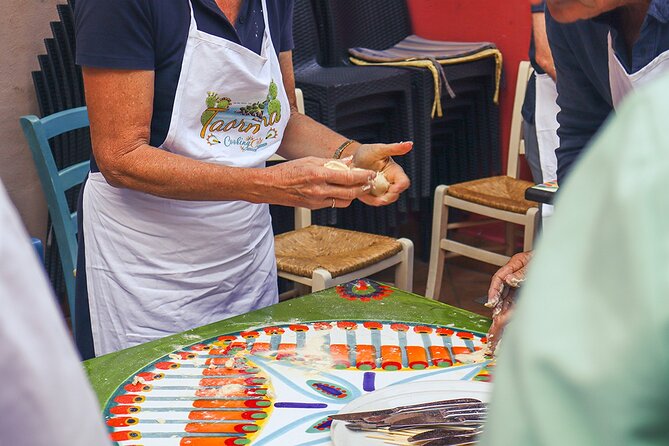
This is the kind of Sicilian cooking class that fits into a busy Taormina itinerary without turning your day into a full expedition. You meet in the morning, you cook and taste, you eat a proper homemade lunch, and you finish back where you started. The schedule is tight, but not rushed, because the class is built around stations and guided steps rather than chaotic trial-and-error.
The best match for this experience is simple: you want to learn by doing, not just by watching. If you like the idea of tasting what you’re about to cook, then rolling into typical Sicilian dishes with instruction, you’ll enjoy the rhythm.
It’s also a solid pick if you travel solo or with friends of mixed skill levels. The class is designed for beginner-to-intermediate cooks, and the staff and chef can correct technique while you’re actively working. One review even mentioned the experience felt special for a milestone celebration, which makes sense: you’re eating your own results, with wine and a keepsake apron.
You can also read our reviews of more tours and experiences in Sicily.


Meeting at Porta Messina Restaurant: the “start smart” moment
The day begins at Porta Messina Restaurant, meeting at Largo Giove Serapide, 4, 98039 Taormina ME, Italy. You start at 10:00, and the tour ends back at the same meeting point, which is helpful in a town like Taormina where time spent wandering can add up fast.
Right after you arrive, there’s a coffee break. That sounds basic, but it matters. It gives you a quick buffer before you jump into prep, and it helps you settle into the kitchen workflow.
Then comes apron time. You’ll get a logo-embroidered apron before the course starts. For some people, that’s just fun. For others, it’s a practical cue that you’re officially entering cooking mode.
The market ingredient step: where the real Sicilian lesson begins
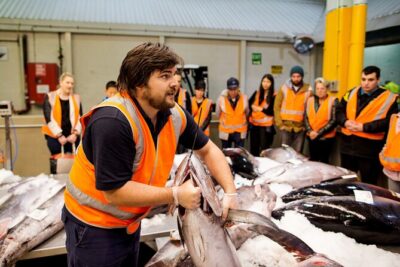
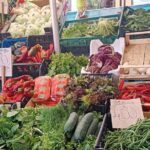
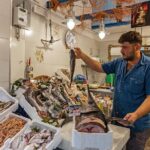
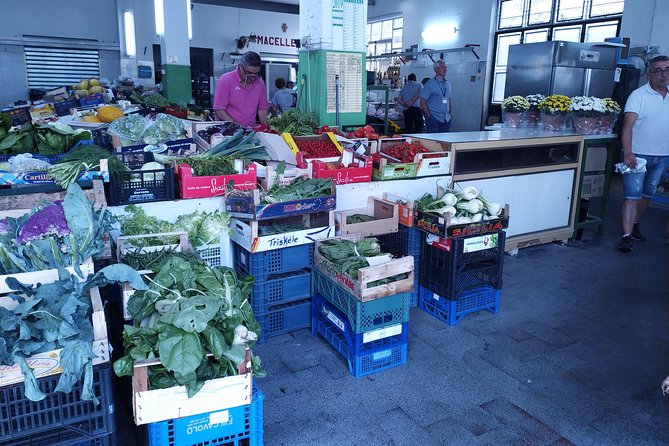
A big part of why this class works is the ingredient selection. You visit a local market in Taormina to choose fresh items that will shape what ends up on your table. This is more than a photo stop. It’s a shortcut to understanding Sicilian cooking’s mindset: start with quality ingredients, then treat them with respect.
If you’re the type who loves going home and cooking from memory, the market piece helps you remember why you chose certain produce or proteins. It also makes the rest of the class feel grounded. When your hands are busy later—chopping, mixing, assembling—you’re not guessing where things came from.
In particular, you may notice how the instruction connects ingredient choices to flavors. One guide name that comes up in feedback is Mauritzio, praised for explaining vegetables and fish at the market. If you ask questions there, it’s a good place to learn how Sicilians think about seasonal produce and simple pairing logic.
The bread-and-tasting kickoff: snack, learn, then cook
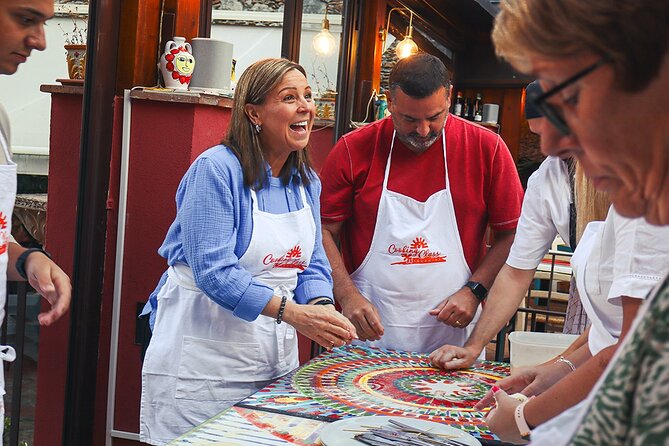
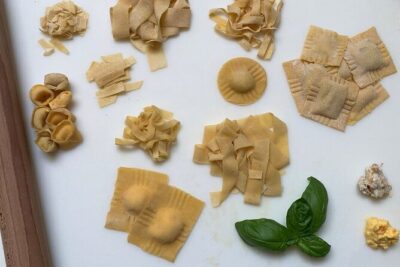
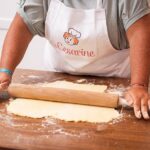
After the market and early setup, the class dives into prep with home made bread and other foundations—then it turns into tasting. This isn’t just “we made bread.” It’s a structured start that trains your palate for what comes next.
You’ll do:
- Home made bread prep and early stages of cooking
- Tasting of different types of bread
- Tasting of cheese and salami
- Sicilian wine pairing during this tasting portion
That appetizer-like sequence matters because it sets the flavor map. You get to understand the balance of bread textures, savory cured meats, and cheese richness, then you layer the wine experience on top. By the time you’re making the main dishes, you’re already tuned in to the style of Sicilian flavors.
Also, this format is beginner-friendly. If you’re worried you won’t know what you’re doing, the class begins with things most people can follow: dough stages, basic prep, and guided assembly.
Typical Sicilian dishes: hands-on prep with chef support
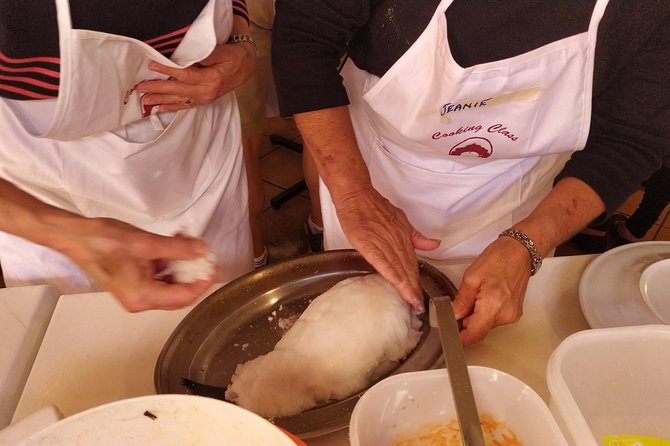
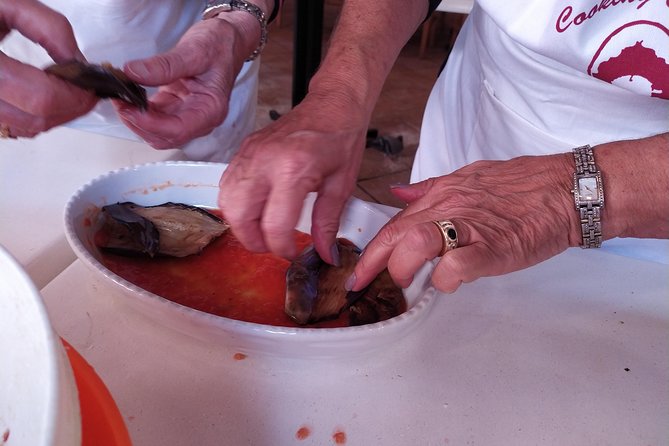
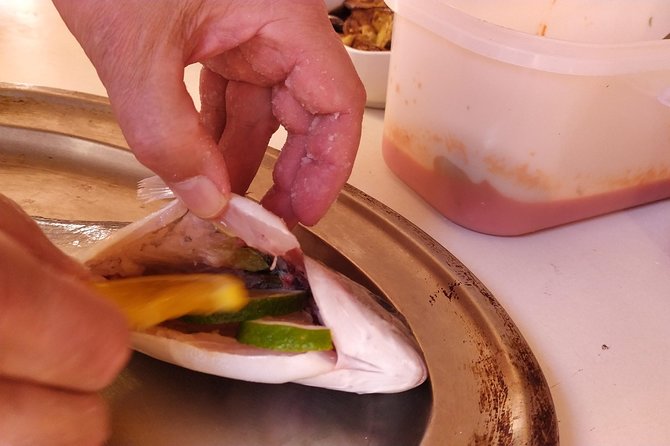
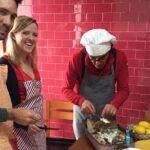
Once the bread and tasting phase finishes, you shift into the typical Sicilian dishes portion. The structure here is important: attendees do the preparation, and the chef and staff help you through technique and timing.
The course description specifically calls out:
- Typical Sicilian dishes preparation
- Chef help and staff support while you cook
Then you move into the tasting and lunch phase—so don’t worry if you’re not a confident home cook. You’re not expected to do everything alone. The best thing about a supported kitchen is that you can focus on learning steps that transfer to your own cooking later.
One practical note: because the class is run through a restaurant kitchen, the heat and tools may feel different than at a small, farmhouse-style cookery school. A past participant noted that it felt more like a restaurant workshop than open-heat cooking. That doesn’t make it bad. It just means your hands-on time may focus more on prep and assembly than on dramatic, high-flame cooking.

Lunch: a multi-dish spread you help create
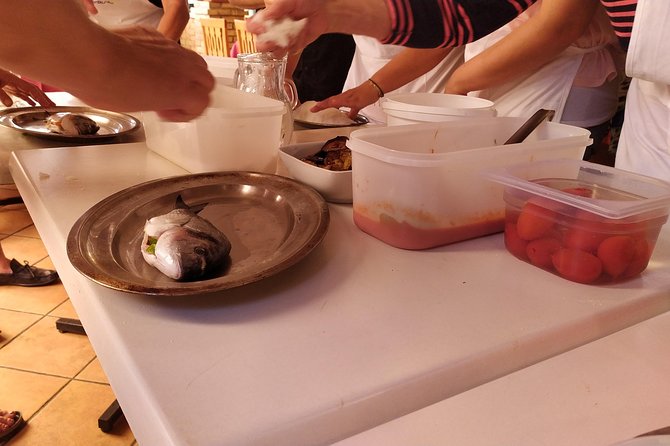
Lunch is where the class cashes in its value. You’ll eat a homemade lunch composed of roughly 4–6 dishes. You’re not just a spectator; the class is designed so the dishes are cooked by attendees with chef help.
This is also the meal part where wine shows up again. The experience includes Sicilian wine, and the tasting earlier helps you understand what you’re about to drink with your food. In Taormina, this is one of the simplest ways to turn your “vacation lunch” into something memorable and educational.
One review also mentioned ocean views during the lunch portion. Taormina often delivers scenery just by existing. Still, it’s a nice detail because it means you get both learning and atmosphere while you eat.
The keepsakes: apron and certificate (and why that matters)
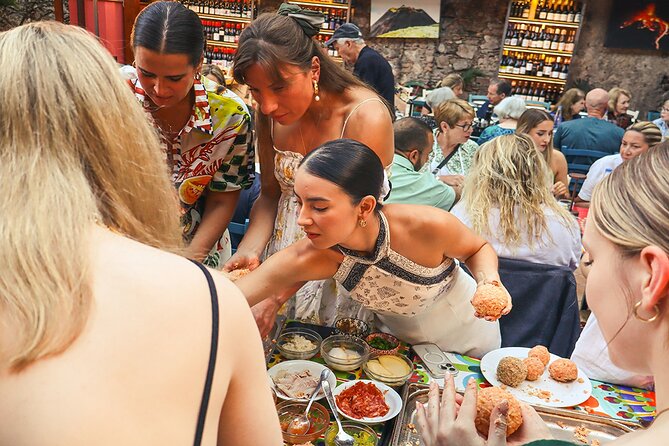
You end the class with:
- An official certificate
- A branded apron (embroidery logo details)
Some people might think keepsakes are fluff. I get it. But here, they serve a real purpose. They turn a half-day food experience into something you can reference later when you’re cooking at home. The certificate also signals this isn’t a casual “sit down and watch” event—it’s meant to feel like a real course.
If you’re the kind of traveler who likes to track skills gained rather than just souvenirs bought, this is a good sign. It’s also a nice add-on if you’re celebrating something, since the class feels like a moment, not just a meal.
Price and value in real terms
At $127.03 per person for about 3 hours, this isn’t a cheap “snack and tour” activity. But it also isn’t overpriced if you look at what you receive.
You get multiple components bundled into one ticket:
- Market ingredient selection
- Cooking instruction and hands-on prep
- Bread work
- Tasting of bread, cheese, salami, and Sicilian wine
- Lunch featuring 4–6 dishes
- Apron and certificate
When you factor in the meal scale and the wine tastings, the class looks more like a paid, structured food experience than a simple demonstration. If you’d otherwise spend your time and money on a sit-down lunch plus a separate food attraction, this can feel like better use of your day because you come away with skills, not just leftovers.
That said, consider your cooking goals. If you only want a light tasting and don’t care about technique, you might find the time and price more than you need. If you want to learn, it’s easier to justify.
English instruction and small-group energy
The class is offered in English, and that’s a major practical advantage if you’re not comfortable cooking with an Italian-only explanation. You’ll have enough guidance to understand what’s happening and why.
Group size is capped at a maximum of 40 travelers. That sounds large on paper, but the class often runs with a smaller, more manageable vibe. Feedback mentions small group cooking around 10–11 people, which would help you actually get your hands on tasks instead of standing back.
If you’re traveling with kids, the pacing can feel family-friendly because it’s structured and guided. One note from feedback even described it as a whole-family option regardless of age, which is exactly what you hope for in a cooking class: clear steps and a forgiving learning environment.
Dietary needs: plan ahead so you can eat comfortably
This class is built to accommodate dietary variation, with clear guidance:
- Vegetarian option is available (tell them at booking)
- Gluten free options are available (you should advise in advance)
- You should advise any specific dietary requirements at booking
This matters because cooking involves shared preparation and ingredient substitutions. The more notice you give, the easier it is for the team to adjust the plan. If you’re gluten free or vegetarian, don’t treat this as a vague request—state your needs clearly during booking so your lunch stays satisfying rather than compromised.
What to expect in your hands-on time (and how to handle it)
Based on the class format, expect a mix of:
- Prep work at your station (bread and dish preparation)
- Guided technique adjustments from the chef and staff
- Tasting intervals where you slow down and learn with your palate
- Cooking support where timing and steps matter
Also, be realistic about kitchen flow. One participant described a hands-on style with some washing and cleaning time built in, plus the class feeling less like open-heat cooking than another style of experience. Translation: you’ll still be active, but it’s a workshop environment with proper sanitation and pacing.
If you want to get the most out of it, treat this like a lesson you can replay. Ask questions while you’re doing the step, not after the dish is plated. That way you’ll leave with memories you can actually recreate.
Tips to help you get the best day possible
You’ll get more from the class if you show up ready to focus. Here are a few smart moves that fit the way the class is structured:
- Arrive on time for the 10:00 start, since the first phases move quickly.
- If you care about substitutions (vegetarian, gluten free), confirm details when you book.
- During the market portion, ask which ingredients drive the dish flavor most.
- If you want recipe notes for later, consider requesting any available written guidance when you’re there. (One participant specifically wished for a recipe sheet, which is a useful signal to plan ahead.)
Who should book this cooking class, and who might skip it
Book this class if you want:
- A real food lesson with hands-on prep
- A Sicilian market-to-lunch experience in one compact morning-to-midday block
- Included wine tastings that pair with what you cook
- A keepsake apron and certificate
- English instruction and staff help during cooking
Skip it if:
- You only want a quick food taste with minimal kitchen involvement
- You specifically want dramatic, high-heat cooking with constant stirring over open flame as the central focus
- You’re not interested in multiple dishes and a longer sit-down lunch component
Should you book in Taormina?
I think this is a strong pick for most people doing Taormina for a few days. The experience is tightly organized, includes a full lunch with multiple dishes, and teaches you through bread, tastings, and guided cooking—not just a demo.
If your trip priorities include learning something you can repeat at home, this class does that job well. If your priority is only photos and casual food sampling, you may find it more structured than you expected.
Either way, because it’s a popular activity, it’s wise to reserve early so you get the timing that fits your day.
FAQ
How long is the Sicilian cooking class in Taormina?
It runs for about 3 hours.
Where do I meet for the class?
You meet at Porta Messina Restaurant (Largo giove serapide, 4, 98039 Taormina ME, Italy). The experience ends back at the meeting point.
Is the class offered in English?
Yes, the experience is offered in English.
What’s included in the ticket?
You’ll visit a local market, do hands-on cooking, participate in tastings (bread, cheese, salami) with Sicilian wines, enjoy a homemade lunch of about 4–6 dishes, and receive an apron and an official certificate.
Are there vegetarian or gluten free options?
Yes. A vegetarian option is available, and gluten free options are also listed. You should advise your needs at the time of booking.
How big is the group?
The activity has a maximum of 40 travelers.
Can I cancel and get a refund?
Yes. Free cancellation is available up to 24 hours in advance for a full refund. If you cancel less than 24 hours before the start time, you won’t get the refund. Changes within 24 hours of the start time aren’t accepted.