REVIEW · ZANZIBAR CITY
Zanzibar:Stone town Street food market walking tour,transfer
Book on GetYourGuide →Operated by Beach & Safari Holidays · Bookable on GetYourGuide
Food, history, and sunset—without the stress. This Zanzibar Stone Town walking tour turns street snacks into a guided route, starting in the markets and ending at Forodhani Gardens when the day cools off and the night stalls wake up.
I love that you begin at Darajani Market, where you see fruits, vegetables, and spices before you start walking. I also like having an English guide named Ali, who connects what you’re tasting to what makes Zanzibar tick as a city.
One drawback to plan for: timing. One booking I saw mentioned pickup was nearly an hour after the scheduled time, so if you’re fighting a strict itinerary, build in a little slack.
In This Review
- Key things to know before you go
- How the Stone Town street-food loop really works
- Darajani Market: where the flavors start before the walking begins
- Stone Town walking: getting your bearings in the old lanes
- Old Fort and the somber stop with your entry ticket
- Forodhani Gardens at sunset: where street food becomes the main event
- Transfers, timing, and the little logistics that matter
- Price and value: is $25 per person a good deal?
- Guide quality (Ali) and how the tour feels in real life
- Who should book this Stone Town street food and market tour
- Should you book it?
- FAQ
- How long is the Stone Town street food market walking tour and transfer?
- What’s included in the price?
- Is food and drink included?
- Where do you get picked up and dropped off?
- What do you do during the tour stops?
- Is the tour private or shared?
- What if my plans change?
Key things to know before you go

- Darajani tasting first: fruits, vegetables, spices, plus coffee/tea and local snack tastings
- Forodhani at night: sunset vibes and the famous food stalls at Forodhani Gardens
- A serious walking segment: a guided Stone Town loop with photo stops, sightseeing, and shopping
- Old Fort stop: a photo-and-visit moment that helps you understand the layout of the town
- Slave market entry ticket included: expect a somber stop as part of the route
- Driver waits after the tour: if you want a little extra time on your own, you won’t be rushed
How the Stone Town street-food loop really works
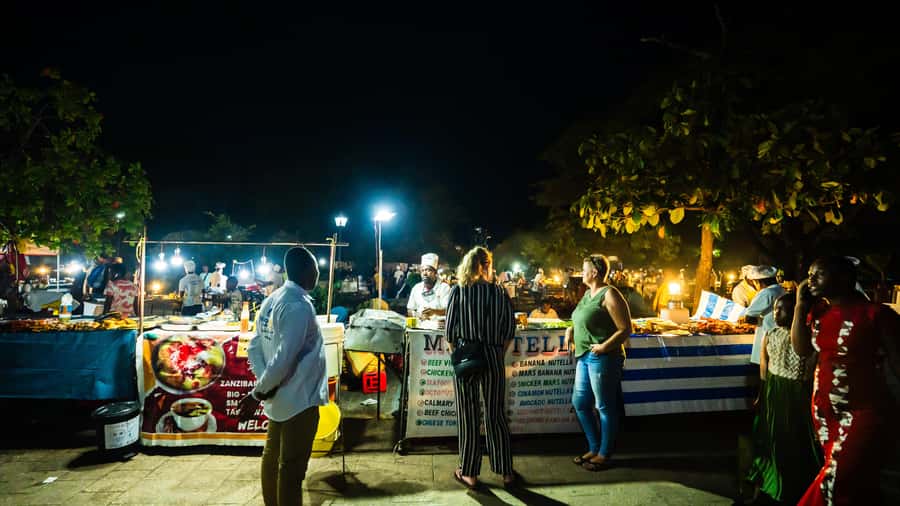
This is a 5–7 hour experience that mixes two things you want in Stone Town: food you can actually eat and a guide who helps you understand what you’re seeing between bites. You’ll get hotel pickup and drop-off, then switch into a walking rhythm for the main part of the day.
The pacing is built around the weather. Stone Town can feel hottest earlier, so you’ll spend the long walking stretch when the temperature has cooled down and the streets are more comfortable. It also means the tour naturally flows toward sunset, which is when Forodhani really comes alive.
It’s a private group, so you won’t feel squeezed into someone else’s pace. Still, it is walking time. If you don’t love standing around markets or doing long old-town lanes, you’ll want to treat this as a food-and-sightseeing plan, not a quick hit.
You can also read our reviews of more tours and experiences in Zanzibar City.

Darajani Market: where the flavors start before the walking begins

Your culinary adventure starts at Darajani Market, a spot that’s great for getting your senses switched on early. You’ll see produce and spices laid out like a working kitchen: fruits and vegetables for daily cooking, spices that give Zanzibar its signature taste, and all the little ingredients that don’t show up on a beach buffet.
Then the tour shifts from looking to tasting. You’ll have coffee and tea options, plus local snack tastings as part of the market visit. This matters because it sets the baseline for the rest of the evening. You’re not just chasing whatever smells good later; you’ll know what you’re tasting and why those flavors belong in Zanzibar cooking.
Practical tip: go in hungry but don’t overdo it at Darajani. The whole point is to sample and learn, so you still have room for the bigger choices at Forodhani Gardens later.
Stone Town walking: getting your bearings in the old lanes
After Darajani, the tour becomes more of a story stroll. You’ll follow a guided walk through Stone Town’s winding streets, with a mix of landmark stops and time to look around. This is where an experienced guide helps you move beyond random wandering.
You’ll also get photo stops and time for shopping and sightseeing. That combination is key in Stone Town. The streets are full of details, and without context it can feel like you’re just moving from one souvenir wall to the next. With the guide, you’re more likely to notice the architecture and understand what you’re seeing.
This is also a good point to remember what you’re doing and why. The market visit gives you the ingredients. The walking segment gives you the setting—so the food later feels connected to the town instead of being just another night market stop.
One more thing I like about this layout: it’s not a rigid monument tour. It’s a walking tour with room to slow down for the street scenes and small views that make Stone Town feel like a real place, not just a list of stops.
Old Fort and the somber stop with your entry ticket
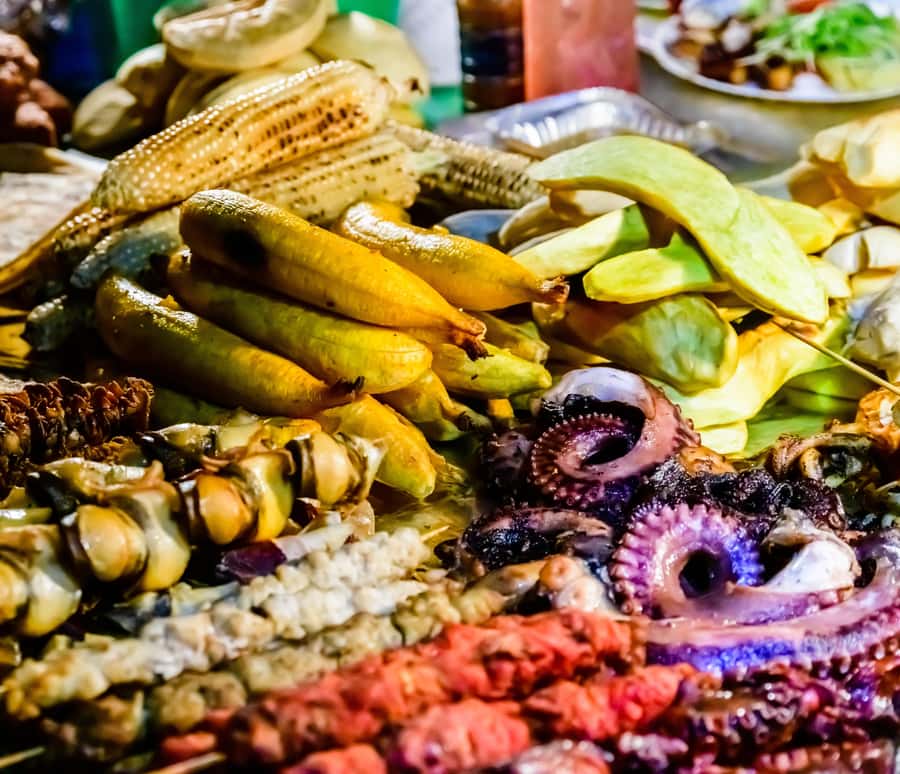
At some point on your route, you’ll have a photo stop and visit at Old Fort. Even if you’re only taking a few photos, it helps you understand how Stone Town’s different areas connect. It also gives the day a clear “checkpoint” feeling, which helps the longer walking time feel more organized.
Your tour includes a 10 USD per person Slave market entry ticket. That’s not just a logistics line—it changes the tone of the experience. A visit tied to the slave market area is heavy, and it’s the kind of stop where the guide’s explanations really matter. If you’re someone who prefers upbeat history only, this may not be your favorite part. If you want the full picture of Zanzibar’s past, it’s an important one.
Also, keep your expectations realistic: history stops can add emotion and stop-and-go pacing. If you’re prone to getting overwhelmed, let your guide know. In a private group, you’ll generally get more flexibility.
Forodhani Gardens at sunset: where street food becomes the main event
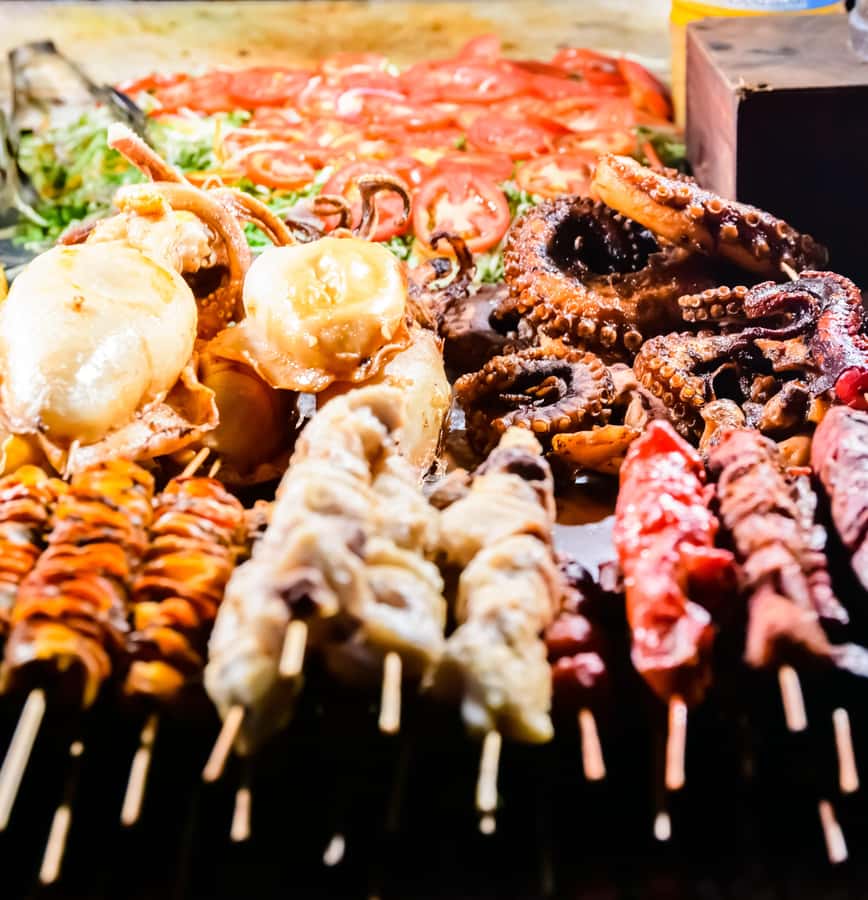
Then the day shifts into evening mode. You’ll enjoy sunset vibes at Forodhani Gardens, with a chance to see how active the local life is after the sun starts dropping and the heat eases.
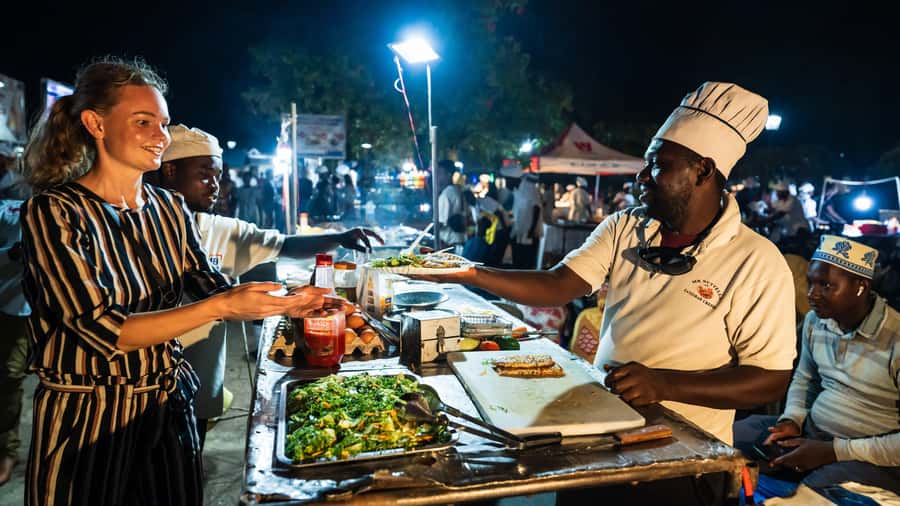
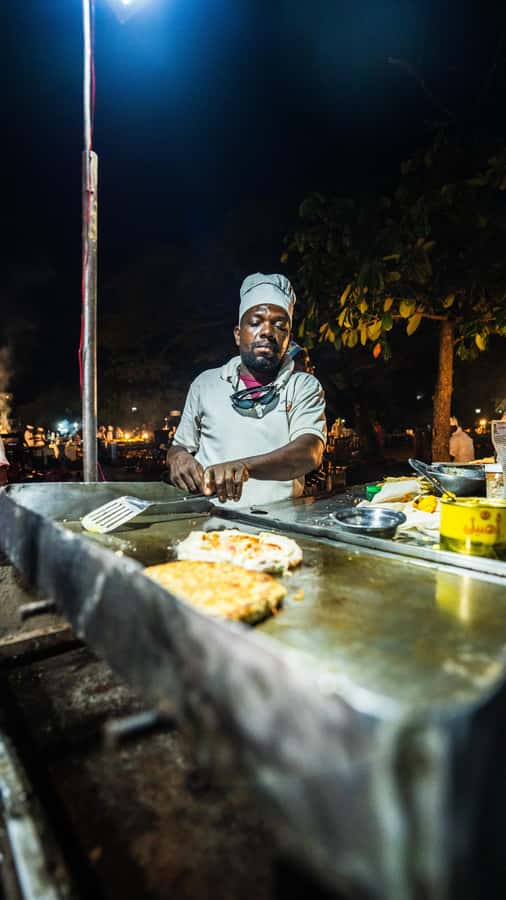
This is where the tour becomes truly about food. The Forodhani night food market is the headliner, and you’ll have time to browse and eat from a range of stalls. The lineup includes drinks like teas and juices, plus a mix of hot, quick meals. You might see choices like shawarmas and pizza, along with traditional dishes such as urojo.
What I like about including both markets (Darajani in the earlier part of the day and Forodhani at night) is that they show different sides of Zanzibar eating. Darajani is about ingredients and local tastes you can trace back to cooking. Forodhani is about the street itself—what people choose when they want something satisfying right now.
Practical move: treat Forodhani like a sampling meal, not a single big purchase. Try one savory item and one drink, then add a second bite if something catches your eye. That keeps you from feeling stuck with a single decision after you’ve already spent your appetite.
And yes, plan to enjoy the atmosphere. One reason this tour scores well is that the evening view by the harbor area and the food market energy feel like the town is breathing. It’s not just dinner. It’s the culture of eating outside—social, informal, and very local.
Transfers, timing, and the little logistics that matter
You’ll have van transfers built into the schedule, with about an hour of driving time mentioned for the start and again on the way back. That means you’re not purely walking from the hotel the entire time. It also means your comfort depends on when you’re picked up and how quickly you start moving.
Here’s the one consideration you should respect: timing can vary. A recent booking noted the pickup was almost an hour later than scheduled. In fairness, a late start can happen for reasons that aren’t in your control. Still, if you have a dinner reservation, a ferry deadline, or a timed activity later that evening, you’ll want buffer time.
What helps: this is a private group with an English-speaking live guide, so you’re not waiting around for a big group to assemble. And after the tour, if you want to keep exploring on your own, the driver can wait until you’re ready to head back.
Price and value: is $25 per person a good deal?
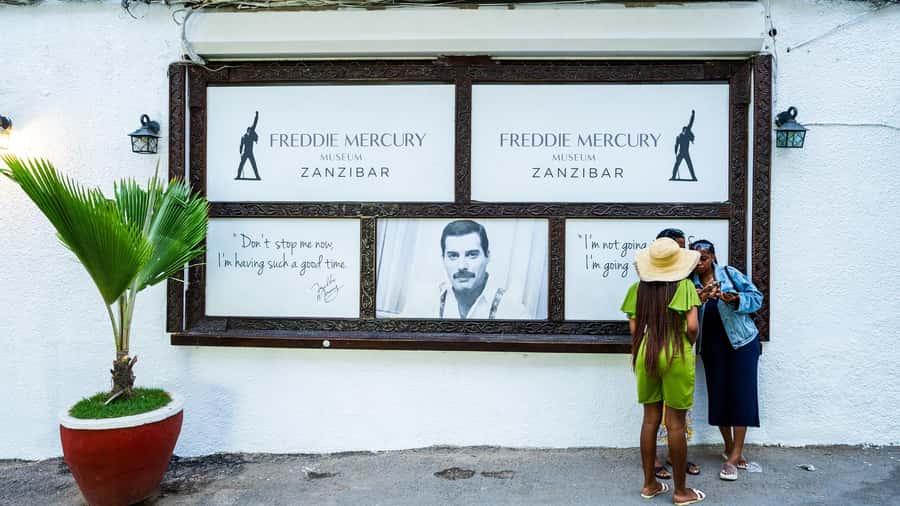
At $25 per person for a 5–7 hour experience, the value is mostly about what’s included and what you’re paying to avoid.
You get:
- hotel pickup and drop-off
- an experienced driver
- a guided walking tour with a guide
- and the 10 USD per person Slave market entry ticket
That slave market entry is the biggest “hidden” piece of value. Without it, many similar tours end up feeling like you’re paying for the walking and story, then paying extra for the sites. Here, you’re already covered for that specific admission.
What’s not included:
- food and drink
So you should budget extra depending on how much you want to eat. In practical terms, this tour is best if you plan to eat during the market stops. If you only nibble once and skip drinks, you might feel like you paid for the guide and photos but not for much food.
Still, even if you keep spending light, you’re paying for two things that are hard to DIY well: a guided interpretation of Stone Town streets and a food route that makes sense from morning ingredients to evening street eating.
Guide quality (Ali) and how the tour feels in real life
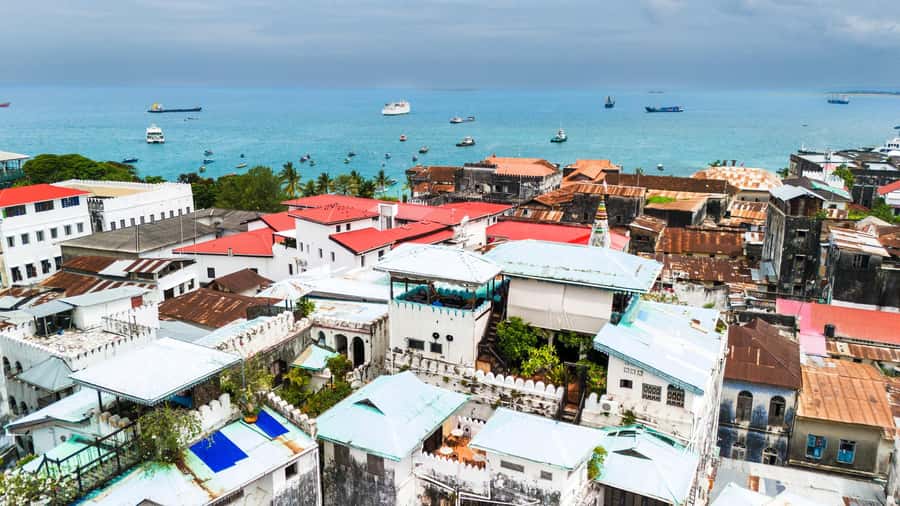
One name stands out from real experiences: Ali. The feedback around him focuses on how informative and comfortable the tour felt, especially when it came to explaining culture and history.
That matters because Stone Town can be confusing if you’re just following your own nose. The streets twist. The sites overlap. Markets can be loud and fast. A good guide helps you slow down without losing momentum.
You also get the benefit of an English live guide. If you prefer explanations over guessing, this is the right style of tour. It’s not just a “here’s the street, good luck” walk.
My balanced take: the quality of the experience depends on your guide’s ability to pace and explain. When it’s going well, it makes everything feel connected—from the spices at Darajani to the night dishes at Forodhani. When pacing slips, it can feel like a lot of moving with not enough time to absorb. That’s another reason timing matters.
Who should book this Stone Town street food and market tour
You’ll probably love this tour if you:
- want market-to-night-market food without planning two separate outings
- like guided context for what you’re eating and seeing
- want a private group experience with hotel pickup
- want an evening highlight in Stone Town (sunset at Forodhani is the payoff)
You might want to choose something else if:
- you have a strict schedule later that day and can’t handle a possible late pickup
- you dislike longer walking segments through old streets
- you prefer meals that are fully included at set prices (here, food and drink are on you)
Should you book it?
Yes, I think you should book this tour if your goal is simple: eat your way through Stone Town with a guide, see the markets in two different moods, and end at Forodhani Gardens when the night food scene is ready for you.
The main “don’t ignore this” point is timing. If your day is packed tight, give yourself buffer time for pickup and transfer. Also, because market and site access can sometimes be confusing day-of, it’s smart to confirm what your entry covers when you meet your guide—especially for the Slave market area, since experiences have differed when people expected one level of access but encountered extra charges.
If you go in with a hungry attitude and a flexible mindset, this is a strong value way to experience Stone Town like people actually live it—between spices by day and smoky street food by night.
FAQ
How long is the Stone Town street food market walking tour and transfer?
The duration is listed as 5–7 hours, depending on the starting time and how the route runs.
What’s included in the price?
Hotel pickup and drop-off, an experienced driver, a guided walking tour with an English live guide, and a 10 USD per person Slave market entry ticket are included.
Is food and drink included?
No. Food and drink are not included, so you’ll want to budget separately for what you choose to eat and drink at the markets.
Where do you get picked up and dropped off?
Pickup and drop-off are available in Stone Town, Zanzibar. You’ll also have a meeting point at your hotel reception.
What do you do during the tour stops?
You’ll visit Darajani Market (with coffee/tea and street-food tastings), explore Stone Town on a guided walking route with photo stops, and spend time at Forodhani Gardens for the night food market.
Is the tour private or shared?
It’s listed as a private group.
What if my plans change?
Free cancellation is available up to 24 hours in advance for a full refund, and you can reserve now and pay later.