REVIEW · SEOUL
Cook 3 Authentic Korean Dishes with Local Market Tour
Book on Viator →Operated by cookorean · Bookable on Viator
A Seoul cooking class that starts at the market. You get a max-four group and a true hands-on setup, not a demo where you watch and hope. It’s a smart way to learn core Korean flavors while still eating well right away.
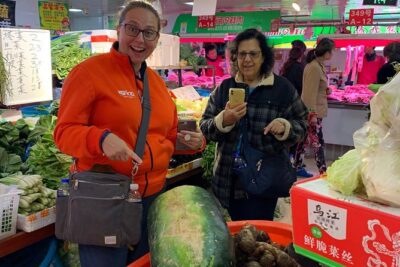
I especially like the start with Mangwon Market, where Jomin walks you through key ingredients and you may even sample street food along the way. That market-to-studio flow makes the recipes feel real, not random.
One thing to plan for: the class can be rescheduled or canceled if it doesn’t meet a minimum of 4 guests, so double-check your dates before you lock in other plans.
In This Review
- Key highlights worth planning around
- A Seoul Cooking Class That Starts at Mangwon Market
- Meeting Jomin at Mangwon Station: Getting Started Without Stress
- Mangwon Market Tour: What You’ll Notice (and Why It Helps)
- Hands-On Cooking Setup: Your Own Station, Your Own Pace
- The Three Dishes You’ll Cook (And What Each One Teaches)
- Soft tofu stew (sundubu-style) and Korean comfort heat
- Bibimbap: assembling more than just ingredients
- Bulgolgi and the idea of marinade chemistry
- Japchae and stir-fry noodle technique (if it’s part of your 3-course menu)
- Kimchi stew and that deeper fermented flavor
- Lunch vs Dinner Class: Which Choice Fits Your Day?
- Take-Home Cookbook and Leftovers: The Value You Actually Get
- Dietary Options: Vegetarian and Vegan Help That Doesn’t Feel Last-Minute
- Price and Value: Is $79 Worth It in Seoul?
- Who Should Book This Cooking Class (and Who Might Skip It)
- Should You Book This Mangwon Market-to-Cooking Experience?
- FAQ
- What dishes will we cook?
- How long is the class?
- Where do we meet?
- Is it hands-on or a demonstration?
- Can I choose lunch or dinner?
- Is there a vegetarian or vegan option?
- How big is the group?
- What do I take home?
Key highlights worth planning around
- Small class size (max four) means you get personal attention at your own station.
- Mangwon Market start at Line 6 (exit 2) keeps the experience grounded and easy to reach.
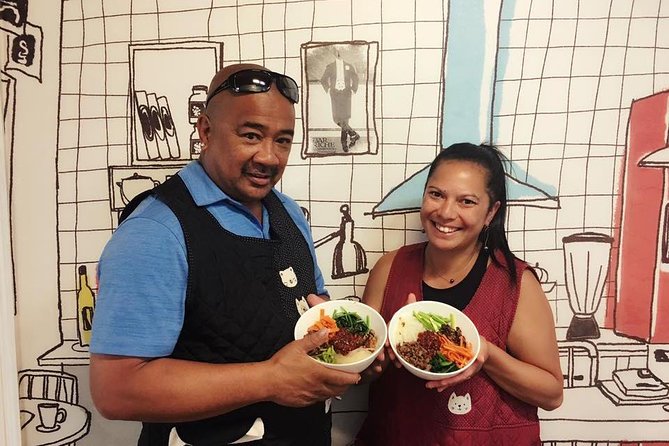
- Hands-on cooking, not a show: you’ll actually make the dishes and eat them.
- Flexible menus: you’ll cook three dishes from the core Korean lineup like bibimbap, bulgogi, and tofu stew.
- Take-home cookbook plus leftovers means the value lasts past the 3.5-hour class.
- Vegetarian/Vegan option available if you want to keep it plant-forward.
A Seoul Cooking Class That Starts at Mangwon Market
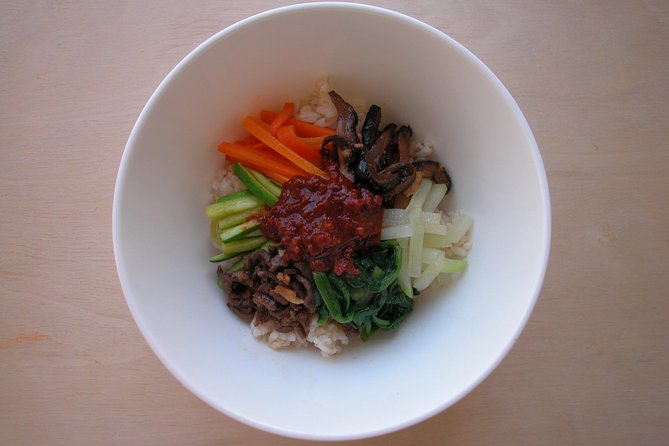
If you’ve ever struggled to translate Korean food you’ve eaten into flavors you can cook at home, this class is built for you. You start outside, where ingredients are sold in the real world, then you move into a clean cooking studio where you cook three dishes as a group of at most four people.
The big win is that it’s not a “watch the chef” situation. You’re on your own station with your own cooking setup, following Jomin’s guidance step by step. You also don’t just leave with a meal—you leave with a professionally designed cookbook and food you can take home.
This is also a nice Seoul activity because it’s short (about 3 hours 30 minutes) but feels full. You get market context, cooking technique, and a sit-down meal in one block of time.
You can also read our reviews of more tours and experiences in Seoul.

Meeting Jomin at Mangwon Station: Getting Started Without Stress
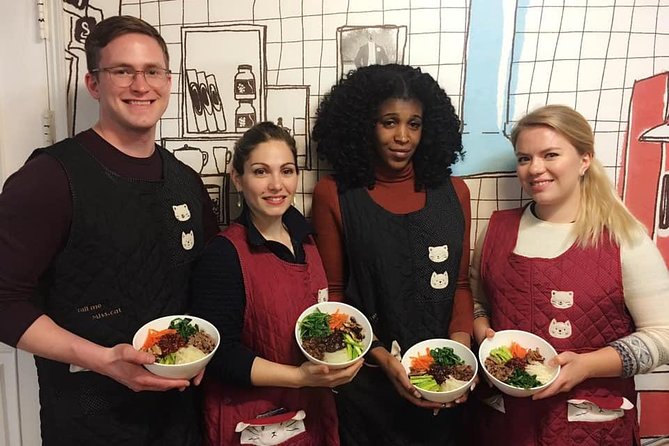
You’ll meet at Mangwon Station in Seoul at Line 6, entrance 2. That matters more than it sounds. A clear meeting point near public transportation reduces the usual travel friction, and it helps you arrive calm instead of frantic.
From there, you walk toward the cooking studio while Jomin gives you a practical intro to what you’ll use in class. It’s also your chance to get oriented with the area so the whole experience feels like part of your neighborhood visit, not just a “tour stop.”
If you’re doing this on a travel-heavy day—palaces, museums, long walks—this timing works well because you’re only gone for half a morning or evening chunk, depending on whether you pick lunch or dinner.
Mangwon Market Tour: What You’ll Notice (and Why It Helps)
The market portion is where your cooking class stops being abstract. Jomin points out ingredient basics you’ll keep seeing in Korean dishes: sauces, seasonings, and produce you’d never think to buy without guidance.
You can expect more than a quick look. The experience is designed around ingredient familiarity, plus you may have time to taste street food while you’re there. That tasting isn’t random; it’s a fast way to understand how different flavors work together in Korean cooking.
Here’s why this part is valuable: when you’re later standing over a pan or pot, you’re not just following steps. You’re connecting those steps to ingredients you already saw in context. That makes the recipes easier to repeat later, and it helps you avoid the common mistake of swapping in whatever you can find at home.
One more practical note: if you happen to travel during a major holiday season, some market stalls can be closed. The core idea still works, but your “market snack variety” can vary depending on what’s open.
Hands-On Cooking Setup: Your Own Station, Your Own Pace
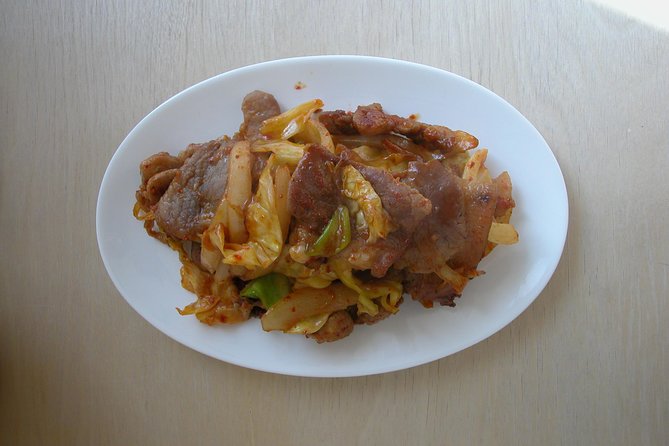
Once you reach the cooking studio, you get a quick chat about the menu—what you’ll cook and what to focus on. Then you roll up your sleeves. This is a hands-on class where you cook using fresh ingredients and your own cooking table and burners.
The format is a big deal for learning. With a group of up to four, Jomin can watch technique and correct small problems early—like chopping, sauce balance, or cooking order—before your dish is already ruined. That’s how you end up leaving with confidence, even if you’re a shaky cook.
Also, the studio setup is described as clean and organized. In practice, that matters because you’re moving through multiple dishes in a short window. If the workspace is chaotic, cooking becomes stressful. Here, it’s designed to keep things flowing.
And yes—you eat. After you cook each part, you enjoy what you made. That reduces the risk of leaving hungry or disappointed because the class is paced toward actual enjoyment, not just skill drills.
The Three Dishes You’ll Cook (And What Each One Teaches)
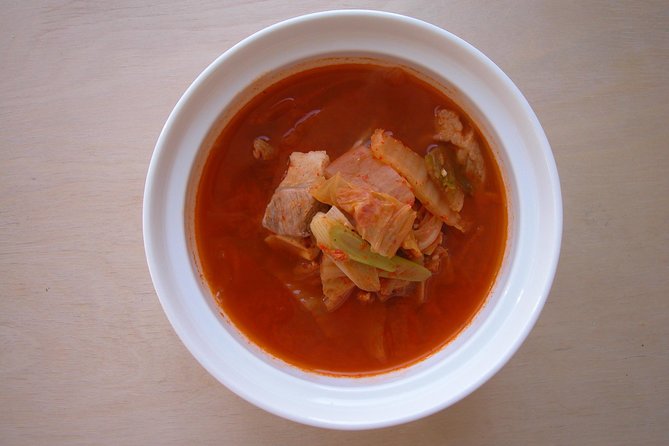
Your menu will include three authentic Korean dishes, chosen from the class lineup. Depending on the day, you might cook combinations such as soft tofu stew, bibimbap, bulgogi, kimchi stew, japchae, or stir-fried pork.
Instead of treating these as separate recipes, think of them as three lessons in Korean home cooking: soup, rice-bowl flavor-building, and savory stir-fry.



Soft tofu stew (sundubu-style) and Korean comfort heat
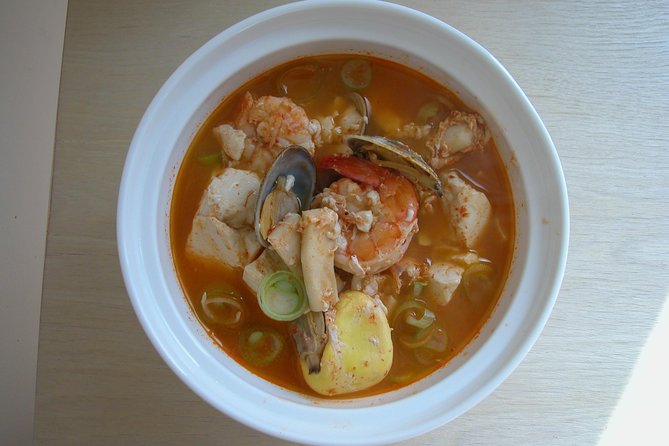
If your menu includes soft tofu stew, you’ll get hands-on experience with the “comfort” side of Korean cooking. This dish is all about balancing rich broth with gentle tofu texture and savory depth. One review experience included buying clams and soft tofu for the stew, which hints at how fresh and ingredient-driven this can be.
What you learn here: how to build a flavorful base quickly and how to avoid boiling that destroys tofu texture.
Bibimbap: assembling more than just ingredients
Bibimbap isn’t only about taste. It’s about structure—layers, colors, textures, and the right way to mix. If bibimbap is on your menu, you’ll likely prep vegetables and learn how to handle them so they stay pleasant, not soggy.
What you learn here: how Korean flavors often balance sweet, salty, and tangy elements in one bowl, plus how heat and timing affect vegetables.
Bulgolgi and the idea of marinade chemistry
Bulgogi is a classic, and it’s a great dish for beginners because the process is teachable. Many classes focus on the final taste; here, you learn the marinade steps, too. In one example, Jomin guided students through bulgogi marinade preparation before cooking.
What you learn here: marinade as a flavor system, not just seasoning. It also gives you a base understanding for cooking other Korean-style stir-fry flavors later.
Japchae and stir-fry noodle technique (if it’s part of your 3-course menu)
Japchae—sweet-savory glass noodles with vegetables—is another dish that rewards technique. You’ll likely learn how to stir-fry without overcooking, and how to keep the noodles glossy rather than clumped.
This is the dish that often becomes someone’s favorite, mainly because it tastes great even if you’re new to Korean cooking.
Kimchi stew and that deeper fermented flavor
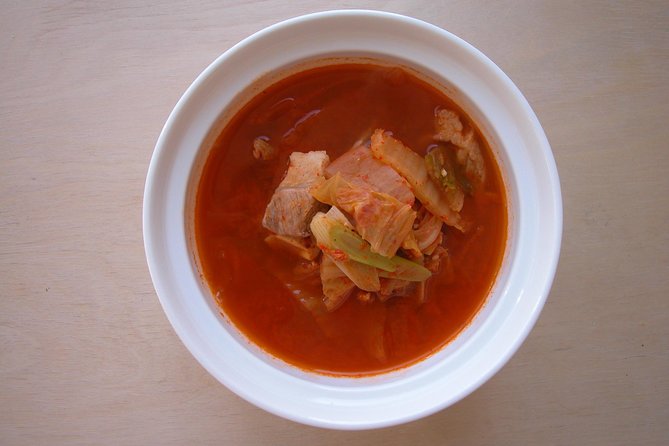
If you cook kimchi stew, you’ll get a clear lesson on fermentation flavor. Kimchi provides tang, funk, and savory depth, and cooking changes the aroma and taste quickly.
What you learn here: how Korean stews rely on fermented ingredients for complexity without needing a complicated pantry.
Lunch vs Dinner Class: Which Choice Fits Your Day?
You can choose between a lunch or dinner session. The core experience stays the same—market walk, studio cooking, three dishes, and eating your work—but timing changes how this fits your Seoul day plan.
Pick lunch if you want a steady midday meal and an experience you can finish before the evening crowd. Pick dinner if you’d rather spend your daytime exploring and let this cooking class become your main “event” meal.
If you’re traveling with someone who isn’t that excited about markets, dinner can also be a good compromise because you get the market context without making it your whole afternoon. Either way, you’ll still eat at the end, so you’re not guessing about meal quality.
Take-Home Cookbook and Leftovers: The Value You Actually Get
A lot of cooking classes end when you wipe the station. This one keeps the value going.
You take home a professionally designed cookbook. Based on what’s described, the recipes aren’t only limited to the three dishes you cook together. You get ideas and references to other Korean favorites too, which makes the cookbook feel useful rather than decorative.
And you’ll also eat what you make—and take home leftovers. That’s a practical perk in Seoul, where portions can be great but your travel day can be long. Leftovers mean you don’t have to plan an extra meal later, and it makes the class payoff bigger than “three dishes right now.”
If you like to cook at home, this is the part that turns the day trip into something you’ll use. If you don’t cook much, it still helps because you can remember what you ate, what you liked, and what to order on your next Korean meal.
Dietary Options: Vegetarian and Vegan Help That Doesn’t Feel Last-Minute
This class offers vegetarian and vegan options. You’re not going to be left out of the fun or forced into a watered-down version of the meal.
In practice, that flexibility matters. Korean cuisine often relies on broths, fermented ingredients, and sauces, so having an instructor adapt the menu for dietary needs is a big quality signal. If you have restrictions beyond vegetarian/vegan, it’s also worth noting that the class is described as accommodating dietary needs.
The best move: mention your preferences clearly during booking so your instructor can plan the right ingredients and steps.
Price and Value: Is $79 Worth It in Seoul?
At $79 per person, you’re paying for more than a cooking lesson. You’re paying for ingredients, instruction, a small group limit, a studio setup designed for hands-on cooking, plus a take-home cookbook and leftovers.
In Seoul, the cost can feel reasonable when you compare it to how much time and learning you get. This isn’t just “one good meal.” It’s about learning Korean techniques across three dishes: a stew, a bowl, and something stir-fried or noodle-based.
Also, the small class size is part of the pricing value. If the group were larger, you’d lose the personal coaching that makes beginners feel capable. Here, the instructor has room to correct details.
If you want Korean food as an experience—not just as something you eat—this price makes sense. If you’re only chasing a quick meal with no interest in cooking, it may feel pricey. But if you want to leave with recipes you can use, it’s a strong buy.
Who Should Book This Cooking Class (and Who Might Skip It)
Book it if you:
- love markets and want to understand ingredients, not just taste snacks
- want a first serious Korean cooking lesson in Seoul
- enjoy hands-on activities more than museum-style sightseeing
- are a beginner. The format is designed to be step-by-step
You might skip it if:
- you dislike cooking, even a little
- you want a purely sightseeing-focused day and won’t enjoy studio time
- your schedule is extremely strict and you can’t handle the possibility of reschedule if the minimum number of guests isn’t met
This class works well for couples, small groups of friends, and anyone who wants a memorable “Seoul flavor” experience without spending all day on logistics.
Should You Book This Mangwon Market-to-Cooking Experience?
Yes—if you want a real Korean cooking day that teaches flavors you can repeat. I like that it starts at Mangwon Market with a guided look at ingredients, then switches to a clean studio where you cook as a small group. That combination makes the recipes stick.
Also, the fact that you leave with a professionally designed cookbook and leftovers makes it feel like value, not just entertainment. And if you’re worried about being “not a cook,” the hands-on setup plus personal coaching is exactly what you want.
Just plan for one practical risk: if the minimum guest count isn’t met, the class may be rescheduled or canceled. If your dates are flexible, this is the kind of class you’ll be happy you booked.
FAQ
What dishes will we cook?
You’ll cook three Korean dishes. The menu may include options like soft tofu stew, bibimbap, bulgogi, kimchi stew, japchae, or stir-fried pork.
How long is the class?
It runs about 3 hours 30 minutes.
Where do we meet?
Meet at Mangwon Station, Line 6 entrance 2.
Is it hands-on or a demonstration?
It’s hands-on. You’ll cook at your own cooking station and then eat what you make.
Can I choose lunch or dinner?
Yes. You can choose between a lunch or dinner class.
Is there a vegetarian or vegan option?
Yes. Vegetarian and vegan options are available.
How big is the group?
The class is kept small, with a maximum of four people. The overall activity listing notes a maximum of 11 travelers.
What do I take home?
You take home a professionally designed cookbook, and you can also take leftovers home.