REVIEW · ROME
Cesarine: Market Tour & Typical Dining at a Local’s Home in Rome
Book on Viator →Operated by Cesarine: Cooking Class · Bookable on Viator
Rome tastes different when you shop first. This market-to-home dining experience starts at a real local market, then turns into a hands-on cooking class and a sit-down meal in an Italian family house. I especially like the fresh-ingredient focus and the chance to learn techniques for Roman favorites like fresh pasta and classic desserts. One drawback to consider: part of the time is active cooking, so it’s not ideal if you want a mostly passive, sightseeing-only outing.
You’ll be joining a private group with an English-speaking host, and you’ll finish back where you started after about 3 hours 30 minutes. Expect a friendly, family-style pace where you learn, taste, and eat together rather than race from stop to stop. It’s also a good idea to wear comfortable shoes and go in hungry, because the meal is a full multi-course experience.
If the idea of shopping with an insider and eating where locals cook sounds like your kind of Rome, this is a strong match. And if your top goal is just iconic landmarks with minimal effort, you may prefer something more tourist-and-quick.
In This Review
- Quick hits you’ll care about
- Market morning in Rome: what you buy and why it matters
- At-home cooking class: turning instructions into technique
- The 4-course Roman menu: starters, pasta, secondi, and desserts
- Starter: seasonal and simple, but very intentional
- Fresh pasta: rigatoni, bucatini, or gnocchi
- Second course: Roman secondi with classic sides
- Dessert: Roman sweets, including tiramisu and ricotta
- Price and time: what $164.43 buys you (and what you should expect)
- Who hosts are to you: the family-home dining difference
- Logistics you can plan around (so nothing feels stressful)
- Practical tips for a smooth market-to-table day
- Should you book this Cesarine market tour and typical dining in Rome?
- FAQ
- How long is the Cesarine market tour and home dining experience?
- What is the price per person?
- Is it a private experience or shared with other groups?
- What language is the tour offered in?
- What do I do during the experience?
- What courses are included in the meal?
- Do I actually cook, or just watch?
- When does it start, and where do we meet?
- What if I cancel?
- Is it suitable for most travelers and different dietary needs?
Quick hits you’ll care about
- Local market shopping for ingredients you’ll actually use in your meal
- Hands-on cooking with guidance, not just watching demos
- A full 4-course Roman menu that typically includes fresh pasta and a Roman-style dessert
- Family-home dining where the conversation is part of the experience
- Italian wines served with your meal
- Hosts with real teaching styles, from pasta-making to dessert techniques like tiramisu
Market morning in Rome: what you buy and why it matters
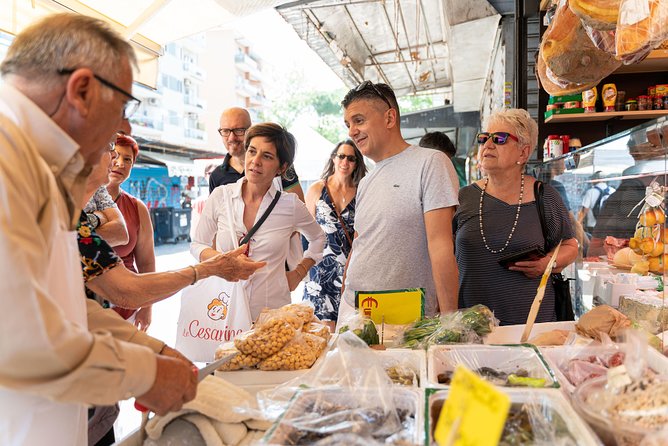
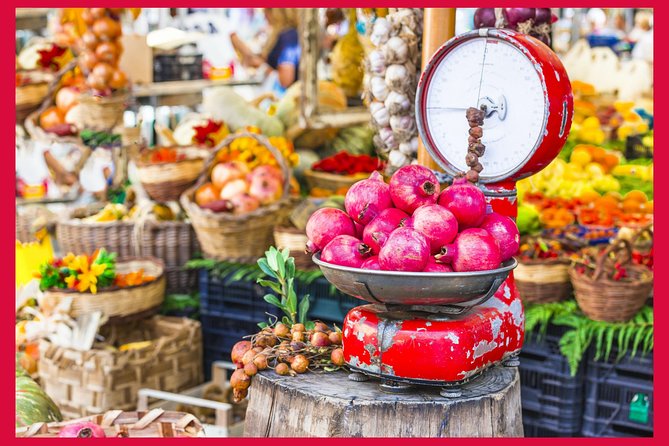
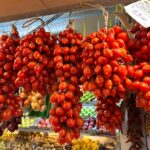
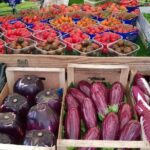
Your day starts at a meeting point in the Rome area (near public transportation), with a 10:30 am start. From there, you head to a local market where the goal isn’t browsing for souvenirs. You’re there to pick ingredients that match the recipes you’ll cook later, so everything feels purposeful.
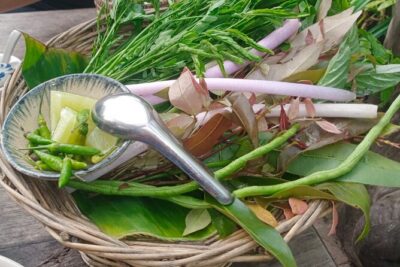
This is one of the most practical parts of the experience. You get to see how Roman cooks think: what looks best, what’s in season, and how ingredients work together in classic dishes. It also helps you understand why some flavors show up repeatedly in Roman cooking, like tomatoes, herbs, seafood, and greens in the right combinations.
In the market, you’re not following a script for a “photo stop.” You’re selecting items for your own lunch, and that changes how you pay attention. You might notice how vendors talk about produce, how different cuts and shapes matter for certain sauces, and why some ingredients are used fresh rather than treated like generic pantry items.
Also, the format is private. That means your host can slow down for questions and adjust the shopping approach to your pace and interests. If you like food details, you’ll get more of them here than in a big-group tour.
You can also read our reviews of more tours and experiences in Rome.
At-home cooking class: turning instructions into technique
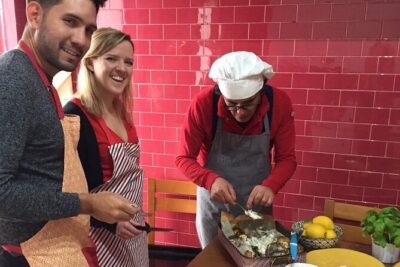
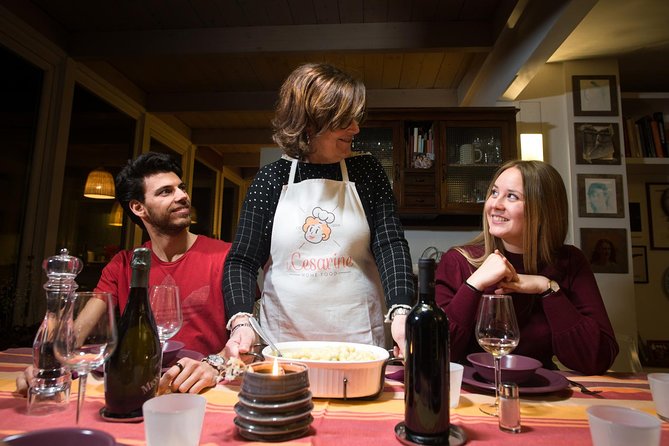
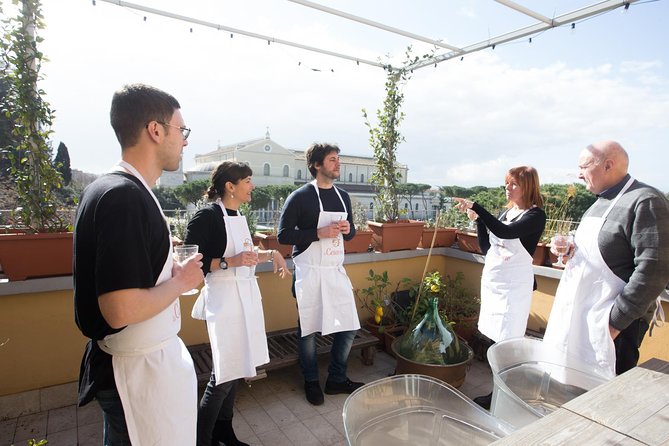
After the market, you go to your host’s home and shift into the cooking class part of the day. This is where the experience becomes hands-on. You’ll see demo-to-do teaching, where your host shows the steps and then invites you to cook.
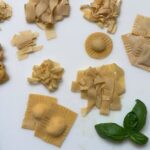
One reason this format works well is that it’s learning by doing. Instead of memorizing a recipe for later, you practice the key motions and decisions in the moment—like how pasta dough or sauce consistency should feel as you go. That’s also why people tend to leave remembering techniques, not just the final dish.
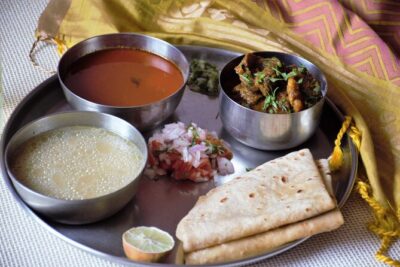
You’ll prepare a 4-course meal during the class. The plan commonly starts with a seasonal starter, then moves to fresh pasta (often rigatoni, bucatini, or gnocchi), followed by a second course with a side dish, and finally a Roman dessert. You’ll taste along the way, so cooking feels like part of the meal, not a separate activity.
The quality of teaching matters here, and the program has examples of very teacher-focused hosts. People have described hosts like Maria teaching fresh pasta and tiramisu, Gianluca cooking multiple courses with a secret tiramisu recipe, and Cristiana walking through each step clearly and letting students cook rather than just stand nearby. Even when the menu changes from home to home, that teaching style tends to stay consistent.
If you have dietary restrictions, you should plan to communicate them in advance. There’s at least one documented case of a host accommodating gluten intolerance by making gluten-free gnocchi and building the rest of the menu around that need. That doesn’t guarantee every host will handle every diet the same way, but it does suggest your best move is to tell Cesarine clearly before you arrive.
The 4-course Roman menu: starters, pasta, secondi, and desserts
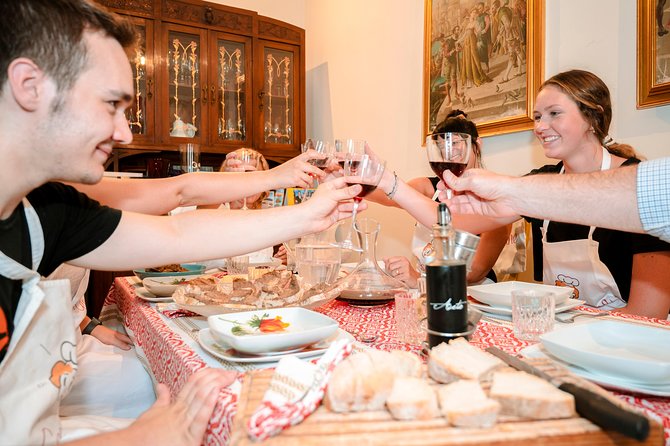
The meal is structured as a full Roman lineup. You’re not just getting one dish and a token sweet finish. You’ll typically sit down to enjoy what you and your host made, including Italian wine.
Starter: seasonal and simple, but very intentional
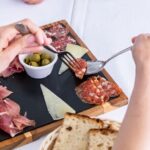
Your starter is listed as a seasonal starter. In Roman home cooking, that usually means you’ll get something that respects what’s fresh right now rather than forcing a year-round version. Even if the exact dish varies, the idea is the same: start light, set the flavor tone, then build.
Fresh pasta: rigatoni, bucatini, or gnocchi
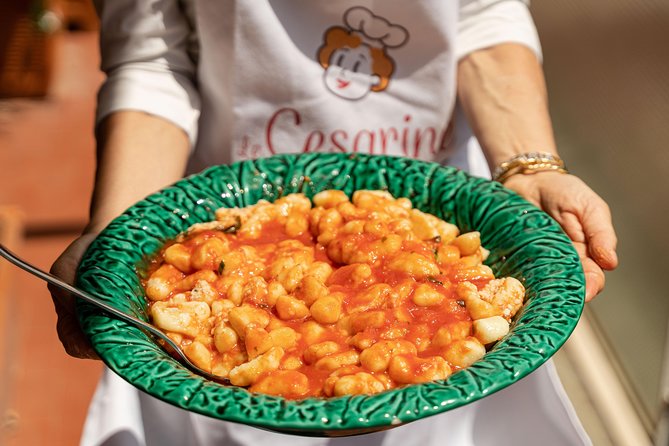
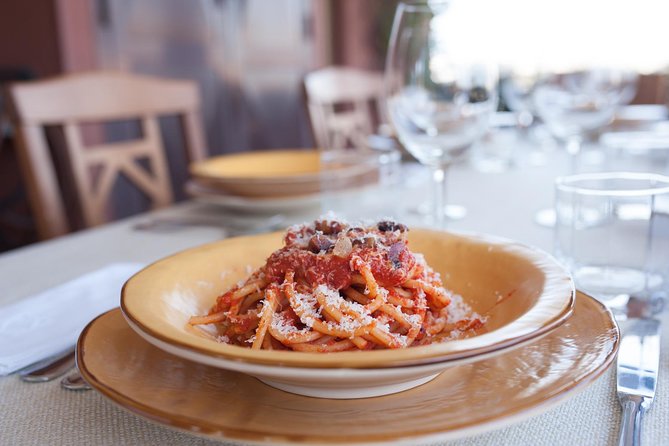
The fresh pasta course is often rigatoni, bucatini, or gnocchi. This is a big deal for value because it’s labor-heavy. Making pasta from scratch takes time and attention, and it’s also where hosts can teach the most useful lessons—how the dough behaves, how shapes matter, and how sauce should cling.
You may also hear people mention specific pasta preferences they asked to learn. For example, one cooking session included making gnocchi with a focus on the correct technique, plus a sauce like Amatriciana. So if you have a strong pasta preference, it’s worth telling your host early.
Second course: Roman secondi with classic sides
Your second course is paired with a side dish, and you might see options like Saltimbocca alla romana con puntarelle, alici fritte, or coda alla vaccinara con cicoria ripassata. These dishes are a great window into Roman cooking beyond just pasta.
Here’s the practical takeaway: Roman “main dishes” often bring the flavor through the sauce, the preparation method, and the pairing with a specific green or side. So learning one of these secondi in a home kitchen teaches you how Romans balance richness with something sharp or bitter, like greens cooked to keep bite.
Dessert: Roman sweets, including tiramisu and ricotta
Dessert is Roman dessert, with example options like ricotta and cherry tart, Roman tiramisu, chocolate shortbread, or tiramisu. If you love sweets but hate overly sugary finishes, Roman desserts can be a nice change of pace because they often feel comforting rather than loud.
Tiramisu shows up again and again in this program’s stories, including versions taught with family-style techniques. In one account, hosts even included a birthday moment with singing in Italian and English, which tells you the dessert portion isn’t the only emotional payoff.
Price and time: what $164.43 buys you (and what you should expect)
At $164.43 per person for about 3 hours 30 minutes, this is not a low-cost “do lunch cheaply” option. But it can be good value if you care about cooking skills, ingredients, and a real meal.
What’s included (based on the experience format you’re booking) is the big part of the equation:
- Market shopping for ingredients
- A hands-on cooking class
- A 4-course meal
- Italian wines with your dining
When a meal includes wine and multiple courses, the price becomes more reasonable. When you add that you’re learning during the meal instead of just paying for food, it shifts from “restaurant price” to “experience with skill-building.” And since it’s private, you’re not sharing the class time with strangers.
Where cost can feel harder is if you’re the type who wants a quick taste and then move on. This experience is designed for people who actually want to cook, sit, and eat properly.
My advice: treat it like paying for a special meal plus a mini culinary workshop. If that matches your travel style, the price makes more sense.
Who hosts are to you: the family-home dining difference
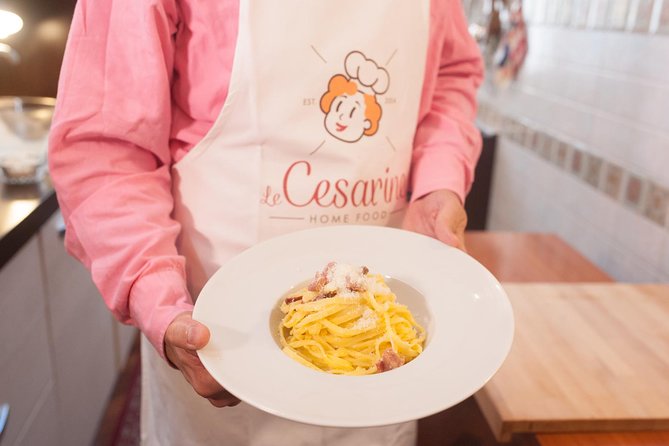
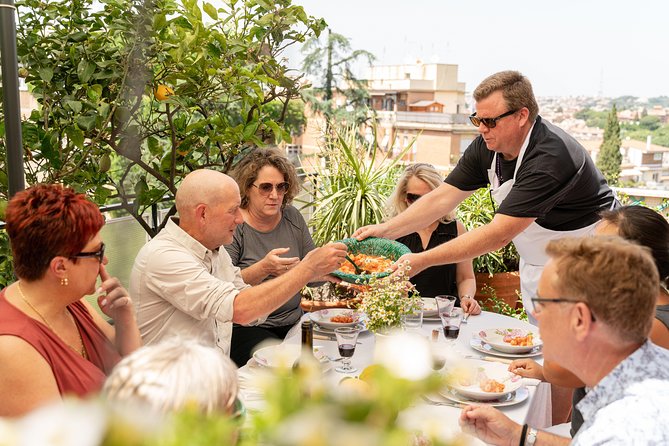
The experience is described as a private dining experience at a local’s home, with warmth and connection as part of the package. That sounds fluffy until you connect it to the reality: you’re not in a restaurant with a staff pipeline. You’re in someone’s home, and your host is guiding you through both the food and the rhythm of the day.
People have specifically highlighted how hosts welcome them like family members, including things like shared stories and laughter. Names that have come up include Maria, Gianluca, Anna, Cristiana (with Luca), and Roberta, plus Giorgia in at least one session. One family even had a dog that joined the day in a friendly way, which is a reminder that the atmosphere can be personal rather than staged.
This home setting also explains why the meal feels more memorable. You’re not just eating. You’re understanding what you’re eating and why it shows up in family cookbooks passed down through generations. Your host may talk about a classic technique, a small trick, or how they learned it, and those bits stick better than a generic food explanation.
Also, the fact that the tour is in English matters. You’ll get the practical steps clearly, not just the broad “this is delicious” commentary.
Logistics you can plan around (so nothing feels stressful)
Start time is 10:30 am, and the activity ends back at your meeting point. That “back where you started” setup is useful because it reduces decision fatigue near the end of the meal. You can plan your afternoon with confidence instead of wondering how you’ll get home.
It’s near public transportation, and you’ll use a mobile ticket. That’s a small but real convenience in Rome, where you don’t want to hunt for paper tickets while your stomach is already thinking about lunch.
Duration is about 3 hours 30 minutes. Since it includes market time, cooking time, and dining time, don’t schedule a tight “something else” right after. Give yourself a buffer so you’re not rushing away mid-digestive enlightenment.
One note to keep expectations realistic: the market-to-home flow isn’t designed for heavy sightseeing. If you want multiple major monuments in one day, you should consider this as the food highlight and plan a simpler second half of your trip.
Practical tips for a smooth market-to-table day
Wear shoes you can stand in. You’ll likely be moving between market stalls and around a kitchen space during prep.
Go ready with questions. Ask why a particular ingredient is chosen for the dish, or how your host adjusts flavor. This is the kind of day where answers are specific, because the information is tied to what’s happening on your cutting board.
Tell your host about dietary needs early. There’s a documented example of gluten intolerance being accommodated with gluten-free gnocchi. Since not every menu is identical, you’ll be safest if you communicate ahead of time.
Finally, don’t overpack your expectations. This experience is about learning and eating, not about checking off a museum list. If you treat it like a cooking lesson plus a long lunch, you’ll enjoy it more.
Should you book this Cesarine market tour and typical dining in Rome?
If you love food, want real Roman recipes, and like the idea of learning by cooking, I think this is an easy yes. The strongest reason to book is the combo: market shopping + hands-on cooking + a full four-course meal with wine. You don’t just buy a dinner. You build the dinner.
Book it if you’ll enjoy one-on-one attention in a private setting, especially since you’re learning in English and getting to work with a host who teaches the process, not just the story.
Skip it (or consider another option) if you want minimal effort, prefer a strictly sightseeing itinerary, or don’t like cooking at all. This day expects participation, and the payoff is tied to that participation.
If you’re celebrating something, it can also be a meaningful choice, since hosts have created personal moments in at least some sessions. That kind of atmosphere is hard to reproduce in a standard restaurant.
FAQ
How long is the Cesarine market tour and home dining experience?
It lasts about 3 hours 30 minutes.
What is the price per person?
The price is $164.43 per person.
Is it a private experience or shared with other groups?
It’s private. Only your group participates.
What language is the tour offered in?
The experience is offered in English.
What do I do during the experience?
You visit a local market to buy ingredients, then you go to a host’s home for a hands-on cooking class and a typical Roman meal.
What courses are included in the meal?
You’ll have a 4-course meal: a seasonal starter, fresh pasta, a second course with a side dish, and a Roman dessert.
Do I actually cook, or just watch?
The format includes a hands-on cooking class, so you should expect to cook as part of the process.
When does it start, and where do we meet?
It starts at 10:30 am, and the meeting point is near public transportation. The activity ends back at the meeting point.
What if I cancel?
You can cancel for a full refund if you cancel up to 24 hours before the experience starts.
Is it suitable for most travelers and different dietary needs?
The experience says most travelers can participate. For dietary needs, there is an example of gluten intolerance being accommodated with gluten-free gnocchi, so it’s smart to tell Cesarine ahead of time.